免费选座底线

Search documents
新规能否击穿航班锁座“黑箱”
Xin Lang Cai Jing· 2026-02-24 06:58
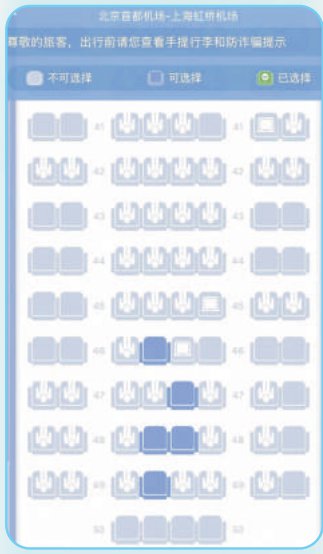
Core Viewpoint - The demand for air travel in China is increasing around the Spring Festival, prompting the China Air Transport Association to release a draft regulation on flight seat reservation rules, aiming to address the controversial issue of seat locking during check-in [1][9]. Group 1: New Regulations - The draft regulation categorizes reserved seats into operational guarantee seats and value-added service seats, with specific requirements for free seat selection percentages for domestic and international flights [9]. - For domestic flights, the minimum percentage of free selectable seats is set at 70%, while for international and regional flights, it is set at 65% [9]. - The regulation aims to standardize the seat reservation process and improve transparency, addressing issues of information asymmetry and inconsistent standards that have left passengers feeling powerless [8][10]. Group 2: Passenger Experiences - Many passengers have reported frustration with the inability to select available seats, often finding popular seats locked and only being offered less desirable options [7][8]. - Complaints have surfaced regarding the lack of clear communication from airlines about seat availability and the reasons for seat locking, leading to a perception of a "black box" in the seat reservation mechanism [8][11]. - Instances of passengers being forced to contact customer service multiple times or visit the airport to resolve seat selection issues have been highlighted, indicating a systemic problem in the current process [7][11]. Group 3: Market Reactions - While some travelers support the new regulations, believing they will enhance the travel experience, others argue that the market should allow for paid seat selection as long as it is transparent [10]. - The existence of intermediaries offering paid seat selection services has been noted, indicating a gray market that exploits the lack of clarity in current regulations [11][12]. - Concerns have been raised about the potential for airlines to circumvent the new rules through practices like requiring passengers to purchase points for seat selection, which could undermine the intended benefits of the regulations [13][14]. Group 4: Industry Implications - The new regulations are seen as a response to long-standing issues in the industry, aiming to balance consumer rights with operational needs [13][14]. - Legal experts emphasize the importance of enforcing these regulations and ensuring that airlines do not exploit loopholes, which could damage consumer trust and the industry's reputation [12][14]. - The draft regulation reflects a commitment to public service principles within the aviation sector, aiming to protect consumer rights and promote fair practices [13][14].