航班锁座

Search documents
新规能否击穿航班锁座“黑箱”
Xin Lang Cai Jing· 2026-02-24 06:58
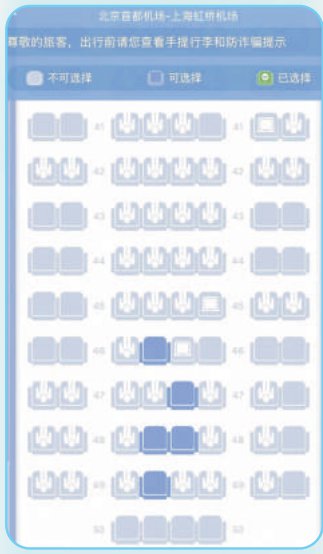
Core Viewpoint - The demand for air travel in China is increasing around the Spring Festival, prompting the China Air Transport Association to release a draft regulation on flight seat reservation rules, aiming to address the controversial issue of seat locking during check-in [1][9]. Group 1: New Regulations - The draft regulation categorizes reserved seats into operational guarantee seats and value-added service seats, with specific requirements for free seat selection percentages for domestic and international flights [9]. - For domestic flights, the minimum percentage of free selectable seats is set at 70%, while for international and regional flights, it is set at 65% [9]. - The regulation aims to standardize the seat reservation process and improve transparency, addressing issues of information asymmetry and inconsistent standards that have left passengers feeling powerless [8][10]. Group 2: Passenger Experiences - Many passengers have reported frustration with the inability to select available seats, often finding popular seats locked and only being offered less desirable options [7][8]. - Complaints have surfaced regarding the lack of clear communication from airlines about seat availability and the reasons for seat locking, leading to a perception of a "black box" in the seat reservation mechanism [8][11]. - Instances of passengers being forced to contact customer service multiple times or visit the airport to resolve seat selection issues have been highlighted, indicating a systemic problem in the current process [7][11]. Group 3: Market Reactions - While some travelers support the new regulations, believing they will enhance the travel experience, others argue that the market should allow for paid seat selection as long as it is transparent [10]. - The existence of intermediaries offering paid seat selection services has been noted, indicating a gray market that exploits the lack of clarity in current regulations [11][12]. - Concerns have been raised about the potential for airlines to circumvent the new rules through practices like requiring passengers to purchase points for seat selection, which could undermine the intended benefits of the regulations [13][14]. Group 4: Industry Implications - The new regulations are seen as a response to long-standing issues in the industry, aiming to balance consumer rights with operational needs [13][14]. - Legal experts emphasize the importance of enforcing these regulations and ensuring that airlines do not exploit loopholes, which could damage consumer trust and the industry's reputation [12][14]. - The draft regulation reflects a commitment to public service principles within the aviation sector, aiming to protect consumer rights and promote fair practices [13][14].

告别航班“锁座”?争议多年后行业新规有望出台
Hua Xia Shi Bao· 2026-01-24 01:31
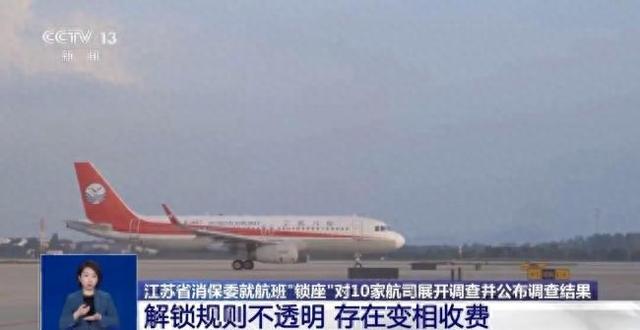
Core Viewpoint - The issue of "seat locking" in China's aviation industry has gained regulatory attention due to growing public controversy, leading to the China Air Transport Association's initiative to establish standardized rules for seat reservation practices [1][2]. Group 1: Regulatory Response - The China Air Transport Association announced plans to create a group standard for seat reservation rules, aiming to address the types, scope, and disclosure of seat reservation practices [1][2]. - The new standards will be open for public consultation, inviting feedback from travelers and the broader community [2]. Group 2: Industry Practices - The practice of charging for seat selection began over a decade ago, initially involving a limited number of premium seats, but has expanded significantly, leading to reduced choices for passengers [2][3]. - A report from the Jiangsu Consumer Rights Protection Committee highlighted issues such as excessive locking of quality seats and unclear disclosure of seat reservation rules by airlines [2][3]. Group 3: Consumer Concerns - Consumers often discover seat locking only after purchasing tickets, with airlines citing reasons like special passenger reservations and emergency seat allocations, yet the actual locking rates exceed necessary levels [3]. - The lack of a unified standard for seat locking practices has led to distrust among travelers, as airlines provide inconsistent explanations for their policies [3][7]. Group 4: Comparison with Global Practices - Globally, low-cost airlines have adopted paid seat selection as a standard practice, often offering low base fares while charging for additional services like seat selection and baggage [5][6]. - Traditional airlines are increasingly adopting low-cost strategies by unbundling services, yet some still maintain a proportion of seats available for free selection to avoid customer dissatisfaction [6][7].
张仲麟:从业内角度说说“航班锁座”这事
Guan Cha Zhe Wang· 2025-12-09 06:18
Core Viewpoint - The Jiangsu Consumer Protection Committee has released a report indicating that domestic airlines are locking a large number of seats for online check-in and promoting paid seat selection services, which allegedly infringes on consumers' rights to fair trade and autonomy [1][3]. Group 1: Technical Aspects of Seat Locking - Airlines lock seats for various reasons, including ensuring the balance of the aircraft, as the center of gravity must be maintained within a certain range for safety and efficiency [3][5]. - The locking of seats, particularly in preferred areas such as the front rows and emergency exit rows, is a common practice among airlines to control passenger distribution and maintain aircraft stability [4][5]. - For example, in a Boeing 737-800 with an economy layout, airlines may lock the first four and last three rows to prevent an imbalance in passenger seating [5][7]. Group 2: Marketing Aspects of Paid Seat Selection - Since 2023, the overall ticket prices in China's civil aviation have been declining, while airlines are under pressure to return to profitability after significant losses during the pandemic, leading to the introduction of paid services like seat selection [12][21]. - The practice of charging for seat selection is seen as a market-driven approach to enhance revenue, as airlines lower ticket prices but seek to compensate through ancillary services [12][21]. - In contrast to domestic airlines, U.S. airlines have a more transparent pricing model for seat selection, where specific seat types are clearly priced, allowing consumers to make informed choices [13][15]. Group 3: Public Service Attributes of Airlines - The Jiangsu Consumer Protection Committee argues that airlines have a public service obligation to provide consumers with the freedom to choose their seats, as purchasing a ticket establishes a contractual relationship [19][20]. - However, it is contended that the primary obligation of airlines is to transport passengers safely to their destinations, and not necessarily to fulfill specific seat selection requests [20][21]. - The concept of public service in aviation is highlighted by the need for airlines to maintain operations in underserved areas, reflecting their social responsibility beyond mere profit motives [20][21].