
党政机关带头过紧日子

Search documents
用“带头过紧日子”滋养民生沃土
Ren Min Ri Bao· 2025-10-09 02:17
Core Points - The core message emphasizes the importance of frugality and resource optimization in government operations to enhance public welfare and support high-quality development [1][2][3][4] Group 1: Government Policy and Actions - The revised regulations stress that government agencies must lead by example in frugality, reducing costs associated with public activities to allocate more funds for development and public needs [1][2] - Since the 18th National Congress, the central government has elevated the concept of "living frugally" as a significant governance strategy, focusing on reducing unnecessary expenditures and reallocating saved funds to social welfare projects [2][3] - Government agencies are actively cutting down on non-essential spending, particularly in areas like "three public expenses," to enhance the financial resources available for public welfare [3][4] Group 2: Cultural and Historical Context - The tradition of frugality is deeply rooted in Chinese culture and has been a consistent theme throughout the history of the Communist Party, reflecting a commitment to serving the people [1][2] - The historical perspective shows that the practice of frugality has been a successful strategy for the Party's growth and resilience, reinforcing the connection between governance and public service [4] Group 3: Societal Impact - The initiative to lead by example in frugality is not merely about cutting costs but is aimed at optimizing resource allocation to improve the quality of life for citizens [2][3] - The reduction of unnecessary administrative expenses is intended to expand the welfare benefits available to the public, thereby enhancing overall happiness and satisfaction [3][4]
焦点访谈|“紧日子”≠“苦日子” 读懂中央“紧”字诀背后的民生温度
Yang Shi Wang· 2025-09-28 14:31
Core Viewpoint - The revised "Regulations on Strict Economy and Opposition to Waste by Party and Government Agencies" emphasizes the importance of frugality and reducing waste, reinforcing the commitment of the Chinese Communist Party to lead by example in living a frugal lifestyle [1][3][5]. Group 1: Regulations and Principles - The new regulations highlight that party and government agencies must lead by example in frugality, which is now a key principle in the revised regulations [3][5]. - The regulations aim to lower costs of public activities, scientifically allocate financial resources, and establish a long-term mechanism for promoting frugality and opposing waste [5][11]. - The revised regulations include stricter rules on budget management, travel, public reception, and resource conservation, with 33 prohibitions and 62 restrictions, increasing accountability and discipline [11][12]. Group 2: Historical Context and Political Commitment - The emphasis on frugality is rooted in the party's historical commitment to saving resources, dating back to the revolutionary era [7][9]. - The party's commitment to frugality is seen as a promise to the public, reflecting a political ethos of self-discipline and public service [3][9]. - The regulations are viewed as a significant step in the party's self-reform and a response to past issues of waste and corruption [9][11]. Group 3: Economic Implications - The reduction in "three public" expenditures in recent years indicates a trend towards greater fiscal responsibility, with a budget decrease of 0.5 billion yuan in 2024 and over 300 million yuan in 2025 [5][12]. - The savings from frugality can be redirected to improve public welfare, with over 70% of the national budget now allocated to social welfare [16][18]. - The initiative aims to enhance government efficiency and effectiveness, allowing public servants to focus on solving real issues for the populace [11][18].

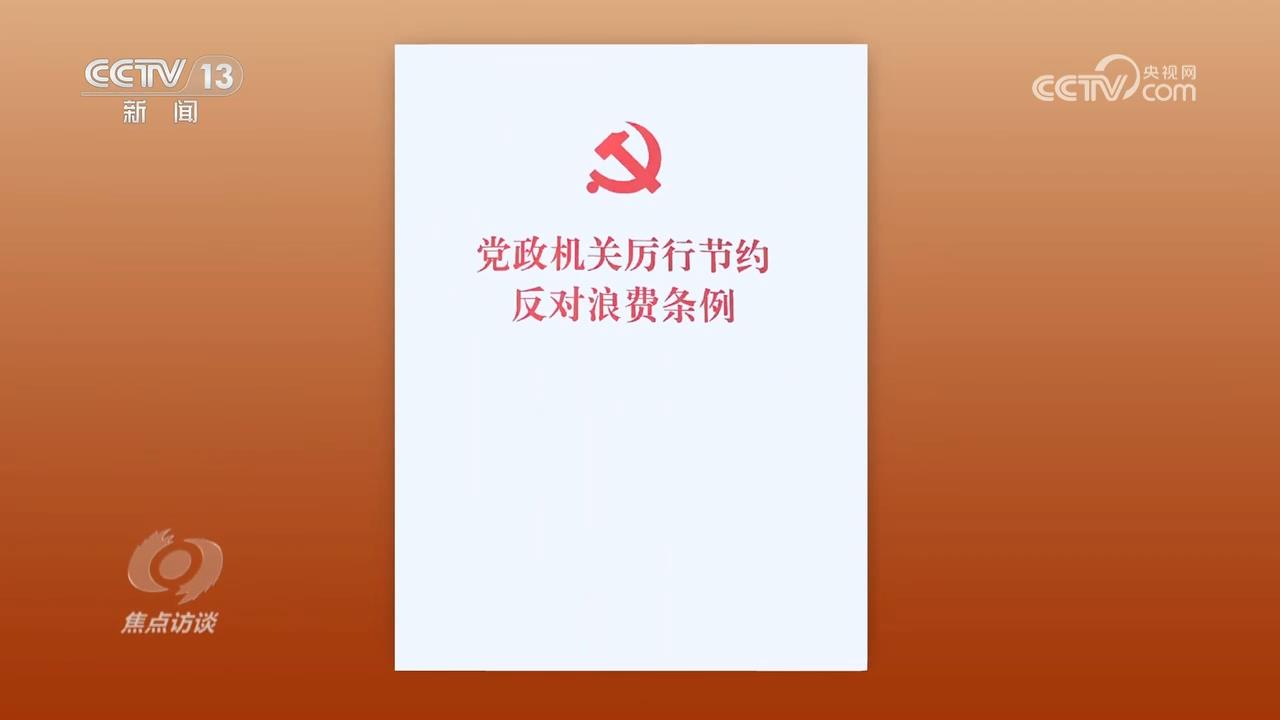
拧紧“带头过紧日子”的制度螺栓
Jing Ji Ri Bao· 2025-05-19 22:00
Core Points - The revised "Regulations on Strict Economy and Opposition to Waste by Party and Government Agencies" emphasizes the principle of "leading by example in frugality" as a key guideline for party and government agencies [1][2] - The regulations aim to curb extravagant behaviors and ensure that resources are effectively utilized for economic development and improving people's livelihoods [2][3] - The document highlights the need for strict enforcement and long-term strategies to ensure compliance with the new regulations, including severe penalties for violations [3] Summary by Sections Section 1: Regulations Overview - The revised regulations were issued to deepen the implementation of the Central Eight Regulations and emphasize frugality as a core value of the party [1] - The regulations aim to address persistent issues of wasteful practices and reinforce the importance of a disciplined approach to resource management [1][2] Section 2: Specific Prohibitions - The regulations explicitly prohibit disguised tourism and extravagant public receptions under the guise of investment promotion [2] - It mandates that work meetings should not include unnecessary decorations or background displays, aiming to eliminate wasteful practices [2] Section 3: Implementation and Enforcement - The regulations call for strict monitoring and accountability for violations, ensuring that every rule is treated as a serious obligation [3] - There is a focus on reforming government accounting and public reception services to enhance efficiency and reduce waste [3] - The commitment to frugality is seen as essential for sustainable development and improving public trust in government actions [3]