艰苦奋斗

Search documents
四川监狱:在“追光”中凝聚奋进力量
Zhong Guo Xin Wen Wang· 2026-01-21 03:29
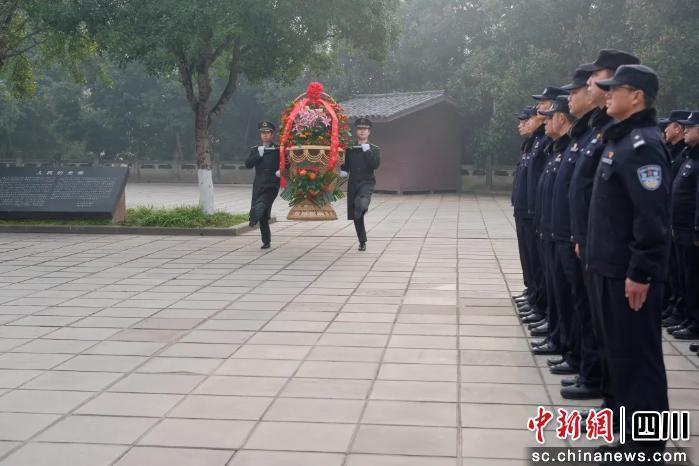
Core Viewpoint - The article highlights the various党建培训 (Party Building Training) and主题党日活动 (Thematic Party Day Activities) conducted by prisons in Sichuan Province at the beginning of the new year, aimed at strengthening political loyalty and collective motivation among the police force [1]. Group 1: Activities and Locations - Hanwangshan Prison organized police officers to visit the Sichuan Museum for party history education, emphasizing the development of the revolutionary history in Bashu [2]. - Yibin and Zigong prisons took young police officers to the hometowns of revolutionary figures Jiang Jie and Wu Yuzhang, drawing inspiration from the spirit of perseverance in adversity [2]. - Xinyuan Prison arranged for party representatives to visit the Red Army Long March Memorial Hall in Qionglai, utilizing digital displays and scene recreations to immerse participants in the resilience and dedication of Red Army soldiers [2]. Group 2: Learning from History - Qiaowo Prison organized young police officers to visit the prison's historical site, listening to stories of predecessors who exemplified hard work and dedication, instilling the spirit of "hard work and selflessness" [5]. - Chengdu Juvenile Offenders Management Institute conducted interviews in Changping Mountain, reflecting on the sacrifices of the Red Army and the commitment to their original aspirations [5]. Group 3: Commitment and Responsibility - Youth police officers at Chuanbei Prison solemnly pledged their commitment to their duties in front of revolutionary historical sites, embodying their mission as law enforcement officers [5]. - Police officers at Chuan Central Prison gained deep insights into the ideals, selflessness, and strong sense of public service from the memorial of Zhu De, vowing to take on responsibilities and maintain social stability in their work [5].

清风存天地 家训重千钧
Xin Lang Cai Jing· 2026-01-08 22:04
Core Viewpoint - The article reflects on the legacy of Premier Zhou Enlai, particularly his "Ten Family Rules," emphasizing the importance of integrity, public service, and the distinction between public and private interests in governance [1][2][4]. Group 1: Public vs. Private - Premier Zhou Enlai strictly distinguished between public and private matters, ensuring that public resources were not used for personal gain, which serves as a fundamental principle for the integrity of party officials [2][3]. - The article highlights the dangers of blurring these lines, as seen in contemporary corruption cases where officials misuse power for personal benefit, contrasting with Zhou's principles [2]. Group 2: Love through Strictness - Zhou's strict requirements for his relatives were rooted in a deep love, encouraging them to be self-reliant rather than relying on his influence, which contrasts with some current leaders who indulge their families [3]. - The essence of true familial love is portrayed as fostering integrity and self-sufficiency rather than using power to shield family members from challenges [3]. Group 3: Integrity and Selflessness - Zhou Enlai and his wife, Deng Yingchao, lived modestly and dedicated their savings to the party, exemplifying the highest ideals of selflessness and integrity [3]. - The article warns against the temptations of materialism and emphasizes the need for public servants to maintain a simple lifestyle and focus on serving the people [3][4]. Group 4: Legacy and Cultural Heritage - The "Ten Family Rules" are presented not only as a personal legacy for Zhou's family but as a spiritual heritage for all party members and the Chinese nation [4]. - The call to internalize and practice these values in daily life is framed as essential for fostering a culture of integrity and contributing to the rejuvenation of the Chinese nation [4].
以自身确定性应对外部不确定性
Xin Hua She· 2025-12-19 00:38
Group 1 - The core message emphasizes the importance of self-reliance and internal development in response to external uncertainties and challenges [1][2] - The focus on expanding domestic demand is highlighted as a strategic move for economic stability and security, with a commitment to prioritize domestic market construction in the upcoming economic tasks [3] - Innovation is identified as a key factor for overcoming challenges, with significant emphasis on technological advancements and the establishment of international innovation centers in major regions [4] Group 2 - The upcoming year marks the beginning of the "14th Five-Year Plan," underscoring the critical nature of economic work for achieving socialist modernization, regardless of global fluctuations [5]
用“带头过紧日子”滋养民生沃土
Ren Min Ri Bao· 2025-10-09 02:17
Core Points - The core message emphasizes the importance of frugality and resource optimization in government operations to enhance public welfare and support high-quality development [1][2][3][4] Group 1: Government Policy and Actions - The revised regulations stress that government agencies must lead by example in frugality, reducing costs associated with public activities to allocate more funds for development and public needs [1][2] - Since the 18th National Congress, the central government has elevated the concept of "living frugally" as a significant governance strategy, focusing on reducing unnecessary expenditures and reallocating saved funds to social welfare projects [2][3] - Government agencies are actively cutting down on non-essential spending, particularly in areas like "three public expenses," to enhance the financial resources available for public welfare [3][4] Group 2: Cultural and Historical Context - The tradition of frugality is deeply rooted in Chinese culture and has been a consistent theme throughout the history of the Communist Party, reflecting a commitment to serving the people [1][2] - The historical perspective shows that the practice of frugality has been a successful strategy for the Party's growth and resilience, reinforcing the connection between governance and public service [4] Group 3: Societal Impact - The initiative to lead by example in frugality is not merely about cutting costs but is aimed at optimizing resource allocation to improve the quality of life for citizens [2][3] - The reduction of unnecessary administrative expenses is intended to expand the welfare benefits available to the public, thereby enhancing overall happiness and satisfaction [3][4]
用“带头过紧日子”滋养民生沃土(思想纵横)
Ren Min Ri Bao· 2025-10-08 22:11
Core Points - The core message emphasizes the importance of frugality and resource optimization in government operations to enhance public welfare and support high-quality development [1][2][3][4] Group 1: Government's Role in Frugality - The government is urged to lead by example in frugality, which is seen as a fundamental requirement for improving the party's work style and aligning with the people's needs [1][2] - The revised regulations stress the need for government agencies to reduce costs associated with public activities, thereby freeing up more funds for development and public welfare [1][2] - Historical context shows that the commitment to frugality has been a longstanding tradition within the party, linking it to the party's foundational values of serving the public [1][3] Group 2: Implementation and Impact - The concept of "living frugally" is not merely about cutting expenses but involves optimizing resource allocation to foster reform and development [2][3] - Government agencies are actively reducing unnecessary expenditures, particularly in administrative costs, to enhance the welfare of the populace [3][4] - The focus on frugality is positioned as a political responsibility and a commitment to improving the lives of citizens, demonstrating a direct correlation between reduced government spending and increased public benefits [3][4]
永葆“赶考”的清醒和坚定
Ren Min Wang· 2025-10-01 01:22
Core Points - The historical significance of Beijing's Xiangshan as the starting point for the Chinese Communist Party's leadership during the establishment of New China is emphasized [1][3] - Mao Zedong's frugality and commitment to simplicity are highlighted through anecdotes about his personal belongings and attire [2][3] - The importance of discipline and respect for the local population by the People's Liberation Army during the liberation of cities is noted [3] - The ongoing "exam" metaphor is used to describe the continuous challenges faced by the Communist Party in maintaining its principles and advancing the nation [3][4] Summary by Sections Historical Context - The journey of the Communist Party from Xibaipo to Xiangshan and then to Beijing marks a pivotal moment in the establishment of New China, with Xiangshan serving as the command center for the liberation war [1] - The transition from rural to urban focus in the revolution is a significant milestone in the Party's history [1] Mao Zedong's Leadership Style - Mao Zedong established an unwritten rule that his personal items should not be replaced without his approval, reflecting his modest lifestyle [2] - An incident where Mao wore patched clothing during a meeting illustrates his belief in humility and the importance of character over appearance [2] Military Discipline - The "Eight Regulations" and directives issued by Mao emphasized the need for military personnel to respect urban residents and maintain discipline during city occupations [3] - Reports from the time highlighted the disciplined behavior of the PLA, contrasting it with the expectations of military conduct [3] Ongoing Challenges - The metaphor of "taking an exam" is reiterated, suggesting that the Communist Party must continuously strive to meet the expectations of the people and uphold its values [4] - The call to remember the revolutionary spirit and maintain a proactive approach in addressing contemporary challenges is emphasized [4]
艰苦奋斗永不过时
Ren Min Ri Bao· 2025-08-26 03:55
Group 1 - The core message emphasizes the importance of the spirit of hard work and self-reliance, which is a fundamental value of the Communist Party of China, rooted in historical struggles and the need to maintain a connection with the people [1][3] - The article highlights the ongoing efforts in improving party conduct since the 18th National Congress, with a focus on the implementation of the Eight-point Regulation and the positive changes in party and public conduct [2] - It stresses that the spirit of hard work should be internalized by party members, urging them to be mindful of expenditures and to prioritize the welfare of the people in their actions [2] Group 2 - The article discusses the necessity of maintaining a frugal lifestyle within the party, warning against the dangers of extravagance and the potential for corruption that can arise from a departure from hard work [1][2] - It mentions the introduction of new regulations aimed at promoting frugality and preventing waste within party and government institutions, indicating a systemic approach to uphold these values [2] - The narrative connects historical perseverance with contemporary practices, asserting that the essence of hard work remains relevant and essential in modern governance [3]
艰苦奋斗永不过时(金台潮声)
Ren Min Ri Bao· 2025-08-25 22:27
Core Points - The article emphasizes the importance of the spirit of hard work and self-reliance in the Communist Party of China, highlighting its historical significance and relevance in contemporary society [1][3] - It discusses the ongoing efforts in improving party conduct and the necessity for party members to internalize and practice the values of hard work and frugality [2][3] Group 1 - The Communist Party's foundation is rooted in self-reliance and hard work, which are considered invaluable traditions that must be preserved despite improved material conditions [1] - The article warns against the dangers of complacency among some officials who may view hard work as outdated, leading to wastefulness and corruption [1][2] - It stresses the need for party members to be mindful of their spending and to prioritize the welfare of the people, ensuring that every action taken is beneficial to the public [2] Group 2 - Since the 18th National Congress, there has been a significant focus on improving party conduct, with the implementation of the Central Eight Regulations leading to positive changes in party and public behavior [2] - The article highlights the importance of institutional measures, such as the revised regulations on frugality and anti-waste, to ensure long-term adherence to these values [2] - Innovative practices, such as digital payment systems in government canteens, are being explored to enhance budget management and reduce waste [2]
市委理论学习中心组召开学习会 凝心聚力全面推进民族团结进步事业 大力弘扬艰苦奋斗勤俭节约优良作风 马明龙主持并讲话
Zhen Jiang Ri Bao· 2025-08-21 23:45
Group 1 - The meeting emphasized the importance of strengthening and improving ethnic work, focusing on building a sense of community among Chinese ethnic groups and promoting high-quality development in ethnic affairs [1] - The Secretary of the Municipal Party Committee, Ma Minglong, highlighted that ethnic work is a significant aspect related to the overall development of the Party and the people's cause, advocating for cultural recognition and shared development outcomes [1] - The meeting called for the integration of the Party's leadership throughout the ethnic work process, promoting exchanges and interactions among various ethnic groups to foster unity and progress [1] Group 2 - Ma Minglong stressed the necessity of tightening the institutional framework for Party and government agencies to lead by example in frugality, which is essential for normalizing and sustaining work style improvements [2] - The focus is on establishing a performance view that benefits the people, adhering to the central eight regulations, and ensuring that resources are directed towards key areas needed for development and public welfare [2] - The aim is to use the commitment of Party and government agencies to frugality to enhance the quality of life for the public [2]
新华全媒+|“我要把大生产的故事讲给更多人听”——红色纪念馆的农民讲解员素描
Xin Hua She· 2025-08-07 15:13
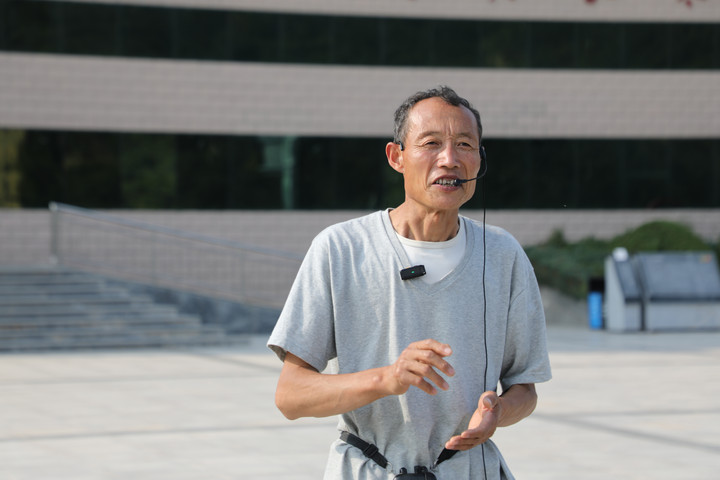
Core Viewpoint - The article highlights the dedication and transformation of Wang Yougong, a former oil worker who became a passionate guide at the Military-Civilian Production Memorial Hall in Huachi County, Gansu Province, emphasizing the importance of preserving historical memory and promoting self-reliance through education and storytelling [3][5][9]. Group 1: Historical Context - The Military-Civilian Production Memorial Hall showcases the fervent spirit of the military-civilian production movement initiated by the 129th Division of the Eighth Route Army in April 1943 [3]. - The memorial hall serves as a platform to educate visitors about the historical significance of self-reliance and economic development during wartime [7]. Group 2: Wang Yougong's Journey - Wang Yougong transitioned from a well-paying job in the oil industry, earning 4,000 yuan per month, to a role as a museum administrator with a salary of 1,800 yuan, valuing the spiritual fulfillment over financial gain [5][8]. - Initially struggling with public speaking, Wang improved his storytelling skills by collecting oral histories and engaging with veterans, leading to a more natural and relatable presentation style [4][5]. Group 3: Visitor Engagement - Wang's innovative approach to engaging visitors includes using historical tools and artifacts to create immersive experiences, such as demonstrating the exchange of grain for cloth, which resonates deeply with students [7]. - Feedback from visitors, including veterans, highlights the emotional impact of Wang's storytelling, reinforcing the memorial's role as a "spiritual lighthouse" [9]. Group 4: Commitment and Dedication - Wang Yougong maintains a meticulous record of his efforts, including restoring artifacts and compiling oral histories, demonstrating his commitment to preserving the legacy of the military-civilian production movement [8]. - His dedication is evident in his willingness to face challenges, such as braving harsh weather conditions to ensure the memorial's upkeep and visitor safety [8].