全流量补燃循环

Search documents
商业火箭迎关键验证窗口:发动机决定太空探索深度,3D打印则是降本核心!
Hua Er Jie Jian Wen· 2026-01-23 12:29
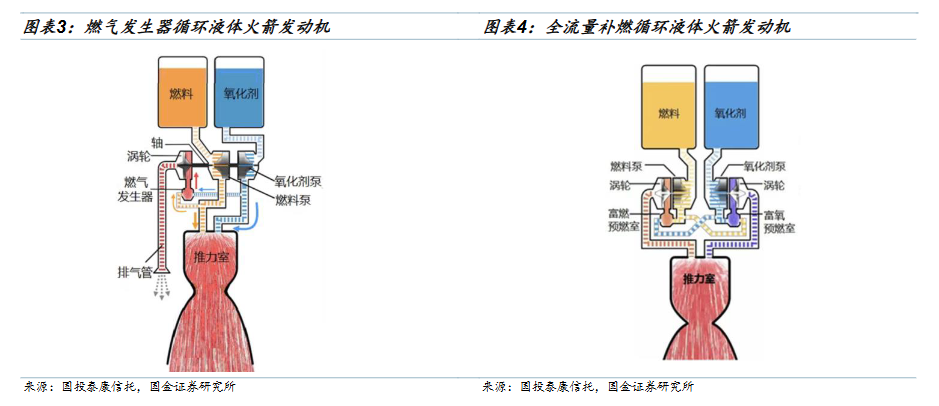
Core Insights - The Chinese commercial space industry is entering a critical development phase, with 2026-2027 identified as a key validation window for medium to large liquid rocket companies, marking the first flights of several rockets and the practical testing of reusable technology [1][3] - The demand for satellite internet and the need for cost-effective launch capabilities are becoming core competitive advantages, with companies needing to achieve a payload capacity of at least 2.8 tons for profitability in near-polar orbits [1][4] - Engine technology advancements, particularly full-flow staged combustion and 3D printing, are seen as the most certain investment logic within the industry [1][5] Group 1: Market Dynamics - The transition from small solid rockets to medium and large liquid reusable rockets is causing profound changes in the supply chain, with core components like 3D printing and large tanks gaining market attention due to their reliability and cost-effectiveness [2] - The success record and payload capacity of commercial rockets are fundamental standards for assessing their commercial value, with a shift towards liquid rockets and reusable technology driven by large-scale satellite networking demands [3][4] Group 2: Technical Developments - The engine evolution is trending towards higher thrust and full-flow staged combustion, with current engines primarily using gas generator cycles, while future designs are expected to adopt more efficient technologies [5][8] - The demand for increased payload capacity is pushing the need for engines with thrust levels reaching 120 tons, and companies are exploring innovative recovery methods to reduce costs [4][5] Group 3: 3D Printing Impact - 3D printing has become a core production capability in commercial aerospace, significantly reducing production cycles and weight, with over 60% of parts in new rocket engines being produced through this technology [9][10] - The Chinese 3D printing market is projected to reach approximately 41.5 billion yuan in 2024, with the aerospace sector accounting for about 16.7% of this market [9][10] Group 4: Structural and Control System Innovations - Rocket structural components are evolving towards larger sizes to meet increased payload demands, with materials like stainless steel and carbon fiber composites being adopted to reduce weight and costs [12] - The control systems are also being upgraded to meet the high-frequency launch requirements of commercial space, with a shift from traditional electric servos to electromechanical hydraulic systems [12]