
天鹊系列发动机

Search documents
中小盘行业点评:液氧甲烷-定义商业航天的“未来燃料”
GOLDEN SUN SECURITIES· 2026-03-29 08:24
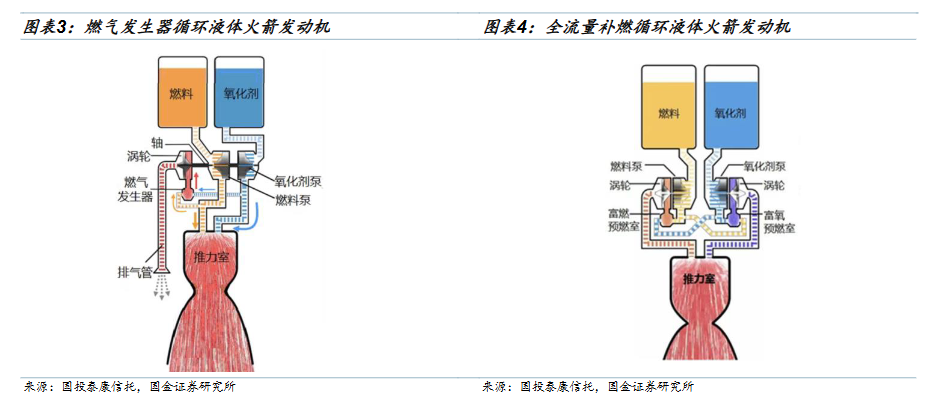
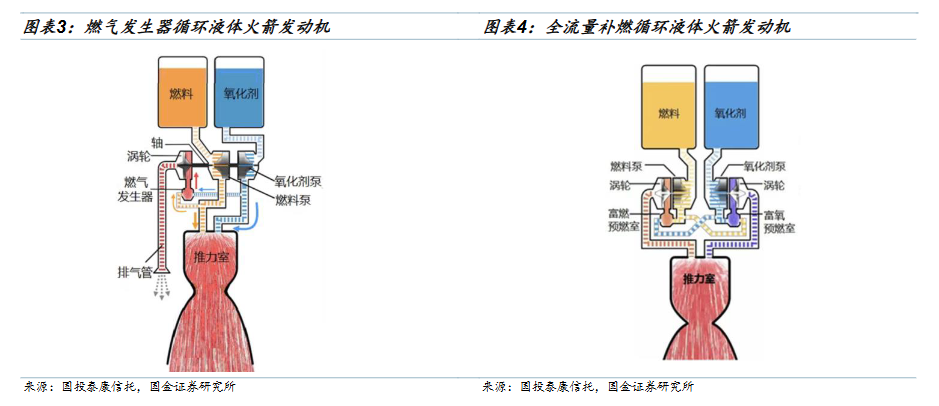
Investment Rating - The report maintains an "Accumulate" rating for the industry [5] Core Insights - Liquid oxygen methane is emerging as the "future fuel" for commercial space travel due to its cost-effectiveness, environmental benefits, and reusability, positioning it as a key driver for the next generation of reusable rockets [2][4] - The successful launch of the world's first liquid oxygen methane rocket in 2023 marks a significant milestone, indicating the technology's transition from concept to practical application [2] - The commercial space industry's primary goal is to drastically reduce the cost per kilogram of payload, with liquid oxygen methane being a crucial pathway to achieve this [4] Summary by Sections Technical Necessity - Liquid oxygen methane offers a superior balance of performance and cost compared to traditional propellants, addressing issues like carbon buildup associated with kerosene and the high costs of liquid hydrogen [2][3] - It provides an optimal solution with excellent cooling properties, a wide range of thrust adjustment capabilities, and outstanding multiple start characteristics, making it ideal for reusable rocket engines [3] Commercial Logic - The widespread availability and low cost of methane (a primary component of natural gas) facilitate quick turnaround times for rocket engines, significantly reducing refurbishment time and labor costs [4] - The potential for in-situ production of liquid oxygen methane on extraterrestrial bodies like Mars and the Moon supports future deep space exploration and base construction [4] Technical Challenges - The performance limits and development complexity of liquid oxygen methane engines are determined by the "power cycle" method used, with a clear global competitive landscape emerging [6] - Different cycles, such as gas generator cycles and full-flow staged combustion cycles, present varying levels of complexity and performance, with SpaceX's Raptor engine representing the highest performance level achieved [6] Industry Chain Opportunities - The report identifies key segments within the industry chain that are poised for growth, including: 1. Leading manufacturers and engine developers that have successfully validated liquid oxygen methane technology [7] 2. Special metal materials that meet the extreme requirements of high-temperature environments [7] 3. Additive manufacturing (3D printing) technologies that enable the production of complex engine components [7] 4. Fuel preparation and launch suppliers that ensure a stable and low-cost supply of liquid oxygen methane [7]
液氧甲烷:定义商业航天的“未来燃料”
GOLDEN SUN SECURITIES· 2026-03-29 08:05
Investment Rating - The report maintains an "Increase" rating for the industry [5] Core Insights - Liquid oxygen methane is emerging as the "future fuel" for commercial space travel due to its cost-effectiveness, environmental benefits, and reusability, positioning it as a key driver for the next generation of reusable rockets [2][4] - The successful launch of the world's first liquid oxygen methane rocket in 2023 marks a significant milestone, indicating the technology's transition from concept to practical application [2] - The commercial space industry's primary goal is to drastically reduce the cost per kilogram of payload, with liquid oxygen methane being a crucial pathway to achieve this [4] Summary by Sections Technical Necessity - Liquid oxygen methane offers a superior balance of performance and cost compared to traditional propellants, addressing issues like carbon buildup associated with kerosene and the high costs of liquid hydrogen [3][4] - It provides optimal performance characteristics, including excellent cooling properties and thrust modulation capabilities, making it ideal for reusable rocket engines [3] Commercial Logic - The widespread availability and low cost of methane contribute to reduced refurbishment times and labor costs, facilitating high-frequency reuse and lowering launch costs [4] - The potential for in-situ resource utilization of methane on extraterrestrial bodies supports future deep space exploration and base construction [4] Technical Challenges - The global competitive landscape for liquid oxygen methane engines is defined by varying levels of technical complexity, with different cycles (gas generator, staged combustion, full flow) presenting distinct challenges and performance levels [6] - China has achieved a "first launch" advantage in engineering efficiency, but still lags in cutting-edge technologies compared to international leaders [6] Industry Chain Opportunities - The report identifies key segments for investment, including: 1. Leading manufacturers and engine developers that have successfully validated liquid oxygen methane technology [7] 2. Specialized materials for high-temperature environments [7] 3. Additive manufacturing technologies that enable the production of complex engine components [7] 4. Suppliers of liquid oxygen methane fuel, emphasizing the importance of stable and low-cost fuel supply for industry operations [7]
商业火箭迎关键验证窗口:发动机决定太空探索深度,3D打印则是降本核心
Hua Er Jie Jian Wen· 2026-01-23 14:43
Core Viewpoint - The key to competition in the commercial aerospace industry lies in surpassing the profitability threshold of "2.8 tons payload at 800 km orbit," which is fundamentally linked to advancements in upstream hard technology, particularly in engine performance and 3D printing capabilities [1][2]. Industry Analysis - The commercial aerospace sector is entering a critical development phase, with 2026-2027 identified as a pivotal window for Chinese commercial rocket companies, marking the first flights of several medium to large liquid rockets and the practical testing of reusable technology [1][2]. - The demand for satellite internet, such as GW constellations, is driving the need for enhanced payload capacity and cost control, making companies that can meet the "2.8 tons at 800 km" threshold key players in the market [1][2]. Technological Advancements - Engine technology is evolving towards full-flow staged combustion and large thrust capabilities, which are essential for increasing rocket performance limits. Currently, most Chinese commercial rocket engines utilize gas generator cycles, but the industry is shifting towards more efficient full-flow staged combustion designs [3][4]. - 3D printing has become a core production capability in the aerospace sector, significantly reducing production cycles and weight. For instance, production times have decreased from 50 hours to 10 hours, with weight reductions exceeding 50% for certain components [10][11]. Market Dynamics - The transition from small solid rockets to medium and large liquid reusable rockets is reshaping the supply chain, with a focus on core components like 3D printing, large storage tanks, and servo systems, which are gaining increased market attention [2][3]. - The Chinese 3D printing market is projected to reach approximately 41.5 billion yuan in 2024, with the aerospace sector accounting for about 16.7% of this market, highlighting the growing importance of this technology in commercial rocket manufacturing [10][11]. Structural and Material Innovations - As payload capacities increase, rocket structures are evolving towards larger dimensions, with tank costs comprising over 60% of the overall structure costs. New materials, such as stainless steel, are being adopted for storage tanks due to their strength and cost-effectiveness [13]. - The control systems in rockets are also being upgraded to meet the demands of high-frequency launches, transitioning from traditional electric servos to electromechanical hydraulic servos, creating new market opportunities for related supply chain companies [13].

商业火箭迎关键验证窗口:发动机决定太空探索深度,3D打印则是降本核心!
Hua Er Jie Jian Wen· 2026-01-23 12:29
Core Insights - The Chinese commercial space industry is entering a critical development phase, with 2026-2027 identified as a key validation window for medium to large liquid rocket companies, marking the first flights of several rockets and the practical testing of reusable technology [1][3] - The demand for satellite internet and the need for cost-effective launch capabilities are becoming core competitive advantages, with companies needing to achieve a payload capacity of at least 2.8 tons for profitability in near-polar orbits [1][4] - Engine technology advancements, particularly full-flow staged combustion and 3D printing, are seen as the most certain investment logic within the industry [1][5] Group 1: Market Dynamics - The transition from small solid rockets to medium and large liquid reusable rockets is causing profound changes in the supply chain, with core components like 3D printing and large tanks gaining market attention due to their reliability and cost-effectiveness [2] - The success record and payload capacity of commercial rockets are fundamental standards for assessing their commercial value, with a shift towards liquid rockets and reusable technology driven by large-scale satellite networking demands [3][4] Group 2: Technical Developments - The engine evolution is trending towards higher thrust and full-flow staged combustion, with current engines primarily using gas generator cycles, while future designs are expected to adopt more efficient technologies [5][8] - The demand for increased payload capacity is pushing the need for engines with thrust levels reaching 120 tons, and companies are exploring innovative recovery methods to reduce costs [4][5] Group 3: 3D Printing Impact - 3D printing has become a core production capability in commercial aerospace, significantly reducing production cycles and weight, with over 60% of parts in new rocket engines being produced through this technology [9][10] - The Chinese 3D printing market is projected to reach approximately 41.5 billion yuan in 2024, with the aerospace sector accounting for about 16.7% of this market [9][10] Group 4: Structural and Control System Innovations - Rocket structural components are evolving towards larger sizes to meet increased payload demands, with materials like stainless steel and carbon fiber composites being adopted to reduce weight and costs [12] - The control systems are also being upgraded to meet the high-frequency launch requirements of commercial space, with a shift from traditional electric servos to electromechanical hydraulic systems [12]
冲刺商业火箭火箭第一股,蓝箭航天上市获受理
Xuan Gu Bao· 2026-01-04 23:18
Group 1 - Blue Arrow Aerospace's IPO has been accepted, aiming to raise 7.5 billion yuan for projects related to reusable rocket capacity enhancement and technology improvement [1] - The company is a leading private commercial aerospace enterprise in China, having successfully launched the world's first liquid oxygen-methane rocket, "Zhuque-2," in 2023, and plans to complete the first flight of the "Zhuque-3" reusable rocket by December 2025 [1] - The IPO marks the first application of the new listing standards for commercial rocket companies issued by the Shanghai Stock Exchange, indicating strong support from the capital market for the commercial aerospace industry [1][2] Group 2 - The approval of Blue Arrow's IPO signifies increased support from the capital market for the commercial aerospace sector, which is expected to accelerate industry development [2] - Technological advancements such as 3D printing are reshaping rocket propulsion, with Blue Arrow's Tianque series engines utilizing this technology to reduce costs and enhance thrust adjustment capabilities [2] - The commercial aerospace industry is projected to become a trillion-yuan market, driven by the rapid deployment of satellites and the demand for high-frequency, low-cost rocket launches [2] Group 3 - Companies like Srey New Materials and Nova Star Cloud have established deep partnerships with Blue Arrow Aerospace, focusing on the industrialization of liquid rocket engine components, with an initial investment of 230 million yuan planned for the first phase [3] - Nova Star Cloud has completed its investment in Blue Arrow Aerospace through a venture capital fund, holding a 0.3582% stake in the company [3]
朱雀三号总指挥:最后一脚刹车没踩好
财联社· 2025-12-15 08:54
Core Viewpoint - The successful launch of China's first reusable rocket, Zhuque-3, marks a significant milestone in the country's commercial space history, despite the failure of the first stage recovery [1][4][27]. Group 1: Launch and Recovery - Zhuque-3 was launched on December 3, achieving successful orbital insertion for the second stage, while the first stage recovery was unsuccessful due to a failure in the landing procedure [2][4][6]. - The rocket's second stage completed a 1400-second glide, laying the groundwork for future payload capacity improvements [1][27]. - The failure of the first stage recovery was attributed to a miscalculation during the landing burn, which resulted in the rocket crashing approximately 40 meters from the intended landing zone [6][8]. Group 2: Development Background - The development of Zhuque-3 is part of a broader trend in China's commercial space sector, which aims to provide low-cost, high-capacity launch services [2][9]. - The rocket's design incorporates advancements such as a stainless steel exterior for enhanced heat resistance and a more powerful engine configuration, increasing thrust and payload capacity [21][22]. - The journey to Zhuque-3's launch involved overcoming previous failures, including the unsuccessful launch of Zhuque-1 and Zhuque-2, which provided valuable lessons for the team [18][19][29]. Group 3: Industry Context and Future Prospects - The commercial space industry in China is rapidly evolving, with increasing competition in low Earth orbit, particularly in satellite internet deployment [24][25]. - The successful orbital insertion of Zhuque-3 is crucial for meeting the growing demand for satellite services and positioning the company favorably in the market [11][30]. - The industry is expected to continue innovating, with upcoming launches like the Long March 12A rocket also focusing on recovery technology and satellite constellation needs [29].
政策资本同频共振,可回收火箭与卫星应用成商业航天关键 | 前瞻十五五㉗
Xin Lang Cai Jing· 2025-12-08 04:24
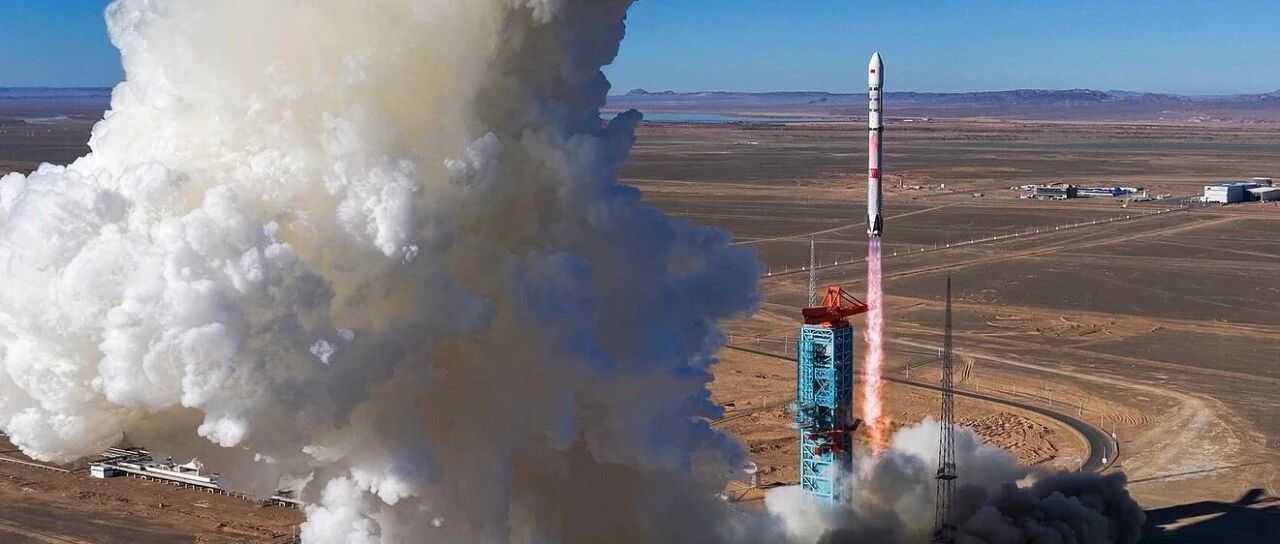
Core Insights - The commercial aerospace industry in China is experiencing a surge in activity, particularly following the successful maiden flight of the Zhuque-3 rocket, which has heightened market enthusiasm [1] - The Chinese government is set to implement significant policies by 2025 to support the commercial aerospace sector, focusing on regulatory frameworks, industry development, and capital support [1] - The establishment of a dedicated Commercial Aerospace Department by the National Space Administration signifies a commitment to high-quality development in the sector [1] Group 1: Policy and Regulatory Developments - The "14th Five-Year Plan" emphasizes the acceleration of building a strong aerospace nation and the development of strategic emerging industry clusters, including aerospace [1] - The National Space Administration has released an action plan for promoting high-quality and safe development in commercial aerospace from 2025 to 2027, aiming for significant advancements in the sector [1][7] Group 2: Industry Growth and Key Players - The construction of low Earth orbit satellite internet is identified as a priority for the commercial aerospace sector during the "14th Five-Year Plan" period, with companies like Blue Arrow Aerospace, Tianbing Technology, and others leading the charge [3] - Companies are focusing on developing reusable rocket technology, which is seen as essential for future projects like "10,000 satellites in orbit" and commercial manned flights [3] Group 3: Financing and Investment Landscape - Recent changes in financing for the commercial aerospace industry have been significant, with the China Securities Regulatory Commission introducing policies to support the listing of unprofitable companies in the Sci-Tech Innovation Board [5][6] - At least eight commercial aerospace companies are currently in the IPO process, reflecting strong market interest and optimism regarding the sector's future [6] Group 4: Strategic Recommendations - Industry leaders suggest that the government should streamline launch approval processes and encourage companies to build their own launch facilities to address current bottlenecks in rocket capacity [4] - There is a call for collaboration among different companies to leverage diverse technological innovations and create a cohesive strategy to enhance competitiveness in the international market [7]
朱雀三号发射入轨,关注我国商业航天产业进展
Changjiang Securities· 2025-12-05 01:56
Investment Rating - The report maintains a "Positive" investment rating for the industry [8] Core Insights - The successful launch of the Zhuque-3 rocket on December 3 marks a significant step in China's commercial space industry, despite the failure of the first-stage recovery test [2][5] - The advancement in reusable rocket technology is expected to significantly reduce launch costs, thereby accelerating the development of China's commercial space sector [2][11] - The report emphasizes the importance of monitoring key suppliers across the industry chain, particularly those related to satellite applications [2][11] Summary by Sections Event Description - The Zhuque-3 rocket successfully completed its flight mission and entered the designated orbit, although the first-stage recovery test encountered issues leading to a failure in soft landing [5][11] Event Commentary - The Zhuque-3 rocket, developed by Blue Arrow Aerospace, is designed for large constellation networking tasks and features a low-cost, high-capacity, and reusable design. The rocket's successful flight operations validate the overall mission plan and system interfaces, laying a foundation for future reusable launches [11] - The report highlights that if China achieves reusable rocket technology, it could reduce launch costs by approximately 70%, bringing the cost down from around 100,000 yuan per kilogram to about 20,000 yuan per kilogram [11] - The report compares China's progress in reusable rocket technology with that of international competitors, noting that while SpaceX and Blue Origin have achieved recovery, they took nearly a decade to do so, whereas China aims to achieve similar milestones within three years [11]
朱雀三号入轨成功回收失败!航天探索没有坦途,失败也是宝贵财富
Mei Ri Jing Ji Xin Wen· 2025-12-03 13:05
Core Viewpoint - The successful launch of the Zhuque-3 rocket by Blue Arrow Aerospace marks a significant step in China's commercial space industry, despite the failure of the recovery test, highlighting the importance of patience and perseverance in developing reusable rocket technology [1][6]. Group 1: Rocket Development and Technology - Zhuque-3 is designed as a large payload, low-cost, reusable rocket using liquid oxygen and methane, featuring the domestically developed Tianque engine and a nine-engine parallel power system [1][3]. - The rocket's stainless steel structure significantly reduces manufacturing costs and production time, showcasing innovative engineering in the commercial space sector [1][3]. - The development timeline of Zhuque-3, from its introduction to the recent test flight, is only two years, indicating a rapid pace of innovation in a highly competitive market [3][4]. Group 2: Market Dynamics and Competition - The global commercial space market reached several hundred billion dollars by 2025, characterized by a "winner-takes-all" dynamic, where lower launch costs and safety are critical for securing contracts [4]. - SpaceX has established a significant lead in the market, making it essential for competitors like Blue Arrow Aerospace to quickly catch up to gain market share [4][6]. - The Zhuque-3 team must engage in rigorous analysis and technical improvements following the test flight to prepare for future launches, emphasizing the need for continuous development in the industry [4][6]. Group 3: Learning from Failures - The journey of space exploration is fraught with challenges, and the failure to recover Zhuque-3 is part of the iterative process of testing and improvement, similar to the early struggles of SpaceX [6]. - The mission provided valuable data on the rocket's performance, which is crucial for future development and the goal of achieving reliable recovery and reuse [6]. - The experiences of Blue Arrow Aerospace, SpaceX, and Blue Origin underline the importance of resilience, hard work, and the willingness to learn from failures in advancing space technology [6].
未来产业潮涌浙江湖州 691亿项目锚定长三角增长极
Zhong Guo Xin Wen Wang· 2025-05-11 01:50
Group 1 - The future of cities is envisioned as green and full of possibilities, with a focus on long-term development strategies as demonstrated by Huzhou's Future Conference [1] - A total investment of 69.12 billion yuan was signed for 106 projects, covering sectors such as new energy vehicles, semiconductors, biomedicine, and high-end equipment manufacturing [1] - Huzhou's city-level capabilities are expected to accelerate, becoming a significant growth pole in the Yangtze River Delta urban agglomeration [1] Group 2 - In the first quarter of this year, Huzhou attracted 212 projects with over 100 million yuan investment, marking a year-on-year increase of 55 projects [1] - The city is experiencing a surge in high-precision spatiotemporal data, with over 10 billion data points generated daily, connecting digital and real-world applications [2] - Huzhou has established a dual narrative of being a high-quality living city and a low-cost entrepreneurial city, with over 3,200 youth innovation projects launched in the past three years [2] Group 3 - Huzhou is rapidly developing its innovation landscape, with the establishment of the Xisai Science Valley and the introduction of 25 research teams in two years [3] - The city has achieved a significant breakthrough in medical device development, marking a historic transition from "0" to "1" in large-scale medical equipment [3] - Huzhou's R&D investment intensity reached 3.4%, ranking third in Zhejiang Province, with a sustainable development index ranked first nationally for two consecutive years [3] Group 4 - Huzhou has established 15 talent innovation "flyovers" in major cities, attracting 203 enterprises and nurturing 37 companies for local industrialization [4][5] - The city is actively supporting businesses, as seen in the case of Zhejiang Xinzi Precision Machinery Co., which is building a dock to reduce logistics costs [6] - Huzhou is fostering a welcoming environment for entrepreneurs, with initiatives like the establishment of a private enterprise festival and regular government-enterprise dialogue sessions [6]