3D打印

Search documents
新书爆料:扎克伯格沉迷VR,错过了收购DeepMind,被谷歌抢下“AI最大交易”
硬AI· 2026-03-30 00:58
Core Insights - The article discusses the strategic acquisition of DeepMind by Google in 2014, highlighting the competitive dynamics between Google and Facebook during the negotiation process [2][3] - The acquisition is framed as a pivotal moment in the AI landscape, establishing Google's leadership in the field [3] Group 1: Strategic Conversations - In June 2013, Google CEO Larry Page met with DeepMind founder Demis Hassabis at a party, suggesting that Hassabis leverage Google's resources to achieve his goal of building artificial general intelligence (AGI) [6] - Hassabis expressed his frustration with fundraising and recognized the value of utilizing Google's computational resources to tackle intelligence problems [6] Group 2: Negotiation Dynamics - In the fall of 2013, Hassabis and his co-founder engaged in secret negotiations with Google, initially avoiding price discussions to focus on research budgets and AI safety governance [8] - Suleyman insisted on establishing an independent oversight committee for AI technology deployment, reflecting concerns about potential misuse by Google [9] Group 3: Competitive Bidding - To pressure Google, DeepMind approached Facebook, where a proposal was made to acquire shares at a lower price but with substantial signing bonuses for the founders [10] - Hassabis conducted a covert assessment of Mark Zuckerberg's understanding of AI, concluding that despite Facebook's higher offer, he preferred to work with someone who truly comprehended AI's potential [11] Group 4: Talent Acquisition Pressure - Following the failed bid, Zuckerberg sought to recruit deep learning pioneer Yann LeCun to build Facebook's AI research team, targeting DeepMind talent [13] - In December 2013, concerns about potential talent loss prompted Hassabis to expedite negotiations with Google, leading to a final agreement [14] Group 5: Final Agreement - In January 2014, Google completed the acquisition of DeepMind for $650 million, including unconventional terms such as the establishment of an independent ethics and safety review committee [16] - The deal faced significant internal resistance at Google due to its implications for asset control, but was ultimately approved based on confidence in Hassabis's vision for AI [16] - Over the following decade, Google invested billions into DeepMind, solidifying its status as a leading AI research institution, far exceeding initial financial projections [17]




BAT稳价有望提高HiLo市占,内需二轮家居个护避险
SINOLINK SECURITIES· 2026-03-29 06:54
Investment Rating - The report does not explicitly state an investment rating for the industry Core Insights - The report highlights a collaboration between Ninebot and Pop Mart to launch a co-branded electric vehicle product, targeting the young consumer demographic and enhancing brand engagement through IP integration [1][8] - In the new tobacco sector, BAT's strategy to maintain stable prices for its Glo products amidst competitors' price increases is expected to enhance market share, particularly for its Hilo brand [11][12] - The home furnishing market shows a decline in domestic sales, with significant drops in transaction volumes for both new and second-hand homes, while furniture exports from China have seen substantial growth [13][14] - The paper packaging sector is experiencing stable growth, with fluctuations in raw material prices and a steady demand for packaging products driven by consumer retail trends [15] - The personal care and AI glasses sectors are witnessing significant revenue growth, with companies like LeShuShi reporting strong performance and new product launches in the AI glasses market [16][17] - Xiaomi's ecosystem continues to expand, with strong revenue growth driven by its AI and automotive sectors, indicating a solid long-term growth trajectory [18][19] - The pet food industry is evolving with new product offerings and quality assurance initiatives, aiming to enhance consumer trust and safety standards [20][21] Summary by Sections 1. Sub-sector Insights - **Trendy Toys**: Ninebot's collaboration with Pop Mart aims to attract Gen Z consumers by integrating emotional value into products [1][8] - **New Tobacco**: BAT's pricing strategy is designed to capitalize on competitors' price hikes, potentially increasing market share for its Glo brand [11][12] - **Home Furnishing**: Domestic sales are under pressure, but furniture exports are robust, indicating a mixed outlook for the sector [13][14] - **Paper Packaging**: The sector is stable, with demand driven by retail consumption, despite some price fluctuations in raw materials [15] - **Personal Care & AI Glasses**: LeShuShi reports significant revenue growth, while the AI glasses market is set for expansion with new product launches [16][17] - **Xiaomi Group**: The company shows strong revenue growth across its ecosystem, particularly in AI and automotive sectors [18][19] - **Pet Food**: The industry is focusing on quality assurance and new product development to enhance consumer trust [20][21] 2. Key Data and Trends - **New Tobacco Exports**: China's electronic cigarette exports have increased significantly, with a year-on-year growth of 51.2% in February [32][34] - **Consumer Trends**: The report notes a shift in consumer preferences towards quality over price in the pet food sector, driven by initiatives like JD's quality assurance program [20][21] - **Sales Data**: The report provides various sales figures across sectors, indicating trends in consumer behavior and market dynamics [39]



3D打印行业研究:重视 DED技术在商业航天成长潜力
SINOLINK SECURITIES· 2026-03-26 15:02
Investment Rating - The report suggests a positive outlook for the commercial aerospace 3D printing sector, particularly for companies actively engaging in the Directed Energy Deposition (DED) technology route [6]. Core Insights - DED is one of the mainstream technologies for metal 3D printing, characterized by its ability to melt materials using focused thermal energy and deposit them layer by layer [2][13]. - International companies like Optomec and Insstek have pioneered the commercialization of DED technology, while domestic firms are catching up with significant advancements in various applications [3][48]. - DED technology offers unique advantages in commercial aerospace applications, such as no size limitations, multi-material composite printing capabilities, and the ability to repair and remanufacture components [4][61]. Summary by Sections What is DED? - DED is categorized as one of the main technology routes for metal 3D printing, alongside Powder Bed Fusion (PBF) [13][14]. - The DED process involves using a focused laser beam to melt materials, allowing for the creation of near-net-shape components [17][19]. International and Domestic Developments - Companies like Optomec and Insstek have successfully commercialized DED technology, with applications in industrial fields such as aerospace [3][42]. - Domestic companies, including Zhongke Yucheng and Jiuyujianmu, are making significant strides in DED technology, particularly in aerospace and automotive sectors [48][55]. Potential of DED in Commercial Aerospace - DED technology is viewed as having a unique technological advantage in the commercial aerospace sector, particularly for certain components that require complex geometries and multi-material structures [4][61]. - The technology allows for significant reductions in production time and costs, as demonstrated by NASA's advancements in DED applications [5][76]. Investment Recommendations - The report recommends focusing on domestic companies that are actively developing DED technology, as the commercial aerospace industry is expected to experience rapid growth and increased adoption of 3D printing technologies [6][95].
拓竹招人!SHEIN招人!10+好公司一起招人!丨人才留言板第二期
36氪· 2026-03-26 10:14
Group 1 - The article highlights over 50 quality job positions across various fields including AI large models, embodied intelligence, quantum computing, 3D printing, and semiconductors, aiming to help individuals find their next career breakthrough [2] - The featured companies include state-owned AI firms, listed technology leaders, global unicorns, and cutting-edge tech startups, with over 60% of the positions being Series B and above [3] Group 2 - Zhongchengjiao Technology is the first state-owned transportation vertical large model company in Shanghai, possessing a data asset worth hundreds of billions and a dual-engine technology system [6] - Qunhe Technology, a Pre-IPO company, is the largest space design platform globally and the parent company of Cool Home, led directly by its founder and chief scientist [8] - Meiri Interactive, a listed company, is recognized for having the highest "data inclusion rate" in China, empowering various industries with data intelligence [13] - Lipusi Semiconductor, in its B+ round, focuses on high-end SiC modules for new energy and high-power charging, actively recruiting top talent [15] - Tuo Zhu Technology, a B-round unicorn in 3D printing, has redefined personal manufacturing with its extreme hardware and software integration [19] - SHEIN, a leading global fashion retail platform, leverages large-scale data and algorithm applications [13]


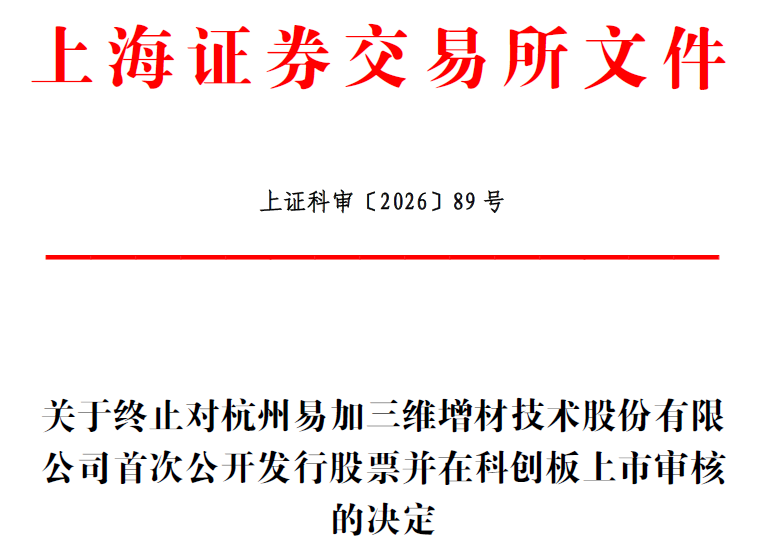
易加增材终止上交所IPO 原拟募资12亿元中信证券保荐
Zhong Guo Jing Ji Wang· 2026-03-25 03:10
Core Viewpoint - Yijia Additive Manufacturing has withdrawn its application for an initial public offering (IPO) on the Sci-Tech Innovation Board, leading to the termination of the review process by the Shanghai Stock Exchange [2][3]. Company Overview - Yijia Additive Manufacturing focuses on the research, production, and sales of industrial-grade additive manufacturing (3D printing) equipment and is classified as a high-tech enterprise [3]. - The controlling shareholder is Hangzhou Yongsheng Holding Group Co., Ltd., which holds 30.64% of the company's shares [3]. - The actual controllers, Li Cheng and Li Jianhao, collectively control 54.53% of the voting rights in the company [3]. IPO Details - The company initially planned to issue up to 29.22 million shares, representing at least 25% of the total share capital post-issue, without involving public sales by shareholders [3]. - The intended fundraising amount was approximately 1.204 billion yuan (120,450.88 million yuan) for various projects, including expansion and R&D [3][4]. Project Funding Breakdown - The total investment for the planned projects is approximately 1.337 billion yuan (133.765 million yuan), with the following allocations: - Beijing Yijia Three-Dimensional Metal 3D Printing Expansion Project: 558.1064 million yuan, with 464.4274 million yuan from the fundraising [4]. - Hangzhou Additive Manufacturing Equipment Industrialization Project: 481.0044 million yuan, with 441.5403 million yuan from the fundraising [4]. - Hangzhou R&D Center Construction Project: 186.6444 million yuan, fully funded by the fundraising [4]. - Technical Service Network Construction Project: 111.8967 million yuan, fully funded by the fundraising [4].

TCT观察丨多头、全彩与AI,谁在定义3D打印的未来?
雷峰网· 2026-03-25 00:52
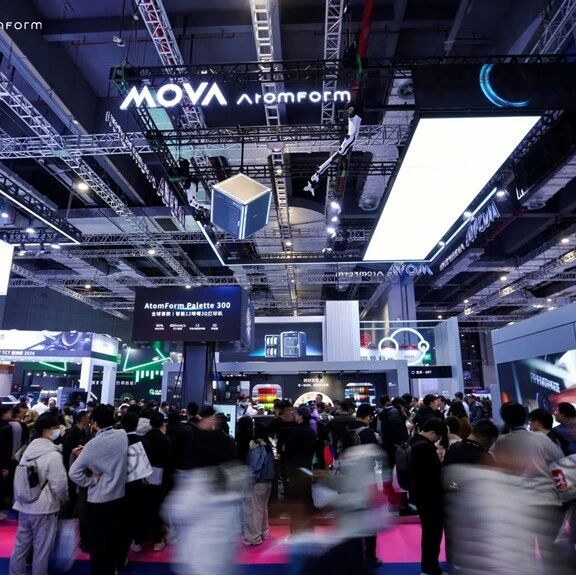
Core Viewpoint - The article discusses the competitive landscape of 3D printing technology, focusing on multi-head 3D printing, full-color 3D printing, and the integration of AI in 3D modeling, highlighting the emergence of new players and innovations in the industry [4][12][24]. Group 1: Multi-Head 3D Printing - Multi-head 3D printing is entering a development phase with various brands competing, including Flashforge, Wonder Maker, and Xianyi, showcasing their products at the TCT Asia exhibition [3][11]. - Flashforge's Creator 5 series is noted for its innovative design and compact size, featuring a detachable extruder and a four-head model priced between 4000-6000 RMB [6][8][10]. - The rapid growth of multi-head printing technology has made it a mainstream configuration, with significant advancements in hardware performance exceeding industry expectations [11][12]. Group 2: Full-Color 3D Printing - Full-color 3D printing is seen as the ultimate goal for desktop 3D printing, with companies like Atom Reconstruct showcasing their Mojo 1 UV printer, which supports vibrant color output and is designed for consumer use [14][18]. - The Flashforge CJ270 is highlighted as a representative of desktop full-color 3D printers, utilizing multi-head inkjet and photopolymerization technology, capable of producing over 10 million colors [20]. - Despite advancements, the high cost and technical challenges of full-color 3D printing limit its immediate adoption in home settings [21][22]. Group 3: AI Integration in 3D Printing - AI-driven 3D modeling software, such as Tripo AI and Hitem3D AI, is emerging as a crucial component in the 3D printing ecosystem, enabling users to create models easily without extensive technical knowledge [24][27]. - The integration of AI tools is expected to democratize 3D content creation, allowing ordinary users to generate printable models quickly, thus expanding the consumer base for 3D printing [27][28]. - The shift towards a holistic ecosystem encompassing hardware, content, and applications signifies a transformation in the competitive landscape of the 3D printing industry [24][27].
国泰海通|“远望又新峰”2026春季策略会观点集锦(下)——消费、医药、科技、先进制造、金融
国泰海通证券研究· 2026-03-24 14:00
Group 1: Food and Beverage Industry - The core investment strategy for the food and beverage sector in 2026 emphasizes the importance of price increases, with a focus on resilient segments such as condiments, beer, and beverages [4][5] - The white liquor industry is nearing the end of its adjustment phase, transitioning from a "U-shaped" to a "V-shaped" recovery, with expectations of a quicker bottoming process starting from Q3 2025 [4] - The beer sector is expected to improve due to the stabilization of dining scenarios and a gradual recovery in consumer spending, with historical trends indicating profitability benefits during periods of rising CPI [5] Group 2: Consumer Goods - The consumer goods sector is witnessing a bottoming out, with a focus on companies that can effectively pass on price increases amidst diminishing cost advantages [5] - The demand for condiments is anticipated to recover, with expectations of price increases and improved profitability in the dairy sector as supply and demand cycles align [5] Group 3: Beauty and Personal Care - The beauty and personal care industry is experiencing a recovery in demand, with significant growth in the cosmetics and personal care segments, particularly in online sales [7][8] - The market is seeing a resurgence in high-end and affordable brands, with domestic brands maintaining rapid growth amidst a competitive landscape [8] Group 4: Service Consumption - The service consumption sector is benefiting from favorable policies, with a focus on travel and leisure services, as well as improvements in traditional retail [10][11] - The education sector is expected to see robust demand, particularly in vocational training and skill development, supported by policy initiatives [10] Group 5: Home Appliances - The home appliance industry is awaiting a recovery in domestic demand, with a focus on companies that possess pricing power amidst rising costs [15] - The global supply chain for home appliances is becoming more resilient, with expectations of improved export conditions [15] Group 6: 3D Printing Industry - The 3D printing market is projected to grow significantly, driven by both industrial and consumer demand, with a forecasted CAGR of 18% from 2024 to 2034 [18][19] - The demand for PLA materials in consumer-grade 3D printing is expected to increase, with domestic manufacturers ramping up production capabilities [19] Group 7: Textile and Apparel - The textile and apparel sector is showing signs of recovery, with strong growth in retail sales and exports, particularly in the context of rising cotton prices [23][24] - The market is expected to see a shift towards mid-to-high-end products, with brands focusing on innovation and sustainability [24] Group 8: Agriculture - The agricultural sector is anticipated to benefit from rising commodity prices, with a focus on the recovery of pig farming and the potential for pet product valuations to rebound [27] Group 9: Pharmaceutical Industry - The pharmaceutical sector is witnessing a shift towards innovative drugs, with a focus on oncology and metabolic treatments, as well as improvements in domestic demand for medical devices [30][31] Group 10: Financial Services - The financial services sector is focusing on wealth management and internationalization, with a notable increase in demand for investment consulting services [59][62] - The insurance industry is expected to see stable growth in premium income, driven by savings demand and improved asset-liability management [66]

申万宏源证券:晨会报告-20260323
Shenwan Hongyuan Securities· 2026-03-23 02:06
Group 1: EDA Industry Insights - The report highlights the rapid importance of multi-physical simulation in the EDA industry, indicating a trend towards the integration of EDA and CAE tools [12][10] - The semiconductor industry is entering a system-level era where multi-physical simulation becomes a critical demand, driven by the need for advanced packaging to extend Moore's Law [12][10] - The growth rate of multi-physical simulation-related EDA is significantly higher than the overall industry, with a projected CAGR of 25.8% for the CAE sub-sector over the next five years [12][10] Group 2: Market Trends and Strategies - The report discusses the current market pressure due to geopolitical tensions, particularly the US-Iran conflict, which has led to a decline in risk appetite and a contraction in industry ETF sizes [11][10] - It emphasizes the need for a stable policy environment to navigate the current market challenges, suggesting that the worst pressure phase may have been reached [11][10] - The report anticipates a two-phase market recovery, with potential for sector rotation and new leading themes emerging, particularly in energy and technology sectors [15][10] Group 3: Alibaba's Performance and Strategy - Alibaba's e-commerce segment shows signs of recovery, with a revenue increase of 6% year-on-year in Q3 FY26, driven by growth in instant retail [22][23] - The cloud segment is accelerating, with a 36% year-on-year revenue growth, indicating a clear path for AI commercialization and integration across its services [22][23] - The company aims to achieve a transaction scale exceeding 1 trillion yuan in its instant retail segment by FY28, with a focus on achieving positive cash flow [22][23] Group 4: Commodity and Metal Industry Outlook - The report outlines a positive outlook for the precious metals sector, driven by ongoing global central bank purchases and a favorable investment environment amid a potential recession [25][10] - Basic metals are expected to maintain a favorable trend, with demand supported by the growth of AI and renewable energy sectors [25][10] - Strategic minor metals are experiencing a revaluation, with significant price increases anticipated due to supply constraints and rising demand from energy storage applications [25][10]
耐用消费产业行业研究:家居宠物新品频发定义行业标准,中烟换帅期待新变革
SINOLINK SECURITIES· 2026-03-22 11:12
Investment Rating - The report maintains a "Buy" rating for the durable consumer goods industry [1] Core Insights - The durable consumer goods industry is experiencing a recovery phase, with various segments showing signs of stabilization and growth potential. The report highlights the importance of new product launches and strategic partnerships in driving market dynamics [1][2][5] Segment Summaries 1. Trend Toys - The collaboration between Pop Mart and Sony Pictures for the LABUBU movie is expected to enhance the commercial ecosystem and deepen fan engagement with IP [9] - Upcoming product launches include several new series of toys, which could expand the proprietary IP matrix and improve profitability [10] 2. New Tobacco Products - The appointment of a new leader at the National Tobacco Monopoly Administration is anticipated to bring favorable policies for the new tobacco sector [13] - The U.S. smoking rate has dropped to a historical low, indicating a shift towards electronic alternatives [13] 3. Home Furnishings - Domestic real estate transactions are showing signs of recovery, with a slight improvement in sales figures for new and second-hand homes [14] - Furniture exports from China have surged by 67.83% year-on-year in February, indicating strong demand [14] 4. Paper and Packaging - Recent price fluctuations in pulp and paper products indicate a mixed market, with some products seeing price increases while others remain stable [18] - The consumer demand for packaging is gradually recovering, as indicated by retail sales data across various sectors [18] 5. Personal Care and AI Glasses - The personal care segment is seeing a recovery in sales, particularly in high-end tissue products, while AI glasses are entering a rapid growth phase with significant increases in shipment volumes [21][3] 6. Xiaomi Group - Xiaomi is leveraging its AI capabilities to create a unique ecosystem that integrates hardware and software, enhancing its competitive edge in the market [20] - The launch of the new Xiaomi SU7 models has generated significant pre-orders, indicating strong market interest [24] 7. Pet Food and Supplies - The pet food sector is aligning with international standards, with significant growth in exports and new product developments aimed at enhancing nutritional standards [25][27] - The establishment of new production facilities is expected to improve cost efficiency and product quality in the pet food market [26] 8. AI and 3D Printing - The industry is moving towards compliance and official authorization in IP usage, which is expected to benefit leading companies in the sector [34] - The TCT Asia Exhibition showcased advancements in 3D printing technology, highlighting its potential for broader applications [35] 9. Two-Wheeled Vehicles - The electric vehicle segment is set for growth, with companies like Niu Technologies targeting significant sales increases for the year [42] - The introduction of new safety features and AI technology is expected to enhance product appeal and market competitiveness [42]


拓竹劲敌要IPO了
投资界· 2026-03-19 08:09AI Processing
同城兄弟。 作者/余梦莹 报道/投资界PEdaily 腾讯投的3D打印公司,要I PO了。 投资界获悉,近日深圳市创想三维科技股份有限公司(简称"创想三维")更新招股书,拟于香港主板上市,中金公司为独家保荐人。 身后掌舵人是四位8 0后青年——1 0多年前相识于一场3D打印展,他们决定联手创业。从深圳一间2 0平米的办公室起步,用平价策略 切入海外市场,将消费级3D打印机卖到了全球第二,成长为一家隐秘的独角兽。 其实早年,创想三维还是业内"老大哥",不曾想拓竹以后起之秀的姿态,迅速跻身为全球霸主。身处深圳, 如今 遍地大大小小3D打 印公司,成为深圳硬件生态繁荣最具象的缩影。 四人做3D打印机,要IPO了 故事始于一场意外的相遇。 2 0 1 4年的深圳,陈春、唐京科、敖单军和刘辉林在一场3D打印展上结识。怀揣着创业的憧憬,他们越聊越投机,相见恨晚,成立一 家3D打印公司的计划徐徐铺开。 四人背景各不相同:陈春曾在智诚科技担任销售工程师,唐京科在富士康任设计工程师,敖单军曾任职深圳中为高科技有限公司,而 刘辉林则是从湖北工业大学一毕业,就来到了深圳打拼。 彼时,3D打印在国内方兴未艾,但已在海外生长多年。一台 ...