全球产业变革

Search documents
时报观察|“万亿”之后城市发展更应着眼于产业变革
证券时报· 2026-01-22 00:12
Core Insights - The article highlights the expansion of China's "trillion GDP club," with Wenzhou, Dalian, and Xuzhou joining, bringing the total to 30 cities [1] - Major cities like Beijing and Shanghai have surpassed the "five trillion" mark, while "mid-tier" cities are now competing for entry into the "trillion GDP club" [1] - The article emphasizes that while scale can be similar, the positioning and core competitiveness of cities are unique, focusing on their ability to form indispensable industrial clusters and innovation ecosystems in key emerging fields [1] Summary by Sections - The article discusses the significance of the "trillion" mark as a reflection of a city's comprehensive strength and its implications for resource allocation [1] - It notes that cities must recognize their unique "niche" within the regional ecosystem, as most are not in the "C position" but serve as essential nodes [1] - The Yangtze River Delta region is highlighted for hosting over one-third of the "trillion cities," where cities must collaborate efficiently around industrial chains and transportation networks to enhance development [2] - The article concludes that achieving "trillion" status is not just a benchmark but a starting point for cities to focus on global industrial changes and regional cooperation to remain competitive [2]


时报观察丨“万亿”之后城市发展更应着眼于产业变革
Zheng Quan Shi Bao Wang· 2026-01-21 23:32
Core Insights - The "GDP trillion club" in China has expanded to 30 cities, with Wenzhou, Dalian, and Xuzhou joining this elite group [1] - Major cities like Beijing and Shanghai have surpassed the "five trillion" mark, while many mid-tier cities are competing to reach the "trillion" threshold [1] - The core competitiveness of cities lies in their unique positioning within global industrial transformations, rather than merely in their scale [1] Economic Development - The "trillion" mark reflects a city's comprehensive strength and is crucial for the allocation of strategic resources [1] - Cities must recognize their unique roles within regional networks to effectively allocate resources and engage in domestic and international dual circulation [1][2] - The Yangtze River Delta region is particularly notable, housing over one-third of the "trillion cities," emphasizing the need for cities to identify their nodes and collaborate efficiently [2] Future Competitiveness - Future urban competition will focus on forming irreplaceable industrial clusters and innovative ecosystems in key emerging fields, rather than just competing on scale [1][2] - Cities should shift their focus from merely accumulating numerical growth to engaging in global industrial changes and regional cooperation [2]

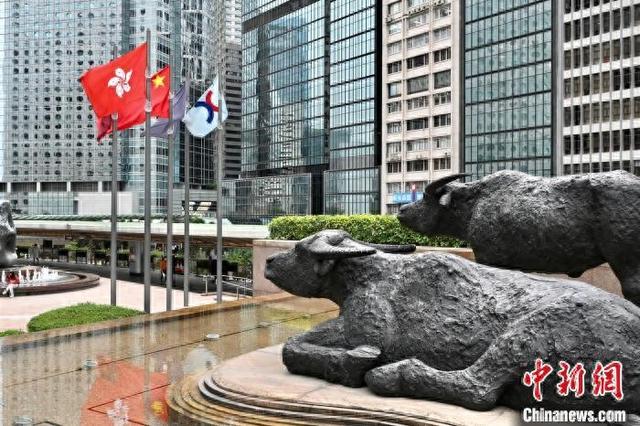
“科技变革中的香港金融市场新发展”论坛在香港举行
Zhong Guo Xin Wen Wang· 2025-05-30 12:44
Group 1 - The forum titled "New Developments in Hong Kong's Financial Market Amid Technological Transformation" was held, focusing on the strategic pathways for Chinese enterprises to leverage Hong Kong in the global industrial chain restructuring [1] - Hong Kong's Financial Secretary emphasized that the current unprecedented changes in the global landscape are accelerating, leading international investors to diversify their asset allocations, which presents new opportunities for Hong Kong's financial market [1] - Chinese financial institutions are key participants and contributors to the development of Hong Kong's financial market, and the government aims to collaborate with the industry to accelerate the construction of Hong Kong's capital market [1] Group 2 - The Chairman of Hong Kong Exchanges and Clearing pointed out that the capital market in Hong Kong has become dominated by technological innovation, providing opportunities and financing channels for Chinese enterprises to go global [2] - The CEO of Huatai Securities highlighted that over the past decade, Hong Kong's institutional advantages and innovative vitality have significantly aided Chinese enterprises in their global value transition [2] - Various industry leaders shared their experiences in technology application and transformation in the context of global industrial changes, covering sectors such as biomedicine, new consumption, and autonomous driving [2]