GDP万亿俱乐部

Search documents
经济十强城市竞速,成都增速第一
Sou Hu Cai Jing· 2026-02-14 12:46
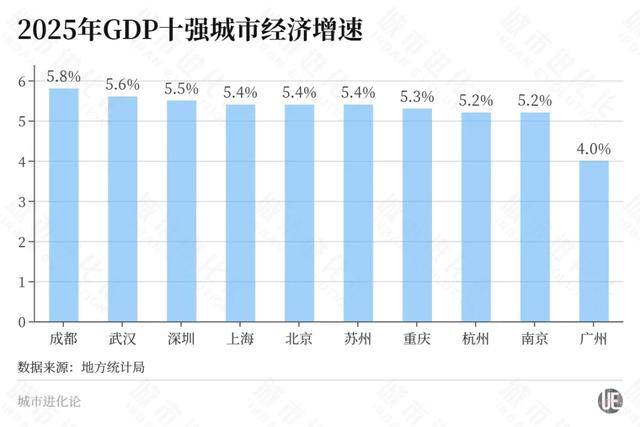
Economic Overview - The number of cities in the "trillion GDP club" increased from 27 to 29 by 2025, with a total economic output nearing 60 trillion yuan, accounting for over 40% of the national economy [1] - The distribution of these cities shows a "pyramid" structure, with Shanghai and Beijing as the only five trillion yuan cities, while Shenzhen, Chongqing, and Guangzhou are three trillion yuan cities [1][5] Top Cities Performance - Beijing has become the second city to surpass five trillion yuan in GDP, achieving a total of 52,073.4 billion yuan, while Shanghai reached 56,708.71 billion yuan [1][5] - Shenzhen's GDP reached 38,731.8 billion yuan with a growth rate of 5.5%, positioning it to potentially become the next four trillion yuan city [5] - Chengdu led the top cities with a growth rate of 5.8%, supported by strong consumer spending and a burgeoning digital cultural industry [7][10] Mid-Tier Cities Competition - Cities with GDPs between 1.3 trillion and 1.8 trillion yuan are experiencing intense competition, with Hefei achieving a growth rate of 6.1% and ranking 18th nationally [4] - Fuzhou has risen from 23rd to 17th place in GDP rankings over five years, driven by stable consumer growth [12][13] New Trillion Cities - Wenzhou and Dalian joined the trillion GDP club in 2025, marking significant milestones for their respective regions [17] - Xuzhou, while close to the trillion mark, faced challenges with a GDP of 9,957.22 billion yuan, falling short of joining the club [17][18] Industrial Development Insights - Industrial investment in Suzhou grew by 6.1%, while Chengdu's industrial investment surged by 19.7%, indicating a strong focus on project-driven growth [10] - The automotive sector in Zhengzhou is projected to exceed 1.1 million units in production by 2024, highlighting the city's industrial capabilities [16] Future Growth Targets - Cities like Chengdu, Hangzhou, and Wuhan have set ambitious GDP targets of three trillion yuan by 2030, reflecting a strategic focus on economic advancement [10][11]

GDP万亿元目标落空,厦门何以破局?
Mei Ri Jing Ji Xin Wen· 2026-01-28 13:27
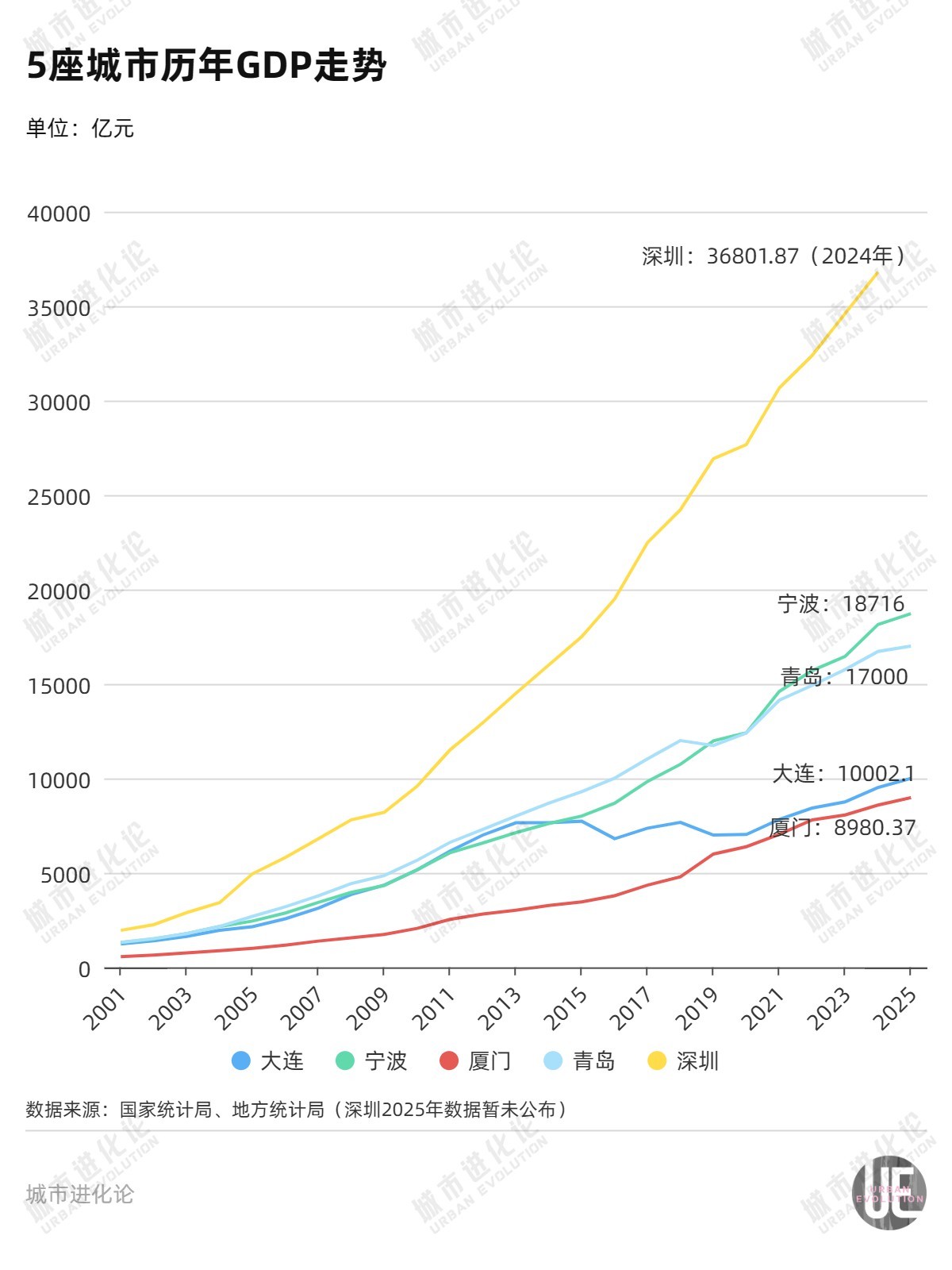
Core Insights - Xiamen has officially become the only city among the five planned sub-provincial cities that has not yet crossed the GDP threshold of 1 trillion yuan, facing significant development pressure [1][4] - The latest data from Xiamen's statistics bureau indicates that the city's GDP for 2025 is projected to be 898.037 billion yuan, a year-on-year growth of 5.7%, falling short of the target [1][4] - Xiamen's industrial capacity is relatively small and its industrial structure is single, which are significant shortcomings in its economic development [3][9] Economic Performance - In 2023, Xiamen's GDP growth rate was only 3.1%, lagging behind the national average of 5.4% and Fujian's average of 4.5% [5] - The secondary industry in Xiamen saw a decline of 2.8% in added value, marking the lowest level for both the secondary industry and industrial proportions since 2011 [5][6] Industrial Structure - Over the past decade, the proportion of the secondary industry in Xiamen has rapidly declined from 50.6% in 2011 to an expected 36.6% in 2024, indicating insufficient industrial support [6][12] - Xiamen ranks last among the five planned sub-provincial cities in terms of the scale of added value from the secondary industry, being only one-fifth of Shenzhen's and half of Qingdao's [6] Strategic Initiatives - Xiamen has proposed an advanced manufacturing doubling plan in its 14th Five-Year Plan, aiming to leverage technological innovation as a driving force [3][10] - The city aims to enhance its industrial investment to account for 29% of total investment by 2025, with a year-on-year growth of 8.1% in non-real estate projects [11] Urban Development - Xiamen is focusing on expanding its urban space through cross-island development, with a goal of having over 60% of the population and fixed asset investment located outside the island by 2025 [17][19] - The city is implementing a "3+1" urban development framework to promote a multi-center, group-style adjustment of urban spatial structure [19] Future Outlook - By 2026, Xiamen plans to strengthen the innovation capabilities of enterprises, aiming to add over 100 new national high-tech enterprises and 25 specialized "little giant" enterprises [15] - The city is expected to address three core challenges: strengthening the industrial chain, optimizing spatial distribution, and managing high land costs to activate advanced manufacturing development [15]
万亿目标落空,“吊车尾”的计划单列市等不起了
Mei Ri Jing Ji Xin Wen· 2026-01-27 15:04
Core Viewpoint - Xiamen has not yet crossed the 1 trillion yuan GDP threshold, making it the only city among five planned separate cities to remain below this mark, indicating significant development pressure [1][4]. Economic Performance - Xiamen's GDP for 2025 is projected at 8980.37 billion yuan, a year-on-year increase of 5.7%, falling short of the target to exceed 1 trillion yuan by that year [1]. - In 2023, Xiamen's GDP growth rate was only 3.1%, lagging behind the national average of 5.5% and Fujian's 4.5% [4]. - The secondary industry in Xiamen saw a decline in added value by 2.8% in 2023, marking the lowest proportion of the industrial sector since 2011 [4]. Industrial Structure - Xiamen's industrial capacity is relatively small and its industrial structure is single, which are significant shortcomings for economic development [4]. - The proportion of the secondary industry in Xiamen has decreased from 50.6% in 2011 to an estimated 36.6% in 2024, indicating insufficient industrial support [8]. - In comparison to other planned separate cities, Xiamen ranks last in terms of secondary industry added value, being only 1/5 of Shenzhen's and 1/2 of Qingdao's [8]. Strategic Initiatives - Xiamen has proposed an advanced manufacturing doubling plan in its 14th Five-Year Plan, aiming to leverage technological innovation as a driving force [4][12]. - The city aims to enhance the proportion of industrial investment to 29% by 2025, with a year-on-year increase of 8.1% in non-real estate project investments [12]. - Xiamen's modern industrial system includes new sectors such as biomedicine, new energy, and new materials, with industrial tax revenue growing by 6.6% [12]. Challenges and Future Directions - Xiamen faces challenges such as a weak industrial chain, fragmented industrial space distribution, and high land costs, which need to be addressed to stimulate advanced manufacturing development [17]. - The city is focusing on enhancing the role of enterprises in innovation and aims to add over 100 national high-tech enterprises and 25 specialized "little giant" enterprises by 2026 [16]. - The ongoing urban development strategy emphasizes the need for a multi-center, group-style adjustment of urban spatial patterns to support industrial growth [22].
29城GDP超万亿:大连成东北首个GDP万亿城市
Di Yi Cai Jing· 2026-01-23 06:02
Core Insights - Dalian has become the first city in Northeast China to surpass a GDP of 1 trillion yuan, achieving a total GDP of 1,002.1 billion yuan in 2025, reflecting a year-on-year growth of 5.7% at constant prices [1] Economic Performance - The primary industry in Dalian contributed an added value of 66.54 billion yuan, growing by 3.6% year-on-year [1] - The secondary industry saw an added value of 353.25 billion yuan, with a growth rate of 7.7% [1] - The tertiary industry achieved an added value of 580.42 billion yuan, marking a growth of 4.8% [1] Industrial Growth - In the previous year, Dalian's industrial output value increased by 11.7% year-on-year, which is an improvement of 4.1 percentage points compared to the previous year [1] - Key industries such as petrochemicals grew by 8.9%, while equipment manufacturing surged by 15.4%, with the railway and shipbuilding sector experiencing a remarkable growth of 57.5% and the automotive industry growing by 19.5% [1] - High-tech manufacturing also saw a growth of 13.9%, with computer and office equipment manufacturing skyrocketing by 78.2% and pharmaceutical manufacturing increasing by 30.9% [1] Product Output - Dalian reported significant increases in product output, with chemical raw materials, integrated circuit wafers, and liquid crystal displays growing by 26.1%, 19.1%, and 3.0% respectively [1] Additional Information - Wenzhou, located in Zhejiang Province, has also joined the "GDP trillion club" alongside Dalian [1]
29座城市GDP超万亿
第一财经· 2026-01-23 05:36
Economic Growth in Dalian - Dalian's GDP is projected to reach 1,000.21 billion yuan by 2025, with a year-on-year growth of 5.7% at constant prices [2] - The primary industry is expected to contribute 66.54 billion yuan, growing by 3.6%, while the secondary industry is projected to add 353.25 billion yuan, with a growth of 7.7%. The tertiary industry is anticipated to reach 580.42 billion yuan, growing by 4.8% [2] Industrial Performance - In the previous year, Dalian's industrial output value increased by 11.7%, marking a 4.1 percentage point improvement from the previous year [2] - Key sectors such as petrochemical industry saw an 8.9% increase, while equipment manufacturing grew by 15.4%, with the railway and shipbuilding sector surging by 57.5% and the automotive sector by 19.5% [2] - High-tech manufacturing also performed well, with a growth of 13.9%, particularly in computer and office equipment manufacturing, which grew by 78.2%, and pharmaceutical manufacturing, which increased by 30.9% [2] Product Output - Dalian's production of chemical raw materials, integrated circuit wafers, and liquid crystal displays increased by 26.1%, 19.1%, and 3.0% respectively in the previous year [3] Economic Milestones - Dalian has become the first city in Northeast China to surpass a GDP of one trillion yuan [4] - Another city, Wenzhou in Zhejiang Province, has also joined the "trillion GDP club," indicating a growing trend among cities achieving significant economic milestones [6] National Economic Landscape - The total number of cities with a GDP exceeding one trillion yuan has now reached 29, including four municipalities (Beijing, Shanghai, Tianjin, Chongqing) and eleven provincial capitals [7] - Major cities like Shanghai and Beijing have GDPs exceeding 5 trillion yuan, with Shanghai projected to reach 5,670.87 billion yuan and Beijing 5,207.34 billion yuan by 2025, both growing at 5.4% [8]

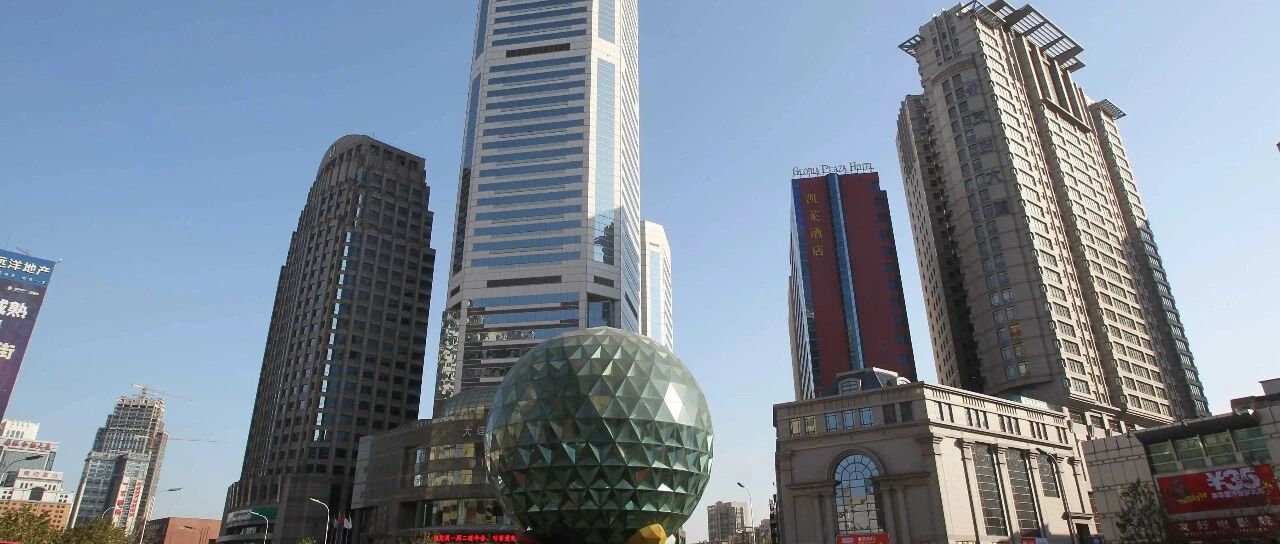
29座城市GDP超万亿:大连成东北地区首个GDP万亿城市
Di Yi Cai Jing· 2026-01-23 05:05
Group 1 - The core viewpoint of the articles is that the number of cities in China with a GDP exceeding 1 trillion yuan has increased to 29, with Dalian and Wenzhou being the latest additions to this group [1][2][4] - Dalian's GDP is projected to reach 1,000.21 billion yuan by 2025, with a year-on-year growth of 5.7%, driven by increases in all three major industries: primary (3.6%), secondary (7.7%), and tertiary (4.8%) [1] - In 2022, Dalian's industrial output value grew by 11.7%, with significant growth in key sectors such as petrochemicals (8.9%), equipment manufacturing (15.4%), and high-tech manufacturing (13.9%) [1] Group 2 - Wenzhou is expected to surpass a GDP of 1 trillion yuan by 2025, supported by its unique external resources and efforts to revitalize traditional industries while fostering new ones [3] - The development of transportation infrastructure in Zhejiang, including high-speed rail, has enhanced Wenzhou's access to educational and technological resources, further supporting its economic growth [3] - Shanghai and Beijing are projected to maintain their positions as major economic centers, with GDPs of 5.67 trillion yuan and 5.21 trillion yuan respectively by 2025, both showing a growth rate of 5.4% [4]
时报观察|“万亿”之后城市发展更应着眼于产业变革
证券时报· 2026-01-22 00:12
Core Insights - The article highlights the expansion of China's "trillion GDP club," with Wenzhou, Dalian, and Xuzhou joining, bringing the total to 30 cities [1] - Major cities like Beijing and Shanghai have surpassed the "five trillion" mark, while "mid-tier" cities are now competing for entry into the "trillion GDP club" [1] - The article emphasizes that while scale can be similar, the positioning and core competitiveness of cities are unique, focusing on their ability to form indispensable industrial clusters and innovation ecosystems in key emerging fields [1] Summary by Sections - The article discusses the significance of the "trillion" mark as a reflection of a city's comprehensive strength and its implications for resource allocation [1] - It notes that cities must recognize their unique "niche" within the regional ecosystem, as most are not in the "C position" but serve as essential nodes [1] - The Yangtze River Delta region is highlighted for hosting over one-third of the "trillion cities," where cities must collaborate efficiently around industrial chains and transportation networks to enhance development [2] - The article concludes that achieving "trillion" status is not just a benchmark but a starting point for cities to focus on global industrial changes and regional cooperation to remain competitive [2]

“GDP万亿俱乐部”再添三城 专家倡言城市评价迈入“市值时代”
证券时报· 2026-01-22 00:12
Core Viewpoint - The article highlights the emergence of three new cities—Dalian, Xuzhou, and Wenzhou—joining China's "trillion-yuan club" by 2025, bringing the total number of such cities in mainland China to 30 [1][2]. Group 1: New "Trillion-Yuan Cities" - Wenzhou is set to surpass a GDP of 1 trillion yuan by 2025, becoming the third "trillion-yuan city" in Zhejiang province after Hangzhou and Ningbo [4]. - Xuzhou's GDP is projected to grow by approximately 5.8%, reaching 953.712 billion yuan in 2024, and is expected to cross the 1 trillion yuan mark in 2025, making it the sixth "trillion-yuan city" in Jiangsu province [5]. - Dalian anticipates a GDP growth of over 5.5%, with a projected GDP of 951.69 billion yuan in 2024, also expected to exceed 1 trillion yuan by 2025, marking a breakthrough for Northeast China [5]. Group 2: Common Characteristics and Development Strategies - The three new cities share a strong industrial foundation and leading industry clusters, such as Xuzhou's renowned engineering machinery cluster, Wenzhou's private economy-driven electrical and apparel industries, and Dalian's complete petrochemical industry chain [5][6]. - Experts emphasize the importance of "industry anchoring + institutional adaptation" for the success of these cities, highlighting the need for a flexible and efficient business environment [6]. - Each city has a unique positioning strategy: Wenzhou as a pioneer of private economy, Xuzhou as a leader in the Huaihai Economic Zone, and Dalian aiming to become a Northeast Asia international shipping center [6]. Group 3: Future Prospects and Competitors - Other cities are also vying to join the "trillion-yuan club," with potential candidates like Yancheng, Yangzhou, and Shaoxing in the Yangtze River Delta region aiming for this goal during the 14th Five-Year Plan period [10]. - Xiamen is projected to become the third "trillion-yuan city" in Fujian province by 2025, with a GDP of 858.901 billion yuan in 2024 [10]. - Shenyang is expected to become the second "trillion-yuan city" in Liaoning province, with a GDP of 902.71 billion yuan in 2024, indicating a high probability of surpassing the 1 trillion yuan mark during the 14th Five-Year Plan [10]. Group 4: Urban Development Evaluation System - The article calls for a re-evaluation of urban development metrics, moving beyond mere GDP figures to include quality indicators such as per capita GDP, total factor productivity, and green innovation intensity [12]. - It suggests incorporating metrics like the Gini coefficient of resident income and the number of patents per capita into the evaluation system for "trillion-yuan cities" to promote a shift from scale expansion to modernization focused on people [12]. - The transition from a "GDP era" to a "market value era" is proposed, where the total market value of listed companies in a city serves as a precise measure of development quality [13].
时报观察丨“万亿”之后城市发展更应着眼于产业变革
Zheng Quan Shi Bao Wang· 2026-01-21 23:32
Core Insights - The "GDP trillion club" in China has expanded to 30 cities, with Wenzhou, Dalian, and Xuzhou joining this elite group [1] - Major cities like Beijing and Shanghai have surpassed the "five trillion" mark, while many mid-tier cities are competing to reach the "trillion" threshold [1] - The core competitiveness of cities lies in their unique positioning within global industrial transformations, rather than merely in their scale [1] Economic Development - The "trillion" mark reflects a city's comprehensive strength and is crucial for the allocation of strategic resources [1] - Cities must recognize their unique roles within regional networks to effectively allocate resources and engage in domestic and international dual circulation [1][2] - The Yangtze River Delta region is particularly notable, housing over one-third of the "trillion cities," emphasizing the need for cities to identify their nodes and collaborate efficiently [2] Future Competitiveness - Future urban competition will focus on forming irreplaceable industrial clusters and innovative ecosystems in key emerging fields, rather than just competing on scale [1][2] - Cities should shift their focus from merely accumulating numerical growth to engaging in global industrial changes and regional cooperation [2]
“万亿”徐州,苏北“零的突破”
Guo Ji Jin Rong Bao· 2026-01-05 04:56
Core Insights - Xuzhou is expected to join the "trillion GDP club" by 2025, becoming the sixth city in Jiangsu and the first in Northern Jiangsu to achieve this milestone [1][2] - The city's GDP is projected to reach 9,537.12 billion yuan in 2024, with a growth target of around 6% for 2025, indicating a steady economic trajectory rather than a sudden leap [1][2] Economic Growth and Development - Xuzhou's economic growth is driven by its unique geographical advantages, serving as a hub connecting four provinces, and has been recognized as the center of the Huaihai Economic Zone since 2017 [1][2] - The city has built a robust transportation network, enhancing its industrial, population, and market factor aggregation, which contributes to its economic expansion [2] Industrial Transformation - Xuzhou is transitioning from a resource-based economy to one focused on emerging industries, with 331 future industry-related enterprises and 15 recognized as high-growth by the province [2][3] - The city is experiencing significant growth in its mining and equipment manufacturing sectors, benefiting from the recovery of the coal industry and engineering machinery market [3] Future Goals and Projections - For 2026, Xuzhou aims for a GDP growth of approximately 5.5%, a public budget revenue increase of 2%, and a retail sales growth of around 6% [3] - The city's transformation journey serves as a model for similar cities in Northern Jiangsu and across the country, enhancing its role in regional collaborative development [3]