全球供应链枢纽

Search documents
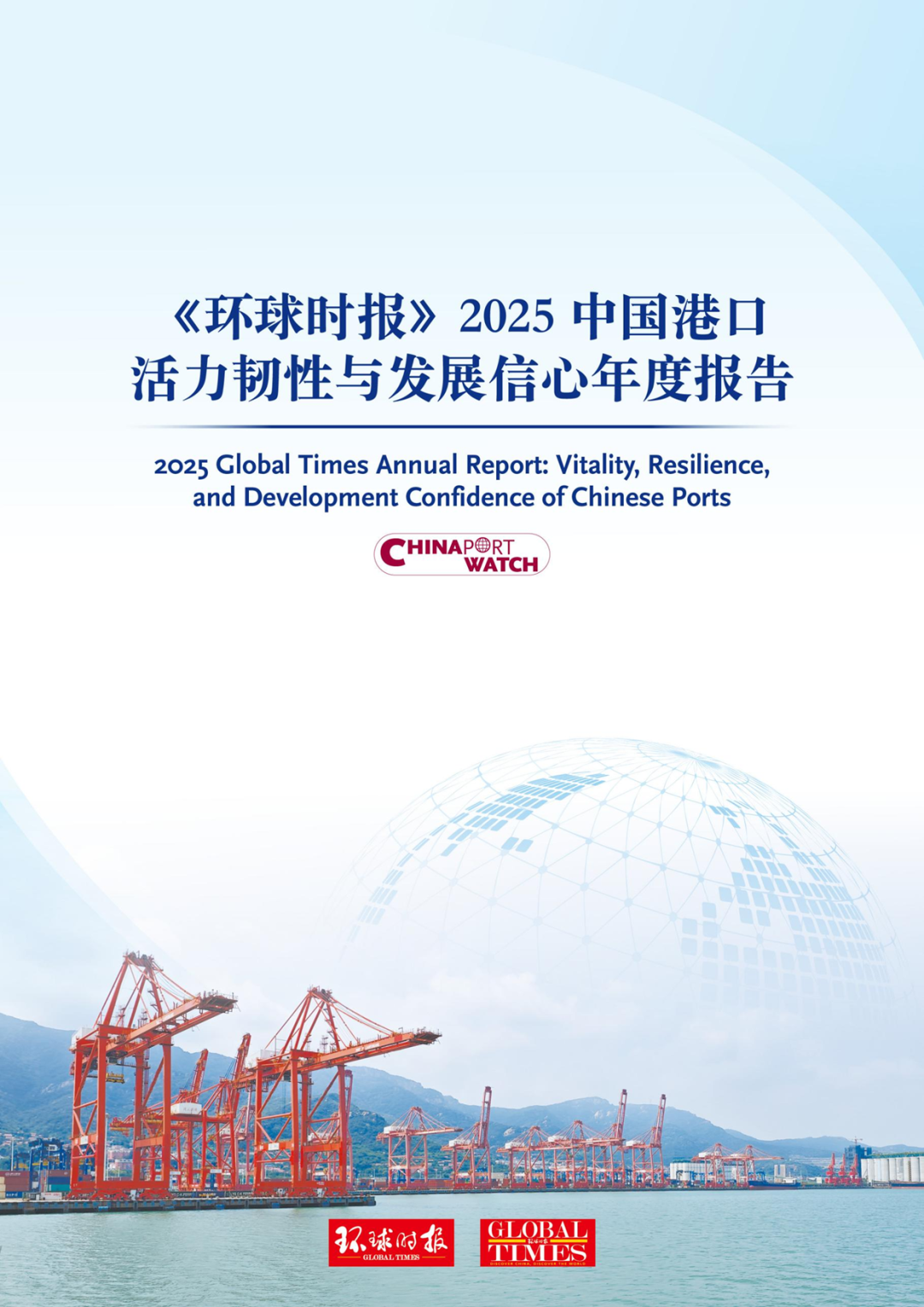
《环球时报》社发布《2025中国港口活力韧性与发展信心年度报告》
Xin Lang Cai Jing· 2025-12-20 08:47
Core Insights - The report titled "2025 China Port Vitality Resilience and Development Confidence Annual Report" highlights the operational status and development trends of China's coastal ports in 2025, emphasizing their resilience amid complex external challenges [1][4]. Group 1: Port Operations and Trends - Coastal port cargo throughput remains positive, indicating that Chinese ports continue to operate actively despite multiple pressures [5]. - The impact of fluctuations in China-U.S. trade on Chinese coastal ports is limited, and the network of international partnerships for Chinese ports is expanding [5]. - In 2025, there is a notable digital transformation in coastal ports, with cross-border e-commerce and multimodal transport driving business growth [5]. Group 2: Future Outlook and Strategic Importance - Chinese ports are maintaining stable operations, supporting the global supply chain through smart upgrades, new business developments, and international cooperation [5]. - The construction of key projects is expected to continue in 2026, with ports accelerating the establishment of efficient, innovative, and sustainable global supply chain hubs [5]. - The ongoing high-level opening-up in China will see ports playing a crucial role, as highlighted in the 14th Five-Year Plan, which aims to expand institutional openness and promote international trade [9].

连通新丝路② | 从小码头到全球第四大港,这片海藏着深圳的全球物流密码
Sou Hu Cai Jing· 2025-08-25 23:51
Core Insights - Shenzhen's port system, particularly Yantian Port, has evolved from a small fishing town to a global shipping hub, handling over 40,000 TEUs daily and connecting to over 100 countries and regions [2][4] - The port's throughput is projected to reach 33.38 million TEUs in 2024, marking an 11.7% increase, with significant improvements in customs efficiency and logistics networks [6][7] Group 1: Yantian Port - Yantian Port has transitioned from manual labor to automation, achieving a loading and unloading efficiency of over 40 containers per hour, ranking among the best globally [6] - The port's innovative customs process has enhanced efficiency by 30%, supporting a robust network of 17 feeder routes across the Greater Bay Area [7] - Yantian Port serves as a critical link between Chinese manufacturing and global markets, exemplifying Shenzhen's role in international trade [9] Group 2: Xiaomo Port - Xiaomo Port, a newer facility, aims to handle 1 million vehicles annually by 2025, significantly impacting the logistics of electric vehicles in the Greater Bay Area [10][12] - The port's operations are designed to reduce logistics costs by 15% for local manufacturers, positioning Shenzhen as a global hub for automotive exports [12] - Predictions suggest that Xiaomo Port could drive Shenzhen's automotive foreign trade to exceed 100 billion yuan by 2030 [12] Group 3: Shekou Cruise Terminal - Shekou Cruise Terminal enhances passenger transport, facilitating seamless travel between Shenzhen and Hong Kong, with over 200,000 travelers benefiting from its services annually [14][16] - The terminal has transformed from a transport hub to a lifestyle gateway, reflecting the collaborative spirit of the Greater Bay Area [16] - The integration of various transport modes at Shekou illustrates Shenzhen's commitment to efficient and warm transportation solutions [16] Group 4: Overall Impact - Shenzhen's port system is not just about transportation; it serves as a stabilizer for global supply chains and a catalyst for China's openness to the world [16][18] - The evolution of Shenzhen's ports symbolizes the country's shift from "bringing in" to "going out," marking a significant historical transition [18] - As Shenzhen continues to expand its maritime routes, it is poised to write a new chapter in the era of openness and win-win cooperation [18]