全球流动性预期宽松

Search documents
投资进化论丨近1年涨超140%,为什么有色金属会迎来强势行情?
Sou Hu Cai Jing· 2026-01-29 12:07
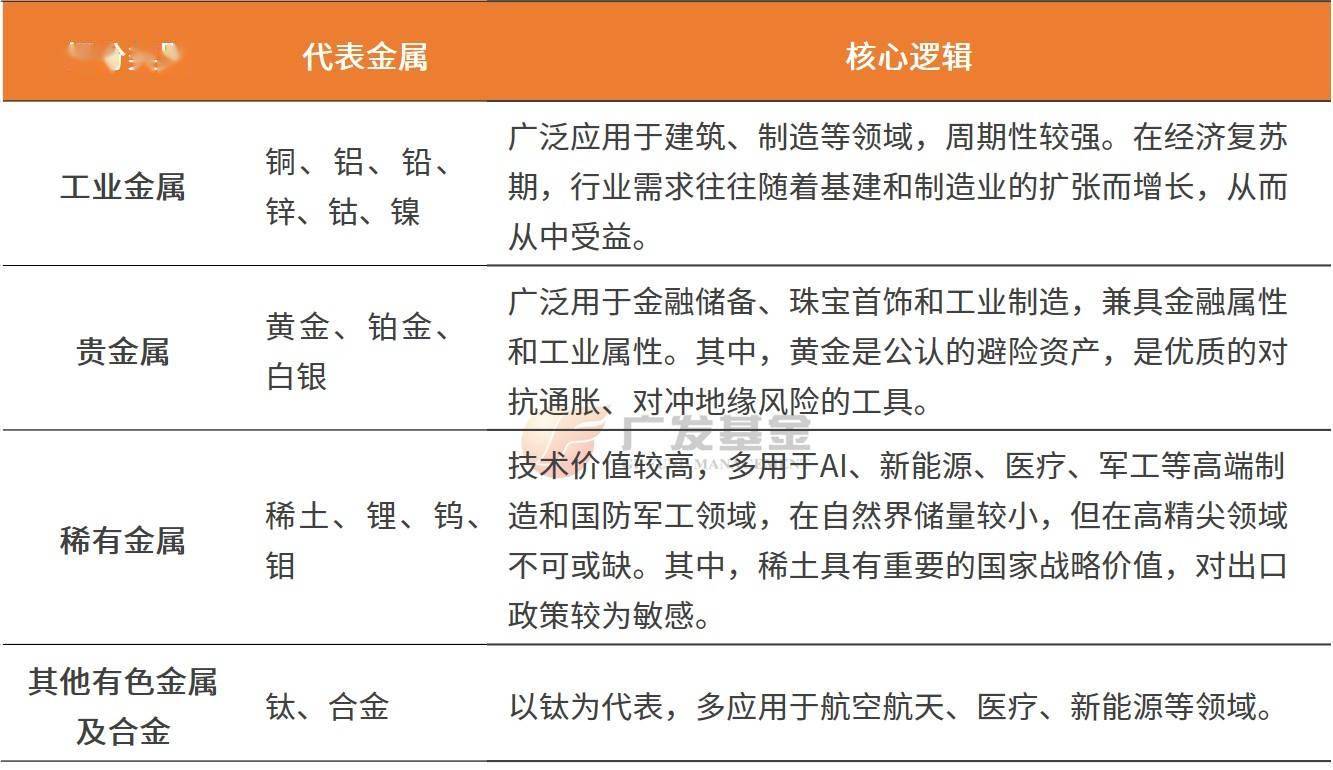
Core Viewpoint - The non-ferrous metal sector has shown remarkable performance, with a growth rate exceeding 140% over the past year, leading all 31 primary industries in China [1]. Group 1: Definition and Classification - Non-ferrous metals are defined as all metals other than ferrous metals, which include only iron, manganese, and chromium [1]. - According to the China Securities Industry Classification, non-ferrous metals belong to a secondary industry that can be further divided into four tertiary industries, each with distinct representative metals and investment logic [2]. Group 2: Market Drivers - The strong performance of the non-ferrous metal sector can be attributed to three main factors: macroeconomic conditions, demand, and supply [3]. Macroeconomic Factors - Global monetary policy is trending towards easing, particularly with both the US and China experiencing simultaneous fiscal and monetary loosening, which typically supports rising commodity prices [4]. Demand Factors - The rapid development of AI technology is driving demand for upstream resources, as the growth in AI is heavily reliant on hardware infrastructure, leading to increased demand for industrial metals like copper and aluminum [5]. Supply Factors - While demand is surging, supply is constrained due to long-term underinvestment in mineral exploration, lengthy development cycles for new mines, and increased export controls from resource-rich countries, alongside geopolitical tensions affecting supply stability [6]. Group 3: Investment Opportunities - Investors optimistic about the non-ferrous metal sector can consider various types of funds based on their risk preferences, including index funds, active funds, and commodity funds [7]. Fund Types - Index funds track specific non-ferrous metal stock indices and are suitable for investors looking for transparent, low-cost exposure to the sector [8]. - Active funds allow fund managers to select stocks based on comprehensive analysis, aiming for returns exceeding the industry average, but typically come with higher fees [8]. - Commodity funds invest in metal futures contracts rather than stocks, offering high-risk, high-reward opportunities suitable for experienced investors [8]. Group 4: Market Considerations - The non-ferrous metal sector has already seen significant price increases, with some commodities reaching historical highs, and is subject to considerable volatility influenced by macroeconomic cycles, supply-demand dynamics, and geopolitical factors [9].