
全球经贸治理

Search documents
应对全球单边主义、贸易保护主义,中外专家共议全球经贸治理
Sou Hu Cai Jing· 2025-11-13 06:39
Core Insights - The forum highlighted the challenges and future of global economic governance, emphasizing the need for cooperation amidst rising unilateralism and protectionism [3][4] Group 1: China's Economic Strategy - China is advancing institutional openness to create a win-win cooperation environment, countering the rise of unilateralism and trade protectionism [3] - Recent policies include the implementation of "three negative lists" for cross-border service trade, investment, and market access, promoting consistent management of domestic and foreign capital [3] - The bilateral trade between China and ASEAN grew by 9.6% year-on-year from January to September 2025, indicating deepening economic ties [3] Group 2: Global Trade Dynamics - Pascal Lamy identified three new norms in global trade: the rise of protectionism, the strengthening of preventive measures, and the weaponization of trade [4] - Lamy emphasized the importance of maintaining a multilateral system and fostering flexible international cooperation, particularly between China and the EU on shared concerns like climate change [4] Group 3: WTO and Multilateral Trade System - The WTO remains essential for global trade, and China is committed to multilateralism, advocating for structural reforms to enhance the efficiency of the dispute resolution mechanism [6] - The U.S. has shifted from being a proponent of free trade to a disruptor of the multilateral trade system, impacting global trade dynamics [5] - Lamy suggested that the WTO's effectiveness could be improved by enhancing organizational efficiency and addressing new complex issues [5][6] Group 4: Future Economic Pathways - Lamy recommended that China continue its economic transformation, particularly by boosting consumption, while businesses should enhance supply chain resilience and adaptability [4] - The dual-edged effect of digital technology was discussed, highlighting its role in accelerating service trade growth while also creating new trade barriers due to differing data regulations [4][5]

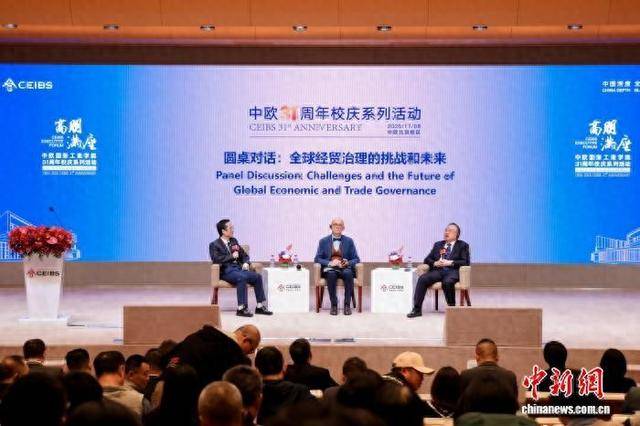
应对全球单边主义、贸易保护主义 中外专家共议全球经贸治理
Zhong Guo Xin Wen Wang· 2025-11-12 17:29
Core Viewpoint - The event highlighted the challenges and opportunities in global trade, emphasizing the need for multilateral cooperation amidst rising protectionism and unilateralism [1][2][4]. Group 1: China's Trade Policies - Zhao Jinping outlined China's recent policies aimed at service trade openness, including the implementation of "three negative lists" for cross-border service trade, investment, and market access [1]. - The cooperation between China and ASEAN has deepened, with bilateral trade growing by 9.6% year-on-year from January to September 2025, serving as a stabilizing anchor for China's foreign trade relations [1]. Group 2: Global Trade Dynamics - Pascal Lamy identified three new norms in global trade: the rise of protectionism, the strengthening of preventive measures, and the weaponization of trade [2]. - Lamy emphasized the importance of maintaining a multilateral system and suggested that China and the EU should seek cooperation in areas like climate change and biodiversity [2]. Group 3: WTO and Multilateralism - The discussion highlighted the U.S.'s shift from a proponent of free trade to a disruptor of the multilateral trading system, impacting the WTO's effectiveness [3][4]. - Zhao Jinping reaffirmed China's commitment to multilateralism and the necessity for structural reforms within the WTO to enhance its dispute resolution efficiency [4]. Group 4: Strategic Choices for China - Zhao Jinping proposed that external pressures could lead to greater willingness for regional economic cooperation, advocating for deeper market reforms and proactive multilateral and regional collaboration [5].