
数字治理体系

Search documents
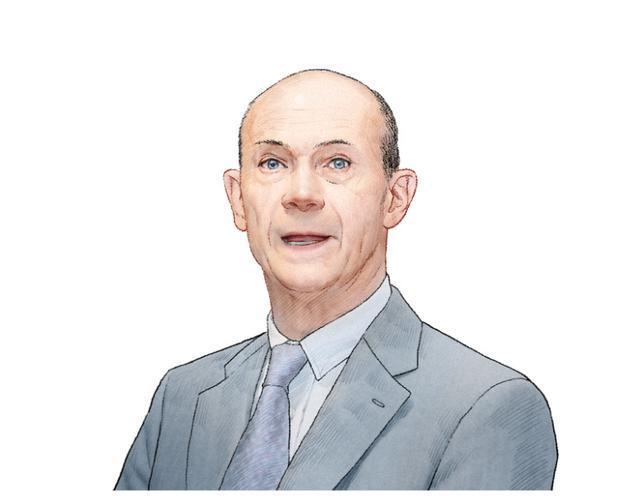
独家专访世界贸易组织前总干事帕斯卡尔·拉米:中国将在下一阶段全球化扮演重要角色
2 1 Shi Ji Jing Ji Bao Dao· 2025-12-09 00:37
Group 1 - The World Trade Organization (WTO) Appellate Body has been "inactive" for nearly six years due to the United States' unilateral and protectionist measures that undermine WTO principles [1][4] - Pascal Lamy, former WTO Director-General, suggests that the WTO must adapt to new realities and continue to operate even without U.S. participation [1][4] - Lamy emphasizes the urgent need for collective action to address climate change, as 90% of the global population is affected by environmental crises [1][3] Group 2 - Lamy identifies two main issues in international trade: the lack of enforceable regulations despite global agreements and the U.S.'s non-cooperation, which hampers international progress [4][6] - He advocates for a platform to address North-South tensions and believes that international trade and labor division can benefit the environment [4][5] - Lamy proposes a comprehensive forum on climate change and trade, emphasizing the need for open discussions based on expertise rather than negotiations [5] Group 3 - The transition from "fast globalization" to "slow globalization" is noted, with international trade still growing but at a slower pace [6][7] - Lamy highlights three characteristics of the current multilateral trade system: weaponization of trade, U.S. protectionism, and the rise of preventive trade measures due to public health and environmental concerns [6][8] - He points out that while the U.S. accounts for only 13% of global imports, the remaining 87% of countries can maintain a stable global trade system if not affected by protectionism [7] Group 4 - China is identified as a major player in global trade, with a projected total import and export value of 43.85 trillion yuan in 2024, a 5% increase year-on-year [9] - Lamy advises that companies must enhance their strategic flexibility and adaptability in response to geopolitical and technological changes [9][10] - Digitalization is recognized as a new variable affecting global trade, with digital technologies lowering transaction costs and facilitating service trade growth [10] Group 5 - Reform of the WTO is deemed necessary, particularly in balancing power between members and the secretariat to improve decision-making efficiency [10] - Lamy calls for the WTO to enhance trade facilitation in areas such as trade, environment, e-commerce, and subsidy disciplines [10]

专家解读 | 以高质量发展为旨归 有效释放数据要素价值
Xin Lang Cai Jing· 2025-12-08 12:25
Core Viewpoint - The issuance of the "Opinions" by the National Data Bureau aims to enhance the construction of data element disciplines and digital talent teams, focusing on improving total factor productivity and developing new quality productivity to accelerate the high-quality development of China's digital economy [1][11]. Group 1: Importance of "Two Constructions" for High-Quality Development - Enhancing total factor productivity is a core indicator of developing new quality productivity and is essential for high-quality development [2][13]. - The growth of total factor productivity is driven by technological revolutions, resource allocation efficiency improvements, new industrialization, new infrastructure, carbon neutrality, and deeper reforms [2][13]. - Empowering artificial intelligence with data and deepening the market-oriented reform of data elements are crucial for strengthening and optimizing the digital economy [2][13]. Group 2: Digital Talent Development - There is a structural contradiction in the supply and demand of digital talent in China, with a gap of 25 to 30 million digital talents in 2023, which is expanding annually [3][14]. - The development of the digital economy requires a deep integration of education, talent, industry, and innovation chains [3][14]. - The "Opinions" emphasize the need for a multi-level, composite digital talent training system to activate the value of data elements [4][15]. Group 3: Multi-Pathways for Digital Talent Cultivation - The "Opinions" stress the importance of creating a collaborative ecosystem for industry-education integration, supporting partnerships between universities, research institutions, and enterprises [7][17]. - It encourages the establishment of data-related disciplines in higher education and the development of a talent training mechanism that connects undergraduate, master's, and doctoral programs [5][16]. - The focus is on practical training and interdisciplinary knowledge to meet the diverse needs of different industries [8][18]. Group 4: Organized Research in Data Field - The release of data value faces theoretical and practical challenges, necessitating innovation in theory and practice to enhance total factor productivity [9][19]. - The rapid development of AI as a core technology in the new round of technological revolution requires deep integration with vast amounts of data [9][19]. - The "Opinions" outline the main research directions in the data field, emphasizing interdisciplinary integration and organized research to solidify the foundation of scientific research [10][20].
独家专访拉米:美国实质上已退出WTO 全球化路在何方?
2 1 Shi Ji Jing Ji Bao Dao· 2025-12-08 09:51
Group 1: WTO and Global Trade Dynamics - The WTO Appellate Body has been "inactive" for nearly six years due to the U.S. obstructing the appointment of members since 2017, leading to its official "shutdown" in December 2019 [1] - Pascal Lamy, former WTO Director-General, suggests that the WTO must adapt to new realities and continue to operate even without U.S. participation, as the U.S. has effectively withdrawn from the organization [1] - Lamy emphasizes the need for a platform to address the North-South tensions regarding climate change and trade, advocating for international trade and labor division to benefit the environment [3][4] Group 2: Environmental Concerns and Trade - Lamy identifies two main issues: the lack of enforceable regulations despite global agreements like the Paris Agreement, and the U.S.'s non-cooperation, which hampers international efforts [3] - He proposes that the world must pursue both open trade and environmental protection simultaneously, highlighting the complexity of balancing these objectives [4] - The rise of preventive trade protectionism, driven by public health and environmental concerns, is noted, with examples like carbon pricing mechanisms in China and Europe [6] Group 3: China's Role in Globalization - China's import and export value is projected to reach 43.85 trillion RMB in 2024, marking a 5% year-on-year increase, with exports growing by 7.1% and imports by 2.3% [7] - Lamy asserts that China will play a crucial role in the next phase of globalization, needing to balance its macroeconomic adjustments while expanding into emerging markets [7] - Companies are urged to enhance their strategic flexibility and adaptability in response to geopolitical and technological changes [7][8] Group 4: Digital Trade and Governance - Digital technology is reshaping global trade, lowering transaction costs and facilitating service trade growth, but differing data governance regulations create new barriers [8] - Establishing an international digital governance framework is critical for sustainable global trade development [8] - Lamy calls for reforms within the WTO to address systemic contradictions, such as the imbalance of power between members and the secretariat, which affects decision-making efficiency [8][9]
独家专访拉米:美国实质上已退出WTO,全球化路在何方?
2 1 Shi Ji Jing Ji Bao Dao· 2025-12-08 09:45
Core Viewpoint - The World Trade Organization (WTO) appellate body has been "inactive" for nearly six years due to the United States' unilateral and protectionist measures, which have undermined the organization's principles and obstructed the appointment of appellate body members [2][3] Group 1: WTO's Current Situation - The WTO appellate body officially ceased operations on December 11, 2019, after over 20 years of functioning [2] - Pascal Lamy, former WTO Director-General, suggests that the WTO must adapt to new realities and continue to operate even without U.S. participation [2][3] - Lamy warns that avoiding large-scale wars and environmental degradation should be prioritized in the coming years, as 90% of the global population is affected by these crises [2] Group 2: Climate Change and Trade - Lamy emphasizes the need for a friendly trade environment to protect against the harmful effects of environmental degradation while utilizing Earth's resources more effectively [3][4] - There is a lack of consensus between developed and developing countries on addressing climate change, necessitating a platform to resolve North-South tensions [3] - Existing global agreements lack enforceable regulations, leading to fragmented actions that could escalate trade frictions [3][4] Group 3: Global Trade Regulations - Some global regulations have pointed the way to resolving trade disputes, but trade protectionism remains a significant barrier [4] - Lamy notes that developed countries often adopt avoidance strategies regarding climate issues, while some developing countries resist discussions that could lead to negotiations within the WTO [4][5] - A proposed comprehensive forum on climate change and trade could facilitate discussions based on expertise and openness, rather than formal negotiations [5] Group 4: The Future of Global Trade - Lamy argues that the world must pursue open trade, environmental protection, and domestic economic development simultaneously, especially for developing countries [5][6] - The transition from "fast globalization" to "slow globalization" is underway, with international trade still growing but at a slower pace [6] - The new normal of the multilateral trade system is characterized by trade weaponization, U.S. protectionism, and the rise of preventive trade measures due to public health and environmental concerns [6][7] Group 5: China's Role in Global Trade - China's total import and export value is projected to reach 43.85 trillion yuan in 2024, a 5% increase year-on-year, with exports growing by 7.1% and imports by 2.3% [7] - As a major player in global trade, China must balance its macroeconomic rebalancing with the need to explore emerging markets and optimize trade structures [7][8] Group 6: Digitalization and Trade - Digitalization is reshaping global trade dynamics by lowering transaction costs and facilitating service trade growth [8] - However, significant differences in data governance and regulatory frameworks across countries create new barriers for service trade [8] Group 7: Reforming the WTO - The WTO faces a systemic contradiction as the U.S. participates in decision-making while having withdrawn from its constraints [9] - Lamy calls for reforms to improve the WTO's structure and efficiency to better address complex new issues [9] - A rebalancing of power between members and the secretariat is necessary to enhance decision-making efficiency within the WTO [9]
应对全球单边主义、贸易保护主义 中外专家共议全球经贸治理
Zhong Guo Xin Wen Wang· 2025-11-12 17:29
Core Viewpoint - The event highlighted the challenges and opportunities in global trade, emphasizing the need for multilateral cooperation amidst rising protectionism and unilateralism [1][2][4]. Group 1: China's Trade Policies - Zhao Jinping outlined China's recent policies aimed at service trade openness, including the implementation of "three negative lists" for cross-border service trade, investment, and market access [1]. - The cooperation between China and ASEAN has deepened, with bilateral trade growing by 9.6% year-on-year from January to September 2025, serving as a stabilizing anchor for China's foreign trade relations [1]. Group 2: Global Trade Dynamics - Pascal Lamy identified three new norms in global trade: the rise of protectionism, the strengthening of preventive measures, and the weaponization of trade [2]. - Lamy emphasized the importance of maintaining a multilateral system and suggested that China and the EU should seek cooperation in areas like climate change and biodiversity [2]. Group 3: WTO and Multilateralism - The discussion highlighted the U.S.'s shift from a proponent of free trade to a disruptor of the multilateral trading system, impacting the WTO's effectiveness [3][4]. - Zhao Jinping reaffirmed China's commitment to multilateralism and the necessity for structural reforms within the WTO to enhance its dispute resolution efficiency [4]. Group 4: Strategic Choices for China - Zhao Jinping proposed that external pressures could lead to greater willingness for regional economic cooperation, advocating for deeper market reforms and proactive multilateral and regional collaboration [5].
建美丽城市需解身边难题
Jing Ji Ri Bao· 2025-04-10 22:07
Group 1 - The core idea emphasizes the importance of building beautiful cities as a means to achieve sustainable urban development and enhance the quality of life for residents, aligning with the broader goal of creating a beautiful China [1][2] - The Ministry of Ecology and Environment and 11 other departments have issued the "Implementation Plan for Beautiful City Construction," which outlines five key tasks, with a focus on improving urban environmental health and safety [1] - Urbanization in China has led to various ecological challenges, including high population density in commercial centers, significant emissions from restaurants, and the exacerbation of urban heat island effects during summer [1][2] Group 2 - Addressing environmental issues in cities reflects a lack of coordination between urban development and ecological protection, making the construction of beautiful cities a critical solution [2] - Integrating ecological and environmental protection concepts into urban planning can enhance the effectiveness of green spaces and promote the use of renewable energy while considering urban development needs [2] - The construction of beautiful cities is a systematic project that requires tailored approaches to create various "green cells," such as green factories and ecological communities, while leveraging technology for digital governance [2]