全球贸易分工

Search documents
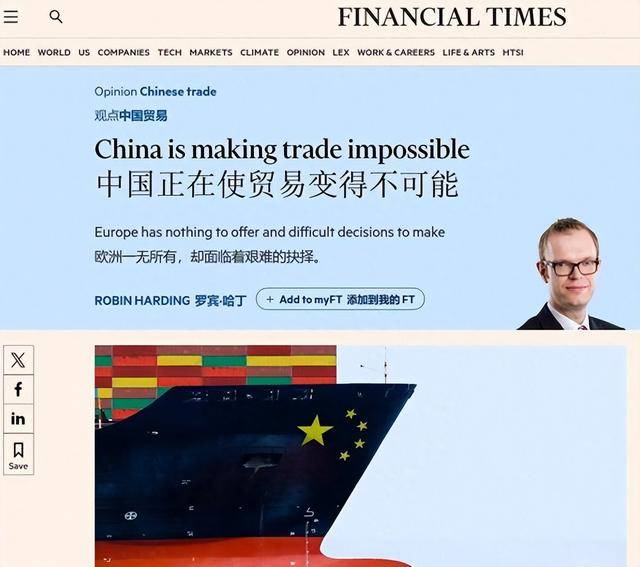
欧媒:中国什么都不想买,什么都想自己造,欧洲快被逼得没活路了
Sou Hu Cai Jing· 2025-11-29 07:36
Core Insights - The essence of trade is questioned, focusing on what China truly desires to import from the world in the foreseeable future [1][3] - The dialogue reveals the underlying tensions in global trade, particularly regarding the distribution of benefits [3][4] - China's shift towards self-sufficiency is driven by a strategic need to reduce dependency on external supply chains, especially in light of geopolitical tensions [10][12] Group 1: China's Economic Strategy - China is moving away from being a mere consumer to becoming a developer within the global supply chain [12] - The country aims for comprehensive self-sufficiency across industries, driven by a sense of insecurity regarding external dependencies [10][12] - This shift is expected to have significant repercussions on European economies, particularly Germany, which may see a 0.3 percentage point reduction in growth due to China's domestic substitution efforts [14] Group 2: European Response and Challenges - Europe faces a dilemma: either reform its foundational production chains or resort to trade protectionism [20][22] - The "difficult option" involves deep reforms to adapt to China's competitive manufacturing landscape, which is politically challenging for European societies accustomed to high welfare [22][24] - The "bad option" of protectionism could lead to a breakdown in global trade relations, as both sides may resort to tariffs and sanctions [26][30] Group 3: Diverging Development Paths - The current situation highlights a historical divergence in development paths between China and Europe, with China prioritizing manufacturing and technology over consumerism [30][32] - China's focus on enhancing technological independence and industrial security is deemed more critical than increasing imports from Europe [32][34] - The inability of Europe to adapt to this new competitive landscape may lead to a closed-off and confrontational approach, reflecting the collapse of the old global division of labor [34]