
高端制造业

Search documents
黄金暴跌的真相
虎嗅APP· 2026-03-21 10:10
Group 1 - The core viewpoint of the article is that despite traditional factors like geopolitical conflicts usually driving up gold prices, recent events have led to a significant decline in gold prices, indicating a shift in market dynamics [2][5]. - The recent drop in gold prices, which fell over 17% during a period of heightened geopolitical tension, is attributed to a combination of liquidity issues and profit-taking from previous gains [9][10]. - The article emphasizes that the real pressure on gold prices comes from the risks that have accumulated from prior price increases, rather than a fundamental change in the asset's investment logic [5][29]. Group 2 - The article discusses the impact of the Federal Reserve's hawkish stance on interest rates, which diminishes the attractiveness of non-yielding assets like gold [3][4][7]. - It highlights that the actual interest rate, which accounts for inflation, is crucial in determining gold's opportunity cost, and rising oil prices could lead to lower real interest rates, potentially supporting gold prices [8]. - The article notes that the A-share market is experiencing similar pressures as high-positioned assets face increased sensitivity to negative news, leading to a broader market weakness [11][13]. Group 3 - The article suggests that the A-share market may have limited opportunities in the first half of the year due to a cautious liquidity environment and declining risk appetite, exacerbated by geopolitical tensions [13][14]. - It points out that while the overall economic data may not be strong, certain sectors like high-end manufacturing are showing structural advantages, indicating a potential for gradual improvement in the economy [16][20]. - The article anticipates that the market may see a more favorable environment in the second half of the year, with improved liquidity and a potential for upward trends in indices if adjustments are made in the first half [23][24]. Group 4 - The article warns that ongoing geopolitical conflicts, particularly in the Middle East, could continue to impact market sentiment and risk appetite, affecting both gold and A-share markets [27][29]. - It discusses the resilience of China's economy to oil price shocks due to diversified oil import sources and increasing reliance on renewable energy, which may mitigate some of the risks associated with rising oil prices [28]. - The article concludes that the current market adjustments are normal and that both gold and A-shares could present new opportunities once high-pressure conditions are alleviated and liquidity improves [29].


海南产经新观察:稳步扩开放引外资
Zhong Guo Xin Wen Wang· 2026-02-27 03:31
Core Viewpoint - Hainan Free Trade Port is striving to become a strategic hub for global capital to access the Chinese market by implementing a series of supportive policies for foreign enterprises and investors [1] Group 1: Policy Implementation - By 2025, Hainan aims to ensure the smooth implementation of core policies, establishing a tax system characterized by "zero tariffs, low tax rates, and simplified tax regulations," which will provide foreign enterprises with direct and long-term competitive advantages [2] - Hainan is expanding its openness and promoting investment liberalization and facilitation, utilizing the shortest negative list for foreign investment in the country and implementing measures to fully remove restrictions on foreign investment in the manufacturing sector [2] - A financial system is being developed to facilitate cross-border capital flow, including the establishment of a multi-functional free trade account system and simplified processes for foreign debt and listing [2] Group 2: Foreign Investment Attraction - In 2025, Hainan is expected to establish 2,549 new foreign-funded enterprises, a year-on-year increase of 23.2%, with actual foreign investment reaching 25.103 billion yuan, up 19.9% [4] - Major foreign enterprises are actively investing in various sectors, including Siemens Energy establishing a green energy innovation research center and hydrogen equipment manufacturing base in Hainan [4] - The establishment of Hainan Lausanne Tourism University by the Swiss Lausanne Hotel Management School and the opening of the first wholly foreign-owned hospital project by Singapore's Parkway Group highlight the growing foreign investment in education and healthcare [4] Group 3: Future Strategies - Hainan plans to continue attracting international enterprises and investors by steadily expanding openness in key sectors such as value-added telecommunications and biotechnology [5] - The province will focus on targeted recruitment from specific countries, such as the UAE, and prioritize high-end tourism, healthcare, information technology, and marine economy sectors [6] - A comprehensive service and management system for foreign enterprises throughout their lifecycle will be enhanced to improve investment facilitation [6]
东莞破题“两业协同”!以资本赋能为抓手,以全周期服务强企
Nan Fang Du Shi Bao· 2026-02-26 12:09
Core Insights - The Guangdong Province is focusing on "coordinated development of manufacturing and service industries" as a key theme for high-quality development, emphasizing the interdependence of strong manufacturing and superior services [1] - Dongguan is actively implementing the provincial directives by promoting capital empowerment to strengthen enterprises, marking a shift from scattered subsidies to a comprehensive service ecosystem [1][9] Group 1: Policy Initiatives - Dongguan's "Kunpeng Plan" 2.0 aims to enhance the financial support for enterprises, particularly in technology upgrades and financing challenges, as the city transitions to a higher value chain in manufacturing [2][5] - The city plans to establish a "Songshan Lake Technology Financial Cluster" to provide dedicated services for companies seeking to go public, integrating administrative and market resources [5][7] Group 2: Market Development - Dongguan aims to increase the number of listed companies from 32 to over 100 during the 14th Five-Year Plan, with the total market capitalization of A-shares expected to grow from 300 billion to over 800 billion [2][5] - The city has a robust pipeline of 344 companies preparing for IPOs, indicating a strong potential for market growth [2] Group 3: Infrastructure and Support - The government is implementing various policies to lower financing costs, encourage technological upgrades, and optimize land use for enterprises, demonstrating a commitment to creating a supportive business environment [7][8] - Dongguan is offering land price discounts and flexible payment options for listed and prospective listed companies, aiming to alleviate financial burdens and expedite the development process [8] Group 4: Strategic Collaborations - The recent conference included multiple signing ceremonies for strategic partnerships, focusing on investment, fund collaboration, and project implementation, which will enhance resource aggregation and improve the industrial ecosystem [9] - The shift in government role from merely providing policy incentives to becoming an ecosystem builder reflects a comprehensive approach to supporting enterprise growth throughout their lifecycle [9][11]
【雄安之声】雄安综合保税区实现全域封关运营
Sou Hu Cai Jing· 2026-02-25 17:13
Core Viewpoint - The approval of the Xiong'an Comprehensive Bonded Zone (Phase II) marks a significant step in enhancing the region's capacity for high-level opening-up and supporting the coordinated development of the Beijing-Tianjin-Hebei area [1][2]. Group 1: Project Overview - The Xiong'an Comprehensive Bonded Zone was established on June 25, 2023, and is being developed in two phases, with Phase I covering 0.42 square kilometers and set to commence operations in January 2024 [2]. - Phase II, covering 0.21 square kilometers, focuses on high-end manufacturing, smart logistics, research and design, and testing and maintenance, aiming for seamless integration with Phase I [2]. Group 2: Operational Enhancements - The bonded zone will implement a highly efficient customs clearance model, allowing for direct customs clearance of export goods at Xiong'an and direct pickup of import goods at the port [2]. - The zone aims to achieve a total import and export value of 60.008 billion yuan by 2025 [2]. Group 3: Strategic Development - The Xiong'an Free Trade Zone Administration plans to leverage policy advantages to create a dual-driven open structure of "Bonded Zone + Free Trade Zone," enhancing the level of industrial and foreign trade development [3]. - The Xiong'an Customs will enhance regulatory services and implement a "one-stop" customs clearance service, utilizing technologies such as IoT, big data, and blockchain to create a smart customs environment [3].
京津冀地区生产总值近12万亿元
Xin Lang Cai Jing· 2026-02-24 23:26
Core Insights - The Beijing-Tianjin-Hebei region is projected to see its GDP grow from 8.96 trillion yuan in 2020 to nearly 12 trillion yuan by 2025, with annual growth rates of 5.2%, 4.4%, and 5.4% for the three areas respectively [1][2] Economic Growth and Industrial Transformation - The industrial structure of the region is shifting, with the proportion of the tertiary industry increasing from 67.6% in 2020 to 70.1% in 2025, indicating a significant transition towards service-oriented sectors [2] - The added value of industrial enterprises above designated size is expected to grow by 6.6% year-on-year by 2025, with high-tech manufacturing leading the charge [2] - The production of integrated circuits is projected to increase by 74.3% compared to 2020, while the output of industrial robots is expected to grow exponentially [2] Collaborative Development and Innovation - By 2025, Tianjin is expected to receive 184.78 billion yuan in industrial project investments from Beijing and Hebei, accounting for 52.1% of all industrial project investments [3] - The number of national advanced manufacturing clusters in the region is set to increase from 2 in 2022 to 7 by 2025, showcasing enhanced industrial collaboration [3] - The total value of technology contracts in the region is projected to reach 1.4 trillion yuan by 2025, 1.8 times that of 2020, with Beijing's technology contracts to Tianjin and Hebei exceeding 320 billion yuan [3] Infrastructure and Urban Development - The urban sub-center in Tongzhou is expected to see an average GDP growth rate exceeding 6% during the 14th Five-Year Plan, with significant infrastructure projects being completed [4] - Xiong'an New Area is entering a phase of large-scale construction, maintaining an annual investment scale of 200 billion yuan, with numerous central enterprises relocating to the area [4] Transportation and Environmental Improvements - The region has added 710 kilometers of railway during the 14th Five-Year Plan, with total operational railway mileage reaching 10,394.9 kilometers [5] - The air quality and water ecosystem in the region are improving, with groundwater levels rising significantly compared to the end of the 13th Five-Year Plan [6] Social Welfare Enhancements - By 2025, the number of insured individuals from Tianjin and Hebei seeking medical treatment in Beijing is expected to increase by 25.2% year-on-year [6] - Collaborative educational initiatives are being established, with 314 quality schools in Beijing partnering with 496 schools in Hebei [6]
中国有可能同时成为世界最大生产国和最大消费国吗?
Sou Hu Cai Jing· 2026-02-20 11:47
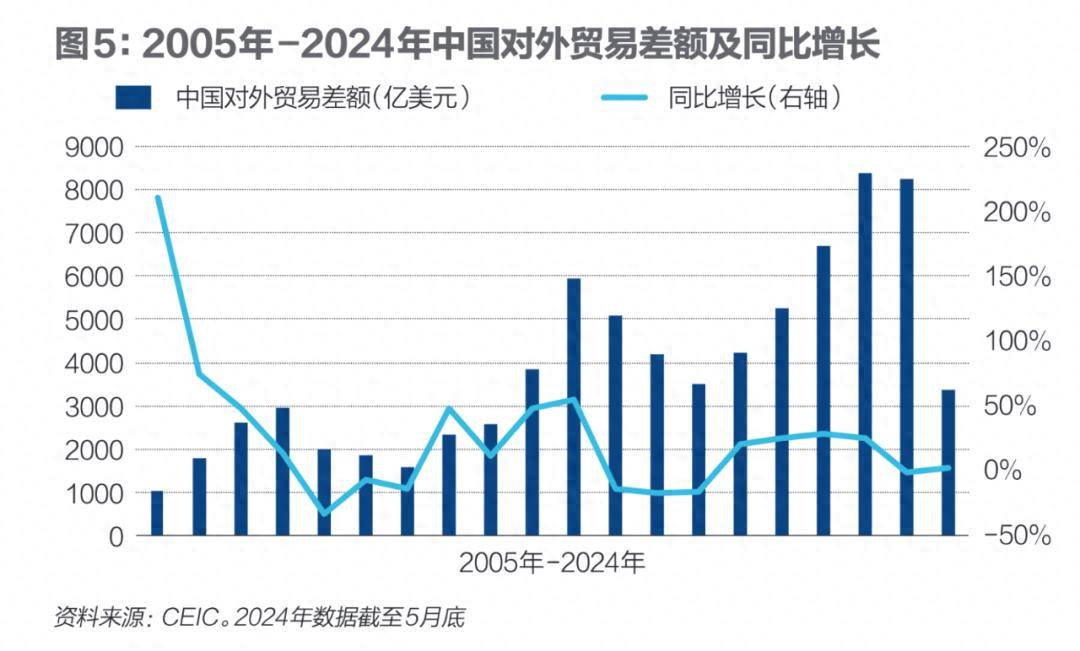
Core Viewpoint - China is currently the world's largest producer, accounting for nearly one-third of global industrial products by 2024, with a trade surplus projected to reach approximately $1.2 trillion by 2025, breaking historical records [1][3]. Group 1: Production vs. Consumption - The notion that the largest producer can also be the largest consumer is fundamentally flawed, as consumption is primarily driven by the service sector rather than manufacturing [3][10]. - Developed economies like the U.S. have a higher proportion of their economic output from services, which supports higher consumption frequency and employment [3][10]. Group 2: Savings and Consumer Behavior - There has been a significant shift in consumer behavior in China, with household savings increasing from around 80 trillion yuan in 2019 to over 160 trillion yuan today, indicating a trend towards precautionary savings rather than consumption [5][12]. - The concept of "preventive savings" has emerged, reflecting a change in mindset among consumers who prioritize saving over spending [5][12]. Group 3: Economic Structure and Income Levels - China's per capita GDP is nearing $14,000, and rising labor costs challenge its ability to maintain its status as the largest producer while also becoming the largest consumer [10][12]. - The income levels of the lowest earners in China, such as sanitation workers earning only a few thousand yuan per month, highlight the disparity in income distribution and its impact on consumption potential [14][15]. Group 4: Balance Between Production and Consumption - The need for a balanced economic approach is emphasized, where reliance on exports should not overshadow the importance of domestic consumption [21][20]. - Both production and consumption are essential for economic health, and over-reliance on one can lead to systemic issues, necessitating a focus on sustainable growth strategies [21][20].
海南是中国扩大内需新的战略支点
Hai Nan Ri Bao· 2026-02-14 04:41
Core Viewpoint - Hainan is positioned as a new strategic hub for expanding domestic demand in China, serving as a bridge connecting China with the world through institutional openness and high-quality supply integration [4][10]. Group 1: Hainan as a Bridge - Hainan is expected to become a prominent island recognized globally, similar to Hawaii, and a leading free trade port, surpassing places like Dubai and Singapore [5]. - The island serves not only as a physical passage but also as an institutional interface, facilitating global trade and investment [6]. Group 2: Financial Openness - Financial openness is essential for China's high-level external opening, with Hainan acting as a "testing ground" for financial reforms and innovations [8]. - Hainan has established an EF account that connects with over 80 countries, allowing for the free flow of funds, including digital RMB, enhancing investment efficiency [9]. Group 3: Expanding Domestic Demand - Hainan's role is to convert domestic and global consumption, with the potential to attract high-quality services and goods, thus becoming a center for high-quality consumption in China [10]. - The average spending of Chinese tourists abroad is significantly higher than domestic tourism, indicating a strong potential for Hainan to capture this market [10]. Group 4: Future Prospects - Hainan is anticipated to evolve into a new international tourism and entertainment center, attracting global stars and events, thereby enhancing its status in the service sector [11].

拒绝中国制造,美国通胀会爆吗?推演结果出炉:比大萧条更惨
Sou Hu Cai Jing· 2026-02-12 06:41
Core Insights - In 2024, the trade volume between China and the U.S. reached a record high of $688.28 billion, indicating a significant economic interdependence that challenges the notion of one-sided reliance [1] - The perception that the U.S. can dictate China's economic fate through trade restrictions is outdated, as China's trade surplus with the U.S. has dropped to below 2.2% of its GDP, reflecting a more diversified economy [2] - ASEAN has become China's largest trading partner for two consecutive years, highlighting the shift in China's trade networks towards Southeast Asia, the Middle East, and Latin America [5] Economic Dynamics - China plans to issue 13 trillion yuan in ultra-long-term special bonds by 2025 to stimulate domestic consumption, indicating a shift towards a dual circulation economic model where domestic demand plays a crucial role [7] - The U.S. underestimates its dependency on Chinese imports, particularly in pharmaceuticals, where 78% of vitamins and critical antibiotics are sourced from China, suggesting that any supply chain disruptions could have severe consequences for U.S. healthcare [10][12] Supply Chain Implications - The potential for the U.S. to cut off trade with China could lead to significant logistical challenges, with U.S. ports facing congestion and supply chain disruptions that would adversely affect the American economy [12] - The reliance on Chinese manufacturing for essential goods, including logistics equipment, underscores the difficulty the U.S. would face in replacing these supply chains with alternatives from countries like Vietnam or India, which may not match China's efficiency [17] Consumer Impact - A disruption in trade with China could lead to empty shelves and skyrocketing prices in U.S. retail, particularly affecting middle-class consumers who have benefited from low inflation driven by Chinese manufacturing [15] - The potential rise in consumer prices could exacerbate social tensions in the U.S., indicating that the consequences of severing ties with China extend beyond economic metrics to societal stability [17]
高市早苗压倒性胜选:日本政治经济全面转向 股市大涨背后逻辑深度拆解
Sou Hu Cai Jing· 2026-02-09 15:43
Group 1 - The core viewpoint of the article is that the overwhelming election victory of Kishi Sanae and the Liberal Democratic Party (LDP) will reshape Japan's domestic and foreign policies, influence the Asian geopolitical landscape, and drive the Japanese stock market to historical highs [2] - The LDP's victory allows for constitutional amendments, solidifying Kishi's leadership and enabling the implementation of comprehensive economic, military, and diplomatic strategies [2][3] - Morgan Stanley MUFG Securities has raised its forecast for the Japanese stock market, predicting a 2,450-point increase in the Tokyo Stock Exchange index by the end of 2026, driven by fiscal expansion, defense investment, and corporate profitability [2][5] Group 2 - Kishi's foreign policy focuses on strengthening the Japan-U.S. alliance while maintaining trade and strategic partnerships with Europe and India, which has garnered support from the business community and conservatives [3] - Domestically, Kishi's political agenda resonates with the public's desire for economic improvement and national strength, leading to high approval ratings and electoral success [4] - Kishi's administration is implementing expansionary fiscal policies that align with the Bank of Japan's monetary policies, creating a "loose fiscal + stable monetary" environment that supports market liquidity and lowers financing costs for businesses [5] Group 3 - The combination of fiscal spending and monetary policy is expected to create a positive feedback loop for the Japanese economy and stock market, with increased government spending boosting infrastructure, defense, and consumer sectors [5] - The forecast of 4,250 points for the stock market is based on rational assessments of policy implementation, profit improvement, and capital inflow, with high liquidity stocks and defense-related sectors showing significant potential for excess returns [5] - While acknowledging the short-term benefits of Kishi's policies, there are concerns about the long-term risks associated with extreme right-wing tendencies and aggressive military expansion, which could undermine regional economic cooperation [6]

中国散裂中子源:既是科技创新“摇篮”,也是产业升级“催化剂”
Xin Lang Cai Jing· 2026-02-08 23:41
Core Insights - The second phase of the China Spallation Neutron Source (CSNS) is accelerating, with key facilities completed, positioning it as a core driver for technological innovation and industrial integration in the Guangdong-Hong Kong-Macao Greater Bay Area [1][2] Group 1: Technological Advancements - The CSNS has achieved a milestone with 100% self-controlled core equipment and the successful acceptance of the world's first high-power P-band fast-tuning tube, marking a leading position in key technical indicators [2] - Over 90% of the equipment for the CSNS is domestically produced, showcasing China's global competitiveness in high-end manufacturing [2] Group 2: Industrial Empowerment - The CSNS has completed over 2,500 projects during the 14th Five-Year Plan, addressing cutting-edge fields such as new energy batteries and high-temperature superconductors [3] - The neutron scattering technology allows companies to optimize battery processes by "visualizing" microscopic changes in electrode materials, significantly shortening R&D cycles [3] - A boron neutron capture therapy (BNCT) device developed by the CSNS has entered clinical trials, breaking foreign monopolies and enhancing the entire industry chain from equipment manufacturing to drug development [3] Group 3: Collaborative Development - There is a need for improved communication and collaboration among industries to facilitate the sharing of technological achievements from the CSNS [4] - The CSNS aims to actively engage with enterprises to promote the use of its advanced research platform, enhancing regional industrial development [4] - The collaboration between government, industry associations, and research platforms is expected to position the CSNS as a key support for the Greater Bay Area's global innovation landscape [4]