
全球资本市场互联互通

Search documents
阿布扎比第一银行加入Majarra倡议,推动全球资本市场互联互通
Sou Hu Cai Jing· 2025-12-18 12:49
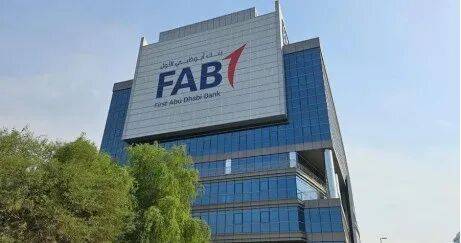
Group 1 - Abu Dhabi First Bank (FAB) has officially joined the Majarra initiative, a groundbreaking global plan aimed at creating an integrated platform for international capital market issuance, trading, and distribution [1][3] - The initiative will be implemented at the Abu Dhabi Global Market (ADGM) with technical support from Halo Investing, collaborating closely with local regulators and liquidity providers [3] - This partnership is part of FAB's strategic positioning as a catalyst for global sustainable investment, capital flow, and financial innovation, potentially opening significant new opportunities for the bank's core business [3] Group 2 - The collaboration will initially benefit FAB's wealth management clients by providing a broader and more diversified range of investment options, allowing access to unique cross-border opportunities [3] - FAB aims to expand its distribution channels through Majarra's interconnected platform, offering onshore and offshore investors quicker and more efficient access to debt instruments, structured products, Islamic finance, and treasury solutions [3] - Majarra's core mission is to establish a stable, innovative, and interconnected global capital market network, enhancing liquidity, reducing transaction costs, and lowering capital costs globally [3] Group 3 - FAB is the largest integrated financial institution in the UAE, established in 2017 through the merger of National Bank of Abu Dhabi (NBAD) and First Gulf Bank (FGH), with total assets projected to reach 1.31 trillion dirhams (approximately 356 billion USD) by 2025 [4] - The bank operates in over 20 global markets and has been assigned a stable AA rating by the three major international rating agencies [4] - FAB focuses on corporate banking, investment banking, and cash management services, providing cross-border financial solutions through its global branches [4]

新交所与纳斯达克官宣:将于明年年中推出环球上市板
2 1 Shi Ji Jing Ji Bao Dao· 2025-11-21 06:48
Core Viewpoint - The introduction of the "Global Listing Board" by the Singapore Exchange Group and Nasdaq marks a significant step towards enhancing connectivity in global capital markets, allowing companies to dual-list efficiently across the Pacific with a single set of listing documents [1][2]. Group 1: Global Listing Board Details - The new framework will enable companies with a market capitalization of at least 2 billion SGD (approximately 10.8 billion RMB) to meet the regulatory requirements of both exchanges simultaneously [1]. - The initiative aims to simplify the listing process through a unified set of disclosure requirements, reducing institutional barriers, complexity, and cost burdens for cross-border listings [3]. Group 2: Market Context and Challenges - Singapore, as a major financial hub in Asia, is responding to challenges posed by weak liquidity in its securities market, which has led many local tech companies to opt for listings in the U.S. [4][5]. - The Monetary Authority of Singapore is actively addressing these challenges through a coordinated approach involving demand, supply, and regulatory measures, including a 5 billion SGD "Securities Market Development Plan" [6]. Group 3: Support and Collaboration - The initiative has received strong support from various stakeholders, emphasizing the importance of attracting high-quality growth-oriented companies related to Asia to expand their investor base without navigating complex dual regulatory systems [7]. - Key figures from both exchanges and government bodies have highlighted the potential for this collaboration to create scale efficiencies and enhance the investment ecosystem in Singapore [7].
跨境投资合作提速,业内热议全球资本市场互联互通新路径
Di Yi Cai Jing· 2025-10-26 06:00
Core Insights - The recent Shanghai Global Asset Management Forum highlighted the transition of Chinese asset management institutions from a "trial phase" to a "scale-up phase" in overseas investments, with global exchanges optimizing rules and innovating products to capture opportunities in the Chinese market [1] Group 1: QDII Fund Growth - The QDII fund scale has surpassed 678 billion RMB, with over 70% of funds directed towards Hong Kong and U.S. markets, indicating a strong demand for overseas investments among domestic investors [2] - In the first half of the year, QDII funds invested over 30 billion RMB in Hong Kong stocks and approximately 20 billion RMB in U.S. stocks, with a preference for equity assets over bonds and gold [2] - The investment focus of QDII funds is primarily on information technology, communication, and non-durable consumer goods, reflecting a keen interest in emerging industries and high-growth sectors, particularly in AI [2] Group 2: International Collaboration and Market Connectivity - The Eurasian Capital Market Alliance (FEAS) is actively working to connect Eurasian markets, with initiatives like the Tabadul project aimed at enhancing market interconnectivity and reducing transaction costs [5][6] - The London Stock Exchange (LSE) has undergone significant reforms to attract more international companies, including the removal of certain listing requirements and the introduction of dual-class voting structures [6][7] - The Singapore Exchange (SGX) is expanding its product offerings and streamlining its IPO processes, aiming to attract more foreign listings, particularly from China and Southeast Asia [8] Group 3: Asset Management Strategies - High-net-worth clients are increasingly seeking both asset preservation and special asset services, with over 70% of trust funds allocated through QDII channels invested in Hong Kong and U.S. markets [3] - There is a growing interest in developing innovative QDII products that focus on specific countries, asset classes, or industries to meet diverse investor needs [2][3] - The focus on sectors such as technology, new energy, and new consumption is particularly appealing to European investors, indicating a strategic push by Chinese asset managers to promote Chinese assets in Europe [3]