全球AI股回调

Search documents
暴跌1400点!高市之“祸”拖垮日股,AI泡沫“杀跌”全球?
Sou Hu Cai Jing· 2025-11-18 06:39
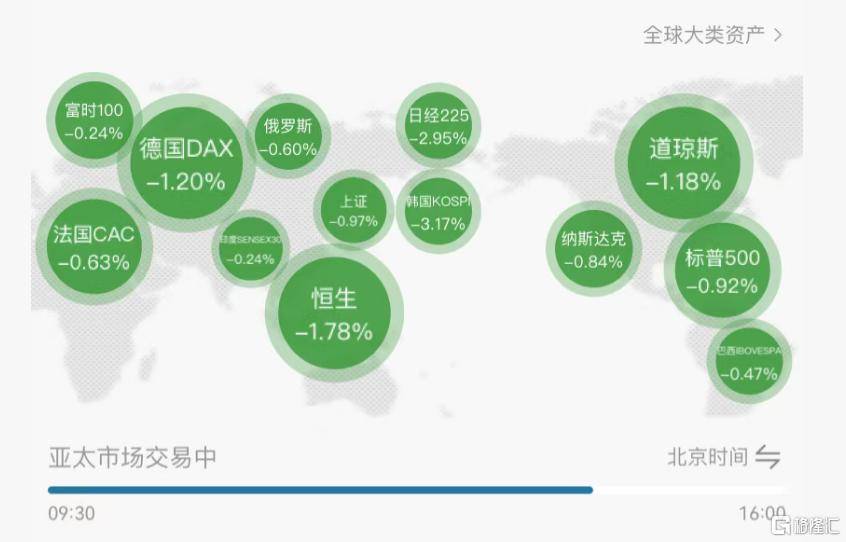
Core Viewpoint - The global financial markets are experiencing heightened anxiety over the technology and AI bubble, particularly ahead of Nvidia's earnings report, which is seen as pivotal for market sentiment regarding AI investments [1][9]. Group 1: Market Performance - Asian markets, particularly Japan and South Korea, are leading declines, with the Nikkei 225 index dropping over 1400 points, a decline of more than 3%, falling below the 49000 mark [3][5]. - The Hong Kong and A-share markets are also experiencing significant downturns, with the Hang Seng Index down over 1.95% and the ChiNext Index down 1.62% [4][3]. Group 2: Technology Sector Concerns - The recent sell-off in the technology sector is attributed to growing concerns over an AI bubble, with the S&P 500 index having risen 38% from its April low to its October high, driven by strong tech stock performance [5][6]. - Major tech stocks, including Tesla, Meta, and Nvidia, have seen significant declines, with Tesla down over 10% and both Meta and Nvidia down over 7% [6][10]. Group 3: Nvidia's Impact - Nvidia is at the center of the current market anxiety, with its upcoming earnings report being crucial for maintaining investor confidence in AI [9][10]. - Notable hedge funds, including Bridgewater, have significantly reduced their holdings in Nvidia, with a nearly two-thirds reduction reported [10][11]. Group 4: Broader Economic Implications - Analysts express concerns that the current market dynamics may be influenced by expectations of tighter monetary policy from the Federal Reserve, which could further impact market stability [20][21]. - Morgan Stanley predicts a "risk reset year" in 2026, with a shift in focus from macroeconomic factors to microeconomic performance, potentially driving strong corporate earnings growth [22]. Group 5: Outlook for Chinese Assets - Foreign investment banks remain optimistic about Chinese assets, with UBS forecasting a continued upward trend in the Chinese stock market by 2026, driven by earnings growth rather than valuation [24]. - Morgan Stanley also anticipates moderate gains in the Chinese stock market, with specific indices expected to see up to 5% upside by the end of 2026 [25].