全能Agent

Search documents
别了,OpenClaw,19个顶尖AI夜袭硅谷,3万刀金融终端变「废铁」
3 6 Ke· 2026-02-26 04:10
Core Insights - Perplexity has launched "Perplexity Computer," a powerful multi-modal system that allows 19 top AI models to work collaboratively without manual intervention, marking a significant advancement in personal computing [1][3][11] - Anthropic has announced the acquisition of Vercept, aiming to enhance Claude's capabilities to operate computers more like humans, thereby improving its task execution efficiency [8][38][39] Group 1: Perplexity Computer - Perplexity Computer can perform end-to-end tasks including research, design, coding, deployment, and project management through the orchestration of multiple AI agents [4][12] - The system automatically selects the best model for each task, utilizing Claude for reasoning, Gemini for research, and Grok for speed, and can operate autonomously for hours or even days [6][12] - It is designed to remember users' past work and is equipped with hundreds of connectors for persistent memory and direct internet access [12][15] - Perplexity Computer allows users to manage multiple projects simultaneously, akin to conducting an orchestra [15][17] - The system is currently available to Max subscribers on the web, with a pay-per-use model and a promotional offer of 20,000 points for new and existing users [23][30] Group 2: Anthropic and Claude - Anthropic's acquisition of Vercept is aimed at enhancing Claude's ability to perceive and interact with software like a human, addressing a long-standing limitation in AI task execution [38][39] - Claude has shown significant improvement in computer usage capabilities, achieving a score of 72.5% on the OSWorld benchmark, nearing human-level performance [43][45] - The integration of Vercept's technology into Claude is expected to further enhance its operational capabilities, emphasizing the importance of effective task execution in AI competition [45]



大模型之上至少还有四层创业机会
3 6 Ke· 2025-08-18 08:21
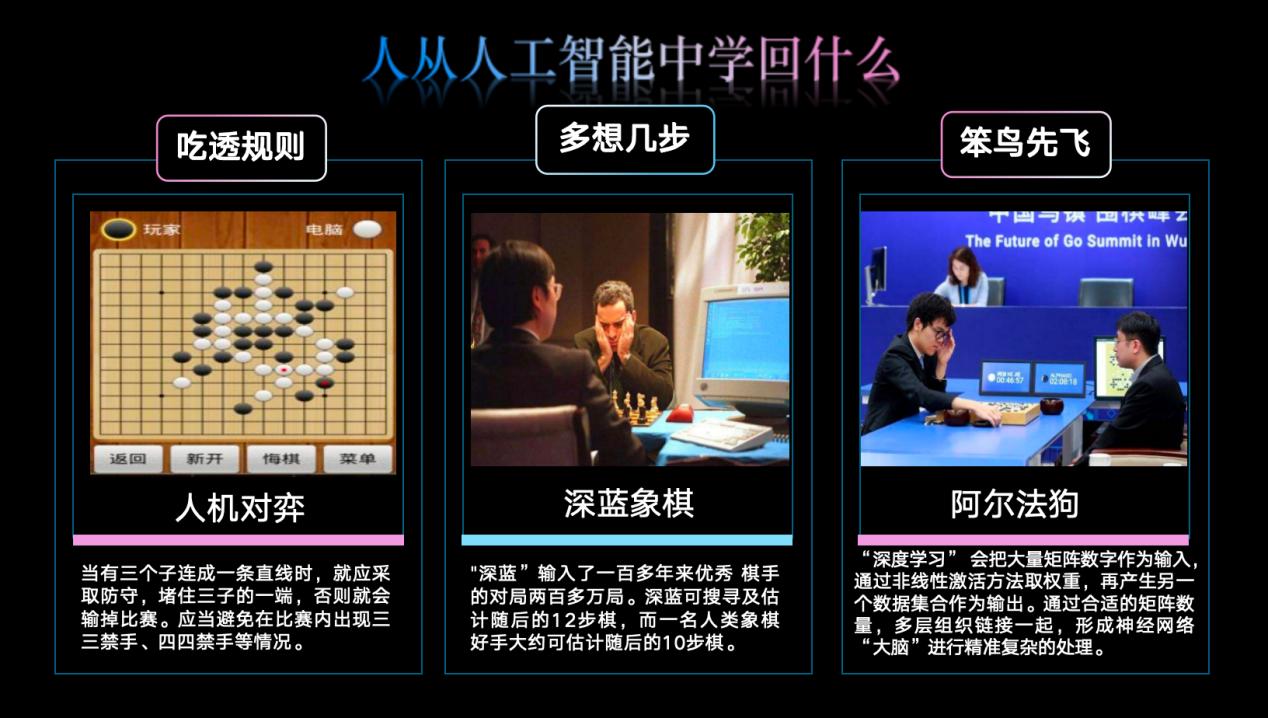
Core Insights - The article discusses the evolution and future of AI, emphasizing the transition from "data intelligence" to "artificial intelligence" and the implications for industries and individuals [1][2][3] Group 1: AI Development Stages - AI has undergone three waves of highs and two lows since the Dartmouth Conference, with a focus on "artificial intelligence" potentially being better termed "artificially created intelligence" [2] - Key insights from AI's evolution include understanding rules, thinking several steps ahead, and the importance of continuous improvement [3][5] Group 2: Challenges in the Era of Large Models - The core challenges in the large model era include attention mechanisms, data quality, and the need for a collaborative ecosystem [5][6] - Human experts are increasingly adopting a "wait and see" approach, allowing AI to present conclusions before providing their insights, enhancing collaboration [6][7] Group 3: Future Pathways - The future of AI applications hinges on the collaboration between edge devices and cloud systems, with a debate between centralized and localized model deployment [10][11] - High-quality data and personalized models will be crucial for the next generation of AI applications, as data quality remains a significant differentiator [11][12] Group 4: Open Ecosystem vs. Closed Systems - The article raises the question of whether the future of the internet ecosystem in China will be closed or open, suggesting that an open approach is necessary for AI development [12][13] - Suggestions for promoting openness include creating a universal AI SDK and establishing an open application ecosystem under regulatory guidance [13][14] Group 5: Industry Coexistence - The article emphasizes the importance of maintaining a balance between various applications and services, advocating for a "boundary awareness" approach to ensure diverse service providers can thrive [16][17] - The emergence of AI as a foundational technology is compared to the Linux era, indicating significant opportunities across various layers of AI development [17][18] Group 6: Security and Trust - The future intelligent ecosystem will rely on a "cloud-edge-end" model, ensuring user data security and trust through a combination of private and shared cloud solutions [19][20] - The article highlights the importance of perceived security, suggesting that users need to feel in control of their data, which is essential for widespread AI adoption [20]