
公共安全治理模式转型

Search documents
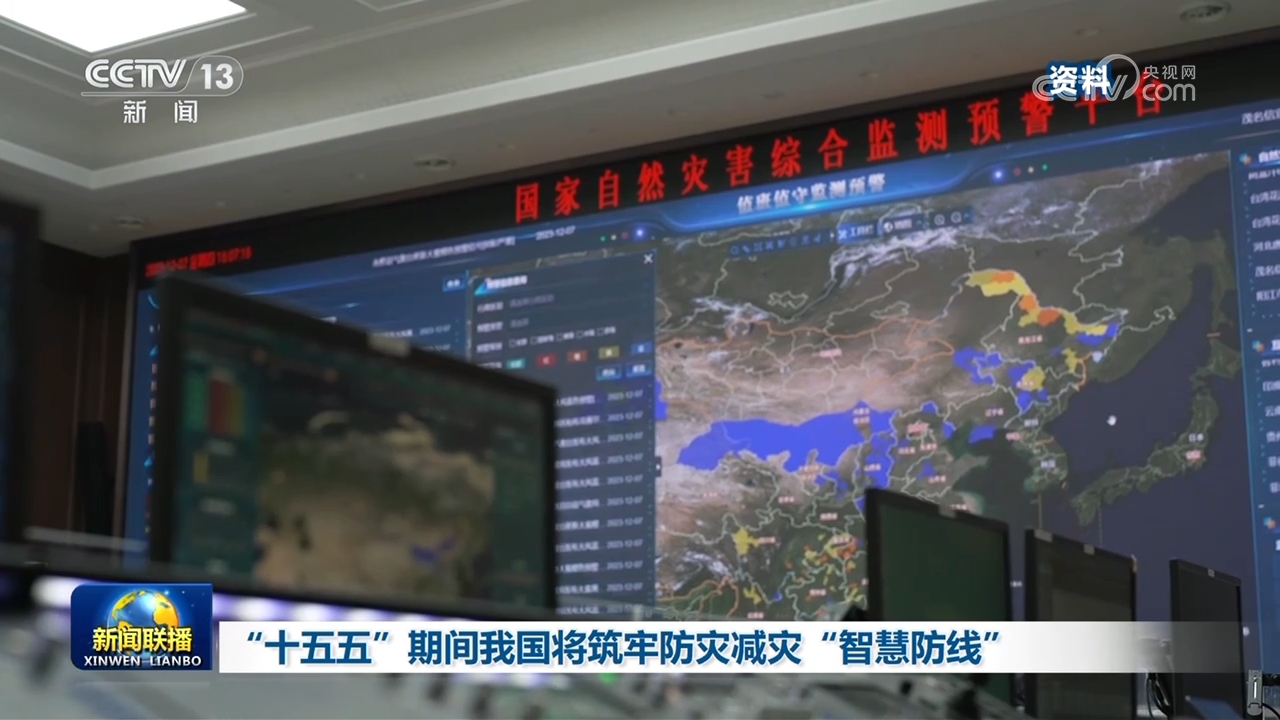
“十五五”期间我国将筑牢防灾减灾“智慧防线”
Yang Shi Wang· 2026-01-10 12:48
Group 1 - The core viewpoint of the article emphasizes China's commitment to transforming public safety governance towards proactive prevention during the "14th Five-Year Plan" period, achieving significant reductions in disaster-related metrics [1] - During the "14th Five-Year Plan" period, the average number of people affected by disasters decreased by 36.0%, the number of deaths and missing persons due to disasters decreased by 22.9%, and the direct economic losses from disasters as a percentage of GDP decreased by 39.0% compared to the previous five years [1] Group 2 - In the "15th Five-Year Plan" period, China will further improve its risk prevention and control system, focusing on building an integrated monitoring system for natural disasters across air, space, and ground [3] - The emergency management department will collaborate with relevant departments to enhance multi-hazard and disaster chain comprehensive risk monitoring and early warning capabilities, as well as to plan and construct provincial emergency rescue centers tailored to local conditions [3] Group 3 - During the "15th Five-Year Plan" period, China will strengthen technological research in emergency management by optimizing and integrating new technologies such as satellite remote sensing, 5G communication, and artificial intelligence [5] - A national key research and development plan will be initiated to comprehensively enhance capabilities in risk intelligent perception, monitoring, early warning, and response, thereby reinforcing the "smart defense line" for disaster prevention and reduction [5]

以法治推动“事前预防型”公共安全建设
Xin Lang Cai Jing· 2026-01-02 18:29
Core Viewpoint - The article emphasizes the importance of transitioning public safety governance from "post-event response" to "pre-event prevention" as a key strategy for building a "Safe China" [1][2]. Group 1: Legislative Developments - Recent legislative efforts have reinforced the "pre-event prevention" concept, integrating it into various laws such as the Production Safety Law, Food Safety Law, and Environmental Protection Law [2]. - The newly revised Emergency Response Law exemplifies this shift, introducing new provisions that prioritize enhancing the capacity for prevention and response to emergencies [2][3]. - The law establishes a dedicated chapter on "Prevention and Emergency Preparedness," emphasizing the need for proactive measures to manage risks and prevent emergencies [2]. Group 2: Risk Management Strategies - Effective public safety governance requires a dual approach of "blocking" and "unblocking" risks, which includes both direct interventions and the development of safety infrastructure [3]. - The article advocates for the legal framework to adapt to modern technologies such as IoT, big data, and AI to enhance risk monitoring and assessment [4]. - It highlights the necessity of establishing clear legal responsibilities for various stakeholders, including enterprises and civil organizations, to ensure a collaborative approach to public safety [7]. Group 3: Legal Adaptability and Responsiveness - The adaptability of laws is crucial for effective risk warning and pre-event prevention, necessitating differentiated legal designs based on risk levels and regional characteristics [6]. - The article stresses the need for laws to evolve dynamically in response to changing risk landscapes, moving from static rules to dynamic responses [6]. - It calls for a comprehensive responsibility system that clearly defines the roles of multiple stakeholders in public safety governance, ensuring accountability even in the absence of incidents [7].