公私背离

Search documents
泰康基金桂跃强:基民为白酒家电“买单”,个人账户狂赚科技股
Sou Hu Cai Jing· 2026-01-30 08:09
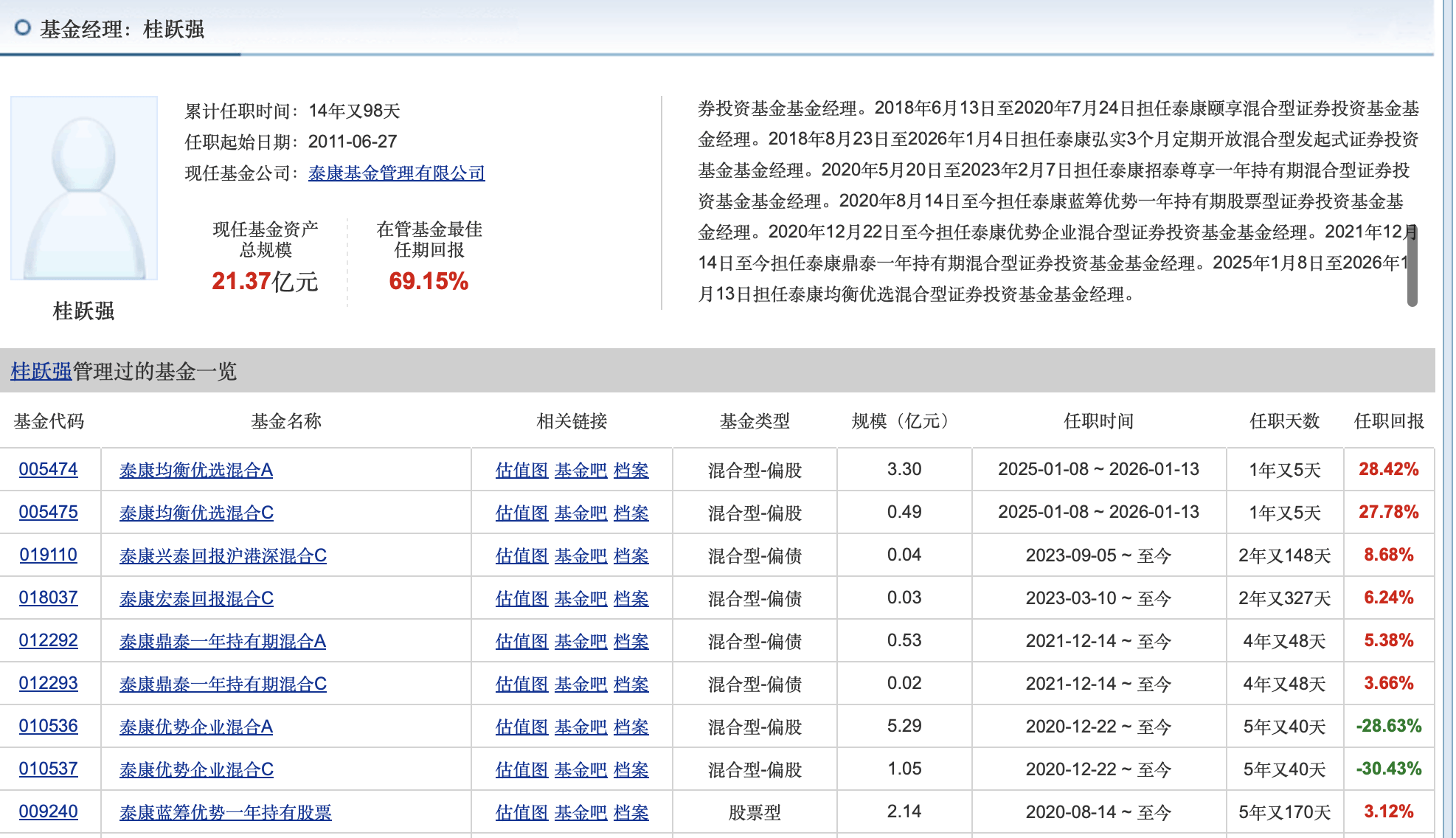
Core Viewpoint - The controversy surrounding fund manager Gui Yueqiang of Taikang Fund highlights a significant disconnect between his personal investment strategies and the poor performance of the funds he manages, leading to investor dissatisfaction and a broader trust crisis in the industry [1][8][10] Group 1: Fund Performance - Gui Yueqiang manages six public funds with a total scale of approximately 2.137 billion yuan [2] - The Taikang Advantage Enterprise Mixed Fund has a tenure return of -28.63% and an annualized return of -6.4% since its inception in December 2020 [2] - The Taikang Blue Chip Advantage One-Year Holding Stock Fund has a tenure return of only 3.12% and an annualized return of 0.56% since its establishment in August 2020 [2][6] Group 2: Investment Strategy and Holdings - Both funds have consistently held traditional blue-chip stocks such as Wuliangye, Midea Group, and Fuyao Glass among their top holdings [6] - Gui's investment strategy disclosures have been minimal, with recent reports indicating a slight increase in allocations to consumer stocks without detailed explanations [7] Group 3: Personal Investment Controversy - Reports suggest that Gui Yueqiang has made significant profits from personal investments in technology stocks, with gains exceeding 50 million yuan, raising questions about the alignment of his personal and fund investment strategies [8] - The discrepancy between personal and fund investments has led to accusations of a "public account defense and personal account offense" strategy, which may exploit regulatory gray areas [8][9] Group 4: Regulatory and Industry Implications - Current regulations allow fund managers to invest their own funds but require prior disclosure to avoid conflicts of interest [9] - The public's trust in fund managers is eroding, as investors feel betrayed by the perceived misalignment of interests, particularly when personal gains are made at the expense of fund performance [9][10]