六边形联盟

Search documents
敏感时刻,莫迪为何访问以色列?
Xin Lang Cai Jing· 2026-02-26 20:43
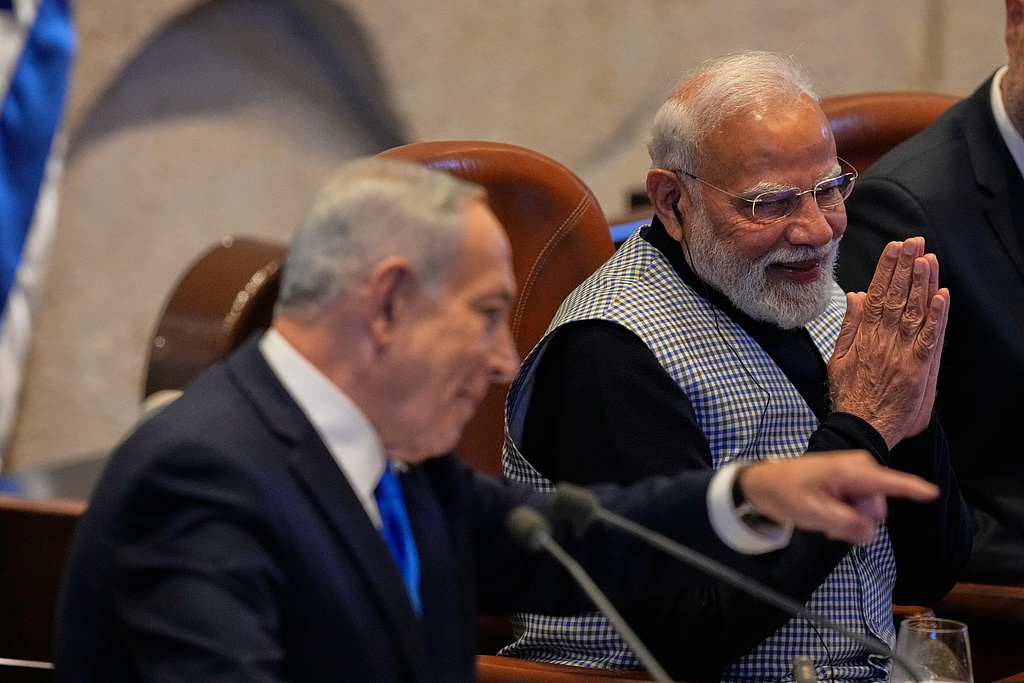
Group 1 - Indian Prime Minister Modi's visit to Israel marks his second trip since becoming the first Indian Prime Minister to visit in 2017, occurring during a sensitive time of international isolation for Israel due to the Gaza conflict [3] - The visit included significant diplomatic gestures, such as a warm embrace from Israeli Prime Minister Netanyahu and Modi's speech in the Israeli parliament, where he condemned the October 7 Hamas attacks and expressed India's unwavering support for Israel [4][10] - Modi's visit is seen as a strategic move for both countries, with Israel seeking to break its international isolation and India aiming to enhance its defense and technology cooperation with Israel [7][8] Group 2 - Historically, India and Israel's relationship has been cautious, with India prioritizing its ties with the Arab world until the 1990s when it shifted towards a more balanced Middle East policy [6] - The current geopolitical context has created deeper needs for both nations, with Israel facing domestic challenges and seeking to expand its military technology exports, while India looks to acquire advanced military technologies and balance its regional interests [7][8] - Key areas of potential cooperation include defense upgrades, accelerated free trade agreement negotiations, and Israel's "Hexagon Alliance" concept, although India's historical ties with Iran may complicate its alignment with Israel [9][10]

拉拢印度,以色列被曝或将分享“铁穹”等军事技术
Xin Lang Cai Jing· 2026-02-26 15:35
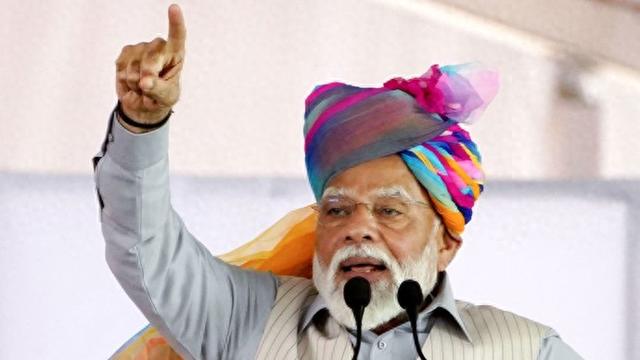
Core Viewpoint - India and Israel are expected to sign a $10 billion defense cooperation agreement, which includes the provision of Israel's "Iron Dome" and "Iron Beam" air defense systems to India [1][4]. Group 1: Defense Cooperation Agreement - The agreement will involve the transfer of advanced military technologies, including offensive weapons such as the SPICE-1000 precision-guided bomb and various missile systems [1]. - The focus of the defense collaboration will be on air defense systems, particularly the "Arrow" missile defense system, "David's Sling," "Iron Dome," and "Iron Beam" [1][2]. - India aims to produce these systems under the "Make in India" initiative and integrate them into a multi-layered defense network by 2035 [1]. Group 2: Strategic Partnership - The strengthening of India-Israel relations is being referred to as a "special strategic partnership," a term previously reserved for the U.S.-Germany relationship [4]. - Analysts suggest that Israel is looking to bind India into its security architecture through the transfer of sensitive military technology, which would create long-term institutional ties [5]. - The collaboration is seen as a move to counter regional threats, particularly from Turkey and other hostile forces in the Middle East [5]. Group 3: Political Context - The meeting between Indian Prime Minister Modi and Israeli Prime Minister Netanyahu emphasized the importance of defense and security in their partnership [5]. - The partnership is also viewed as a response to India's vulnerabilities in drone, missile, and cyber capabilities, especially following the India-Pakistan conflict [5].
加沙战火未熄,莫迪访以被批“透支印度国际道义”
Huan Qiu Shi Bao· 2026-02-25 22:49
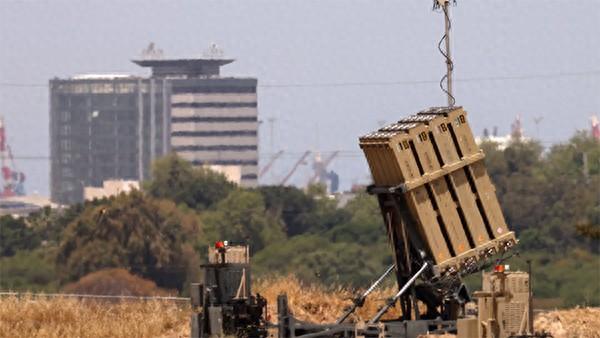
Group 1 - Indian Prime Minister Modi's visit to Israel marks his first trip to the Middle East since the recent escalation of the Israel-Palestine conflict, focusing on deepening bilateral cooperation [1][3] - Modi is scheduled to meet with Israeli Prime Minister Netanyahu and President Herzog, and will attend a summit on innovative technologies such as artificial intelligence and quantum computing [3] - The Israeli government expresses high expectations for the visit, with Netanyahu stating that it will significantly enhance cooperation in economic, diplomatic, and security fields, aiming to establish a "hexagonal" alliance including India, Greece, Cyprus, and some Arab and African countries [3] Group 2 - The warming of India-Israel relations is influenced by Turkey's increased military support to countries like Pakistan, prompting India to promote the "India-Middle East-Europe Economic Corridor" to connect India with Europe through the UAE, Saudi Arabia, Jordan, and Israel [4] - Modi's visit has sparked controversy, with opposition leaders in India criticizing it as a betrayal of the Palestinian cause, and some analysts arguing that it undermines India's moral influence in the global south [4] - The bilateral trade between India and Israel is projected to approach $4 billion in 2024, with plans to sign multiple agreements in areas such as cross-border payments, cybersecurity, and semiconductor supply chains during this visit [3]