共配模式

Search documents
国家出手整治派费,网点迎来新转机?
Sou Hu Cai Jing· 2026-01-15 05:11
Core Viewpoint - The national postal work conference has initiated measures to address differentiated delivery fees, aiming to rectify unreasonable management practices in the express delivery industry and promote a balanced distribution of interests among headquarters, franchisees, and couriers [1][4]. Group 1: Issues in the Express Delivery Industry - The problems arising from differentiated delivery fees have become evident, as this model leads to cost transfer from express companies to delivery points and couriers, resulting in a vicious cycle of concentrated business volume with compressed profits [3]. - The inability of delivery fees to adequately support operational costs has caused financial difficulties for delivery points and reduced income for couriers, leading to service disruptions in some areas [4]. Group 2: Policy Implications - The government's intervention is expected to sever the cost transfer chain, shifting industry competition from price wars to service quality improvement, which is a direct benefit for delivery points and couriers [4]. - If implemented effectively, the policy could clarify cost accounting for delivery points, stabilize courier incomes, and reduce personnel turnover, thereby strengthening the express delivery network [4]. Group 3: Operational Solutions - The current trend towards shared delivery models is gaining traction as it integrates resources and reduces costs, with the "Kuai Bao" shared delivery system being highlighted for its comprehensive functionality and reliability [6][12]. - The shared delivery system offers significant cost reductions by unifying sorting and delivery processes across multiple brands, thus lowering operational costs at the end [6][12]. - Enhanced operational efficiency is achieved through large-scale delivery and targeted resource integration, resulting in increased operational efficiency at delivery points [7]. Group 4: System Features - The "Kuai Bao" system supports seamless integration with major express brands, eliminating the need for multiple system switches and enhancing resource utilization [13]. - It provides comprehensive scanning coverage and real-time data monitoring, ensuring accurate tracking of logistics and minimizing disputes over lost items [13][14]. - The system includes features for handling special items and offers multiple notification channels to reduce communication costs and improve customer experience [14]. Group 5: Future Outlook - As the differentiated delivery fee reform progresses, the express delivery industry is expected to transition towards high-quality development, encouraging delivery points to enhance operational efficiency and service quality [14].

驿站之争,下沉有战事
3 6 Ke· 2025-05-13 10:35
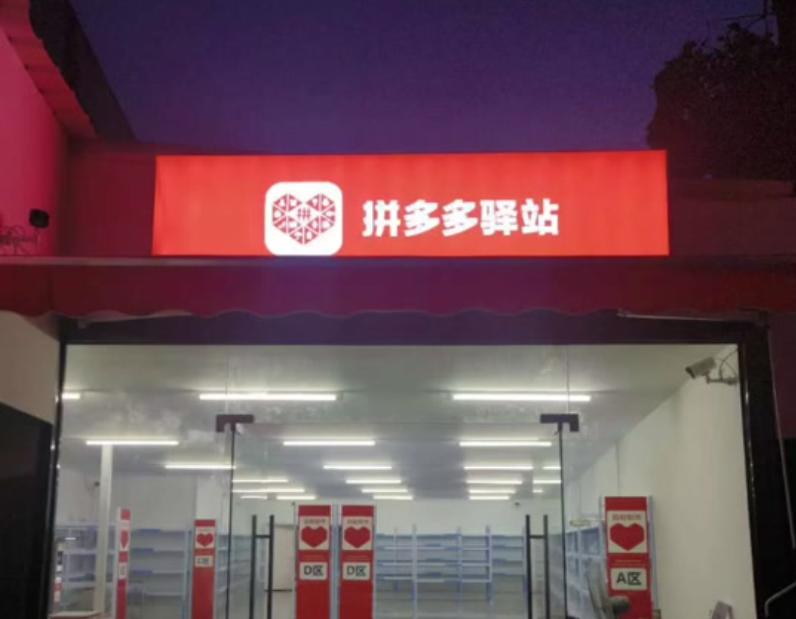
Group 1 - The integration of business flow and logistics is accelerating, with a focus on the "last mile" delivery stations this year [1] - Express companies are exploring various business models to increase revenue from delivery stations, such as retail services and laundry services [1][3] - E-commerce platforms are intensifying competition by entering the delivery station business, with Pinduoduo rebranding its delivery service to "Pinduoduo Station" and expanding its reach [1][8] Group 2 - The delivery station is a crucial link in the logistics chain, and its effectiveness directly impacts consumer satisfaction [3][4] - Pinduoduo's aggressive subsidy strategy for delivery stations is significantly increasing their revenue potential, with some stations seeing monthly income boosts of 1,200 to 3,000 yuan [8][9] - The competition is leading to a fragmented delivery experience for consumers, as multiple delivery stations may be required for different packages [9] Group 3 - Alibaba's Taotian is responding to Pinduoduo's market moves by enhancing its logistics capabilities and integrating its services [10][12] - The focus on increasing delivery volume is critical for Taotian, especially as Pinduoduo's single order volume has surpassed Taotian's for the first time [12] - Taotian is implementing technology-driven solutions to improve efficiency and reduce costs in its delivery operations [12][13] Group 4 - The strategies of Pinduoduo and Taotian reflect differing approaches to local delivery, with Pinduoduo favoring subsidies and Taotian focusing on integration and efficiency [15][17] - The competition in the last-mile delivery sector is evolving, with various players experimenting with different models to enhance service delivery [17]