关联交易披露

Search documents
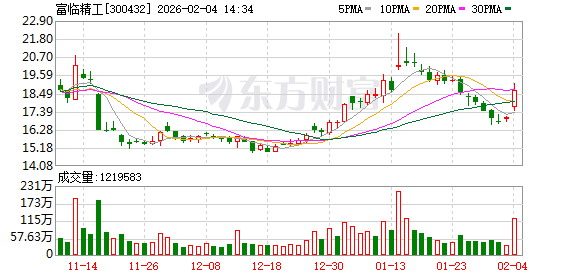
再现关联交易披露问题 富临精工被责令改正
Zhong Guo Jing Ying Bao· 2026-02-04 06:34
Core Viewpoint - Fulin Precision (300432.SZ) has been reprimanded by the Sichuan Securities Regulatory Bureau for issues related to the disclosure of related party transactions, raising concerns about the effectiveness and stability of its internal controls [2][3][4]. Disclosure Issues - Fulin Precision has been found to have delayed and inaccurate disclosures regarding related party transactions, including the failure to disclose a special report on the use of raised funds for the first half of 2022 [3][4]. - The company previously received a warning in September 2021 for similar disclosure issues, where it failed to identify and disclose its relationship with Mianyang Anda Construction Engineering Co., Ltd. in its annual reports from 2018 to 2020 [4]. Financial Reporting Irregularities - The company has been cited for various financial accounting irregularities, including misreported revenue from outsourced processing materials and improper revenue recognition for some export businesses [5][6]. - These irregularities resulted in a misreported revenue of 12.45 million yuan, accounting for 0.15%, and a profit misreporting of 1 million yuan, accounting for 0.25% in the 2024 annual report [6]. Governance and Internal Control Issues - Fulin Precision has faced governance issues, such as missing votes from individual board members in some resolutions and lack of signatures from insiders on confidential information records [6]. - The Sichuan Securities Regulatory Bureau has mandated corrective administrative measures and issued warnings to key executives, including the chairman and general manager [6]. Strategic Developments - Prior to the regulatory measures, Fulin Precision announced plans to introduce CATL as a strategic investor through a private placement, with CATL being a significant customer for its lithium iron phosphate materials [7]. - The impact of the recent regulatory actions on the progress of this strategic investment remains uncertain, particularly regarding the company's related party transaction approval processes [7].


【锋行链盟】港交所IPO关联交易披露核心要点
Sou Hu Cai Jing· 2025-10-25 13:39
Group 1 - The core objective of the Hong Kong Stock Exchange's IPO related party transaction disclosure is to ensure issuers provide sufficient information about the nature, amount, pricing fairness, and impact of related party transactions to protect minority shareholders and prevent interest transfer [2][7] - Related parties include controlling shareholders, directors, senior management, and entities controlled by them, while related party transactions encompass various arrangements such as sales of goods or services, asset transfers, and financial transactions [3][4] - Disclosure thresholds for related party transactions during the IPO phase require that the transaction amount or percentage exceeds specified limits, ensuring even one-time transactions above HKD 1 million must be disclosed regardless of their percentage of net profit [2][3] Group 2 - The prospectus must detail the identification of related parties, the nature and background of transactions, transaction amounts, pricing policies, and their impact on the issuer [3][4][6] - If a related party transaction meets the "major related transaction" threshold, independent shareholder approval is required before or after listing, with related parties abstaining from voting [4][7] - Certain related party transactions may be exempt from disclosure if they are conducted on normal commercial terms and do not adversely affect the issuer [5][6] Group 3 - Sponsors are responsible for verifying the authenticity, fairness, and completeness of related party transaction disclosures [5][6] - Ongoing related party transactions disclosed during the IPO must comply with reporting obligations post-IPO, including annual reports detailing transaction amounts and pricing policies [5][6] - The core logic of IPO related party transaction disclosure emphasizes fairness and transparency, with sponsors acting as gatekeepers to ensure compliance with regulations and protect minority shareholders [7]