养老金危机

Search documents
张尧浠:我们正站在新旧文明周期的断层线上,黄金未来无法想象的价格是对于货币体系的重置和再次校准
Sou Hu Cai Jing· 2025-12-19 03:52
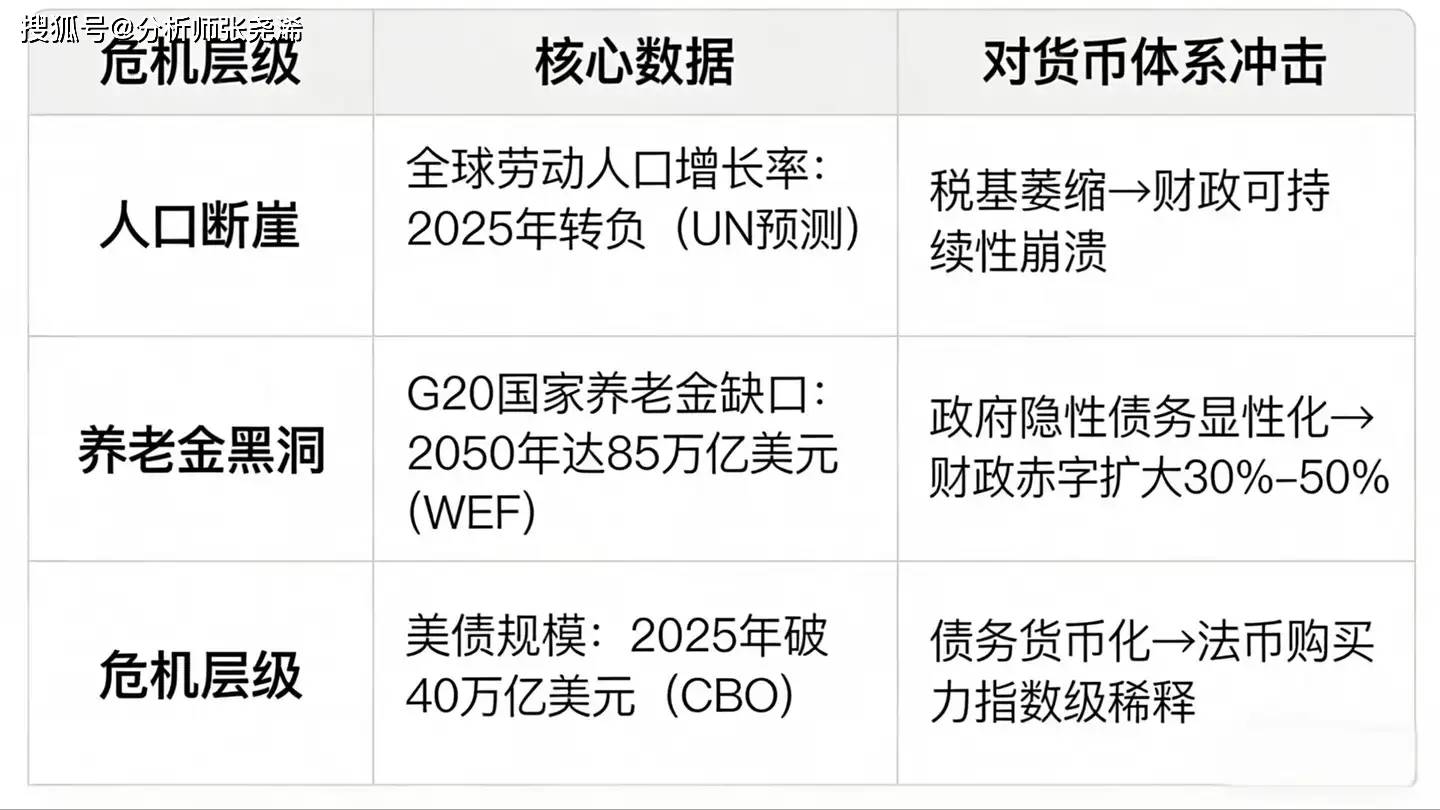
Core Viewpoint - The future price of gold is not merely about reaching a certain level but is tied to a reset and recalibration of the monetary system, indicating a significant shift in how assets are valued and perceived in relation to currency [1][6]. Group 1: Historical Context and Price Movements - Historical surges in gold prices have occurred during moments of monetary system failure rather than economic recessions, highlighting gold's role as a "pressure gauge" for the monetary system [1]. - Significant historical price jumps in gold occurred in 1933, 1971, and 2008, each corresponding to a breakdown in monetary credibility, with price increases of 40%, 70%, and over 180% respectively [1]. - The commonality in these instances is that gold's price increases (10-30 times) far exceeded inflation rates (2-3 times), indicating that the core driver was a reassessment of monetary credibility rather than mere inflation hedging [1]. Group 2: Structural Economic Challenges - The global economy faces three interrelated structural challenges: aging populations, pension fund insolvency, and uncontrolled sovereign debt, which collectively exacerbate long-term risks to fiscal sustainability and the monetary system [2][4]. - By 2050, G20 countries are projected to have a pension shortfall of $85 trillion, indicating a looming fiscal crisis [4]. - The U.S. national debt is expected to exceed $40 trillion by 2025, further stressing the fiscal landscape [4]. Group 3: Debt and Monetary Dynamics - Global sovereign debt is projected to reach $100 trillion by 2025, with interest payments consuming 4.2% of GDP, raising concerns about repayment capabilities [5]. - The U.S. debt interest-to-GDP ratio is expected to surpass 5.3%, indicating a potential crisis similar to the stagflation period of the 1980s [5]. - The ongoing geopolitical conflicts, such as the Russia-Ukraine war, are accelerating the depletion of pension reserves in affected countries, illustrating the fragility of pension systems under stress [5]. Group 4: Central Bank Gold Purchases - In 2023, global central banks purchased 1,136 tons of gold, marking the 14th consecutive year of net buying, with emerging markets accounting for 78% of this demand [5]. - The strategic intent behind these purchases includes providing super-sovereign credit guarantees for sovereign debt restructuring and experimenting with new monetary anchors [5]. - The formula for estimating future gold prices suggests a potential range of $15,000 to $60,000 per ounce based on global debt levels and gold coverage ratios, far exceeding current market expectations [5]. Group 5: Future Monetary System and Gold's Role - The transition to a new monetary system is anticipated, with major central banks directly purchasing government bonds, leading to a loss of price discovery for fiat currencies [5]. - Regional currency alliances are emerging, with initiatives like gold-backed digital currencies being tested in Southeast Asia and the Gulf region [5]. - The shift from physical gold to digital gold certificates is underway, with compliance-driven gold ETFs seeing significant growth [5]. Group 6: Investment Strategy Recommendations - The company suggests increasing gold allocation in investment portfolios from 5% to over 20% as a monetary reserve [6]. - Prioritizing physical gold holdings and central bank-level gold ETFs is recommended for future-proofing against monetary system changes [6]. - The timeframe for strategic positioning is advised to be before large-scale sovereign debt restructuring agreements, expected between 2028 and 2032 [6].

经济专家预言:中国未来五十年,人口将急剧下降,将变成5.8亿!
Sou Hu Cai Jing· 2025-09-30 15:07
Core Insights - China's birth rate has sharply declined, with only 9.02 million births in 2023, a 50% decrease from 2017, while deaths reached 10.93 million, resulting in a net population decrease of 1.39 million [1] - The declining birth rate poses significant challenges for society, economy, education, and the job market, leading to potential labor shortages and increased pension burdens in the future [1][21] Economic Factors - The high cost of raising children is a major deterrent for young couples, with estimated expenses from birth to college graduation reaching approximately 680,000 yuan, doubling for families in first-tier cities [3] - The economic pressure on young people, including job market discrimination and educational competition, contributes to their reluctance to have children [1][3] Workplace Challenges - Gender inequality in the workplace creates a dilemma for women regarding childbirth, as many face difficulties returning to work post-maternity leave, leading to career setbacks and even job loss [5] - The perception of career penalties associated with childbirth further diminishes women's willingness to have more children [5][19] Educational Pressures - Intense competition for educational resources leads parents to invest heavily in their children's education, exacerbating anxiety and discouraging them from having more children [7] - The societal pressure to ensure children do not fall behind in education contributes to the reluctance to expand family size [7] Aging Population - By 2023, the elderly population (60 years and older) reached 290 million, accounting for 21.1% of the total population, with projections indicating that by 2031, this group will exceed 20% [9][11] - The increasing proportion of elderly individuals will lead to significant societal pressures, including labor shortages and rising wages, impacting business operations [11][13] Pension and Healthcare Challenges - The pension system is projected to face a shortfall by 2035, with the gap potentially reaching 10 trillion yuan by 2050, posing a significant challenge to the social security system [13] - The rising elderly population will also increase healthcare demands, further straining social resources [13] Government Initiatives - The Chinese government has introduced policies to encourage childbirth, such as annual subsidies of 3,600 yuan for families with children under three, and additional local incentives in certain regions [15] - Economic experts suggest increasing GDP allocation for birth subsidies and implementing measures to promote shared parenting responsibilities [17][19] Cultural and Social Support - Addressing workplace gender discrimination and ensuring women can return to their jobs post-maternity leave are crucial for improving birth rates [19] - Reforming the education system to alleviate excessive educational pressure and enhancing childcare services are necessary for supporting families [19][21] Conclusion - The population crisis in China is a multifaceted issue affecting various sectors, necessitating collaborative efforts from the government, businesses, and society to enhance birth rates and mitigate negative impacts [21]