内生增长模型

Search documents
AI会带来经济爆发,但引线很长
创业邦· 2026-01-27 11:53
Core Viewpoint - The article discusses the ongoing debate about the impact of AI on GDP and productivity, focusing on the varying predictions regarding AI's contribution to economic growth over the next decade, which range from 0.07% to 10% [3][4]. Group 1: Perspectives on AI's Economic Impact - The academic community is divided into three distinct narratives regarding AI's potential to enhance long-term GDP growth, influenced by differing views on technological capabilities and economic mechanisms [7]. - The gradualist perspective, represented by Daron Acemoglu, suggests that AI's contribution to total productivity growth will be minimal, estimating a cumulative increase of only 0.71% over the next decade, based on the assumption that AI can impact 20% of tasks with a 25% cost reduction [8][9]. - The explosive growth perspective, represented by William Nordhaus and Epoch AI, views AI as a new production factor that could lead to significant economic growth, predicting that if AI can automate research processes, global GDP growth rates could exceed 10% in the 2030s [10][11]. Group 2: Integration of Perspectives - Erik Brynjolfsson's "J-Curve" theory suggests that the introduction of general-purpose technologies like AI may initially slow productivity growth due to the need for substantial investments in intangible assets, which may not yield immediate returns [12]. - Charles I. Jones introduces a unifying framework that acknowledges both the revolutionary potential of AI and the structural weaknesses in the economic system that may delay its impact, coining the term "bottleneck effect" to describe how the slowest part of a process determines overall productivity [13][20]. Group 3: Bottlenecks and Economic Growth - Jones argues that the economic system is complex and interdependent, where the productivity gains from AI may be limited by the slowest tasks in a process, emphasizing that even with advanced AI, the overall output is constrained by these bottlenecks [14][26]. - The article highlights that while AI can significantly enhance certain tasks, the overall economic growth will be gradual, with predictions suggesting a potential increase in TFP growth to around 5% over several decades, rather than an immediate leap [20][26]. Group 4: Future Scenarios and Human Roles - Jones outlines three potential scenarios for how AI could reshape economic structures, including the possibility of redefining production functions, expanding the share of tasks that can be automated, and addressing fundamental bottlenecks in energy and materials [22][25]. - The article suggests that as AI continues to evolve, human roles will shift towards areas where AI has not yet made significant inroads, such as complex physical tasks, regulatory oversight, and defining societal values [28][30].

AI会带来经济爆发,但引线很长
3 6 Ke· 2026-01-26 09:14
Core Viewpoint - The debate surrounding the impact of AI on the economy centers on the speed at which AI will reflect in GDP and productivity growth, with predictions ranging from minimal contributions to significant increases [1][2]. Group 1: Perspectives on AI's Economic Impact - The academic community is divided into three distinct narratives regarding AI's potential to enhance long-term GDP growth [5]. - The gradualist perspective, represented by Daron Acemoglu, suggests that AI's contribution to total factor productivity (TFP) growth over the next decade may only be between 0.07% and 1% [1][7]. - Acemoglu's methodology, based on Hulten's Theorem, is criticized for being inadequate to predict the transformative potential of AI, as it fails to account for structural changes in the economy [7][8]. Group 2: Alternative Perspectives - The explosionist view, represented by William Nordhaus and Epoch AI, posits that AI could act as a new factor of production, potentially leading to GDP growth rates exceeding 10% in the 2030s if AI can automate most cognitive tasks [11][12]. - The integrative perspective, introduced by Charles I. Jones, combines elements from both gradualist and explosionist views, suggesting that while AI has revolutionary potential, its impact will be moderated by systemic weaknesses in the economy [16][28]. Group 3: Structural Constraints and Economic Dynamics - Jones' "weak link" theory highlights that economic systems are complex and interdependent, where the slowest component determines overall productivity, thus limiting the impact of AI advancements [18][21]. - The initial introduction of general-purpose technologies like AI may lead to a temporary slowdown in productivity growth due to necessary investments in intangible assets and organizational restructuring [13][14]. - Empirical data supports the notion that while AI can enhance efficiency in certain tasks, overall economic output may still be constrained by non-automatable processes [26][27]. Group 4: Future Scenarios and Human Roles - Jones outlines three potential scenarios for AI's economic impact, including the possibility of redefining production functions, endogenous growth through increased AI penetration, and breakthroughs in fundamental constraints like energy and materials [30][39]. - As AI continues to evolve, human roles will likely shift towards areas where AI has not yet made significant inroads, such as complex physical tasks, regulatory oversight, and defining societal values [43][45]. - The transition to a post-abundance era may redefine human existence, focusing on meaning and purpose rather than mere economic utility [47][48].
学术交流|国际经济与贸易学院硕博连读研究生包朝峰参加第七届欧洲经济与政治国际会议
Sou Hu Cai Jing· 2025-12-03 08:07
Group 1 - The core viewpoint of the news is the implementation of the Central University of Finance and Economics Graduate Academic Exchange Reward Program, aimed at encouraging graduate students to actively participate in domestic and international academic exchange activities [1] Group 2 - The 7th International Conference on European Economics and Politics will be held at the University of Milano-Bicocca in Italy on June 12-13, 2025, gathering experts and scholars from various universities, research institutions, and policy organizations [2] - Graduate student Bao Chaofeng's paper was accepted for presentation at the conference, highlighting the university's support for academic achievements through the reward program [2] Group 3 - Bao Chaofeng presented a paper titled "Artificial Intelligence, Knowledge Spillovers, and Growth" at the conference, discussing the significant potential of artificial intelligence to reshape the global economy [4] - The paper developed an endogenous growth model illustrating two key impacts of artificial intelligence on innovation: intensive margin and extensive margin, indicating that AI enhances the processing and application of knowledge [4] - The research findings suggest that in a planned economy, AI promotes economic growth through these two margins, although the extensive margin may reduce the labor proportion allocated to R&D [4] Group 4 - The conference provided a valuable academic exploration opportunity, allowing for the presentation of research results and engagement in discussions on cutting-edge global economic and political issues [7] - The diverse topics discussed, including AI-driven economic transformation and policy debates in the context of green transition, offered new academic insights and perspectives [7] - Interaction with scholars from different cultural backgrounds enhanced the understanding of the importance of international academic collaboration and improved academic communication skills [7]

2025年诺奖得主菲利普·阿吉翁访谈
Sou Hu Cai Jing· 2025-10-15 02:54
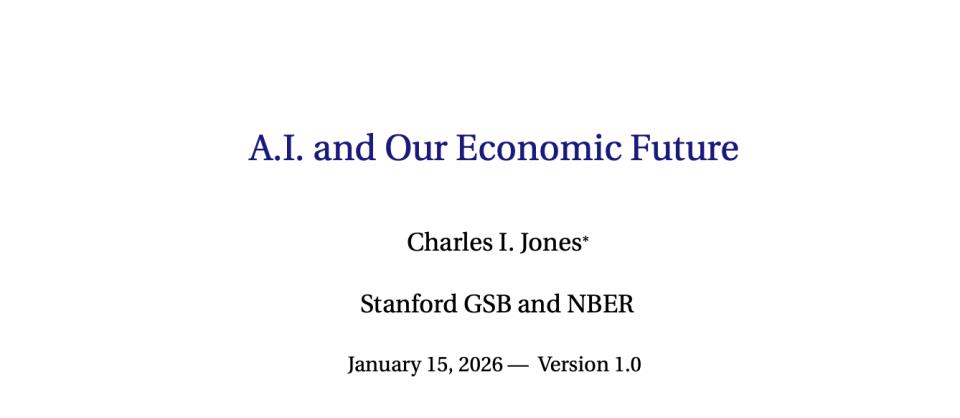
Group 1 - The core idea of the article revolves around Philippe Aghion's optimistic perspective on "creative destruction," which he believes leads to explosive economic growth and innovation, contrasting with previous pessimistic views [6][12][16] - Aghion's model of growth through creative destruction emphasizes that innovation is a struggle against old entities, where new ideas face resistance from established interests [6][14] - The article discusses the three waves of innovation: the initial wave where foundational innovations are often overlooked, the second wave where applications begin to disrupt old industries, and the third wave where innovation leads to job creation and economic growth [14][16][28] Group 2 - Aghion argues that government should act as an investment-oriented entity, supporting innovation and addressing the challenges faced by those negatively impacted during the transition phases of innovation [16][17] - The article highlights the importance of a dynamic government that adapts to market changes and supports education and basic research to foster innovation [18][19] - Aghion's insights suggest that innovation is not solely driven by new entrants but also by existing firms that adapt and innovate in response to market changes [15][28]