农业技术创新

Search documents
优化种植结构提升科技含量
Jing Ji Ri Bao· 2025-11-12 01:35
Core Insights - The overall stability of grain production in China is attributed to the continuous optimization of planting structure and significant agricultural technological innovations, which are crucial for ensuring food security [1] Group 1: Agricultural Innovations - The promotion of intercropping technology in North China is expected to yield 500 to 600 kg of corn per mu while additionally increasing soybean yield by 100 to 130 kg, enhancing both staple food security and oil supply [1] - In the northwest dry farming areas, drought-resistant wheat varieties and drip irrigation technology have been implemented, achieving a water savings of 30 to 50 cubic meters per mu and stabilizing wheat yields at 400 to 500 kg per mu [1] Group 2: Challenges in Grain Production - Current challenges include structural labor shortages in rural areas, low enthusiasm among some farmers for modern agriculture, bottlenecks in key technological innovations, and difficulties in the implementation of technology [1] - Extreme weather events such as droughts, heavy rains, and pests pose new uncertainties for agricultural production [1] Group 3: Policy Support and Financial Investment - The government has enhanced policy responsiveness and financial support, exemplified by the allocation of 484 million yuan for disaster relief during the critical autumn harvest period [2] - Future subsidy mechanisms may be explored to link financial support to planting area and actual yield, promoting a diversified investment model involving government, enterprises, and society [2] Group 4: Agricultural Technology Development - Emphasis on breeding innovation using modern technologies like gene editing and AI to accelerate the development of new crop varieties [3] - The establishment of a diversified agricultural technology promotion system, including technology commissioners and agricultural promotion stations, aims to facilitate the widespread application of agricultural technologies [3] Group 5: New Agricultural Entities - The cultivation of new agricultural entities such as collective economic organizations and family farms is encouraged to promote moderate-scale operations, enhancing both yield and profitability [3] - There is a need to connect small farmers with modern agricultural practices to stimulate production enthusiasm and create a cohesive operational framework [3] Group 6: Future Directions - The transformation in planting structure and agricultural technology represents a significant shift from traditional agricultural practices, necessitating the integration of cutting-edge technologies for sustainable and efficient agricultural practices [4] - A more robust agricultural disaster prevention and mitigation system is essential to enhance resilience and risk management in agricultural production, ensuring long-term food security [4]
庄明浩:优化种植结构提升科技含量
Jing Ji Ri Bao· 2025-11-12 00:00
Core Insights - The overall stability of grain production in China is attributed to the continuous optimization of planting structure and significant agricultural technological innovations, which are crucial for ensuring food security [1] Group 1: Planting Structure Optimization and Technological Innovation - The promotion of intercropping technology in North China is expected to yield corn at 500 to 600 kg per mu while additionally increasing soybean yield by 100 to 130 kg, enhancing both staple food security and oil supply [1] - In the northwest dry farming areas, drought-resistant wheat varieties and drip irrigation technology have been implemented, achieving a water savings of 30 to 50 cubic meters per mu and stabilizing wheat yields at 400 to 500 kg per mu [1] Group 2: Challenges in Grain Production - Current challenges include structural labor shortages in rural areas, low enthusiasm among some farmers for modern agriculture, bottlenecks in key technological innovations, and difficulties in technology promotion [1] - Extreme weather events such as droughts, heavy rains, and pests pose new uncertainties for agricultural production [1] Group 3: Policy Support and Financial Investment - The government has enhanced policy responsiveness and financial support, exemplified by the allocation of 484 million yuan for disaster relief during the critical autumn harvest period [2] - Future subsidy mechanisms may explore differentiated approaches linked to planting area and actual yield to improve fund utilization efficiency [2] Group 4: Agricultural Technology Development and Promotion - There is a call for increased investment in breeding innovation using modern technologies like gene editing and AI to accelerate the development of new crop varieties [3] - The establishment of diverse agricultural technology promotion systems, such as technology special commissioners and agricultural technology promotion stations, is crucial for large-scale application of new technologies [3] Group 5: New Agricultural Operating Entities - The cultivation of new agricultural operating entities, such as collective economic organizations and family farms, is essential for promoting moderate-scale operations and enhancing production efficiency [3] - Creating a close interest connection mechanism between small farmers and modern agriculture can stimulate production enthusiasm and strengthen food security [3] Group 6: Future Directions - The transformation towards optimized planting structures and technological innovation represents a profound change in agricultural practices, moving from single crop management to systematic optimization [4] - There is a need to integrate cutting-edge technologies like AI with agriculture to develop new models that are green, low-carbon, high-yield, and efficient [4]
优化种植结构 提升科技含量
Jing Ji Ri Bao· 2025-11-11 22:04
Core Insights - The overall stability of grain production in China amidst extreme weather events is attributed to the dual drivers of optimized planting structure and innovative agricultural technology [1] - The promotion of intercropping techniques in North China and drought-resistant wheat varieties in Northwest regions has significantly improved crop yields and resource efficiency [1] - Despite achievements, challenges such as labor shortages, low farmer engagement, and frequent natural disasters remain pressing issues for agricultural production [1] Policy Support - Strengthening the policy support system and increasing financial backing is essential, with timely responses to agricultural challenges, such as the issuance of disaster relief funds during adverse weather conditions [2] - Innovative subsidy mechanisms linked to planting area and actual yield can enhance the effectiveness of financial support [2] Agricultural Technology Development - Emphasis on agricultural technology research, integration, and application is crucial, including the use of modern techniques like gene editing and AI for breeding innovations [3] - The establishment of diverse agricultural technology promotion systems is necessary to facilitate the widespread application of new technologies [3] New Agricultural Entities - The cultivation of new agricultural operating entities, such as collective economic organizations and family farms, is vital for enhancing grain production efficiency [3] - Creating mechanisms that connect small farmers with modern agricultural practices can stimulate production enthusiasm and ensure food security [3] Future Outlook - The transformation towards optimized planting structures and agricultural innovation represents a significant shift in agricultural practices, necessitating the integration of advanced technologies for sustainable production [4] - A comprehensive agricultural disaster prevention and mitigation system is needed to enhance resilience and sustainability in agricultural production [4]
花椒基地来了位“张技术”
Ren Min Ri Bao· 2025-07-31 22:22
Core Insights - Zhang Shengping, a technical leader in a Sichuan pepper base in Chongqing, has transformed local agricultural practices by introducing innovative techniques and establishing a standardized system for pepper cultivation [1][2]. Group 1: Agricultural Innovation - Zhang Shengping developed a "three-dimensional management method" for Sichuan pepper trees, which includes providing support structures and protective nets to enhance resilience against adverse weather [2]. - After a heavy rainstorm, the protective nets in Zhang's experimental field successfully retained the fruit, leading to increased trust from local farmers in his methods [2]. Group 2: Economic Impact - The adoption of new techniques has resulted in a 20-30% increase in annual fruit set rates for farmers using Zhang's methods [2]. - The total planting area for Sichuan pepper in the town has reached approximately 10,000 acres, with an annual production of over 200 tons of dried pepper, benefiting 19 surrounding villages [2]. Group 3: Future Plans - Zhang aims to experiment with more new varieties to enhance the added value of the industry and promote the integration of agriculture, culture, commerce, and tourism [2].


从地头叫卖到“未摘先卖”:广东荔枝产业的“三级跳”跃升
2 1 Shi Ji Jing Ji Bao Dao· 2025-05-24 15:06
Core Insights - The article highlights the transformation of the lychee industry in Guangdong, showcasing advancements in preservation, logistics, and marketing that have turned lychee from a rare delicacy into a widely accessible fruit [1][2][3] Industry Overview - The lychee production in Guangdong has seen a significant increase, with the province accounting for over 50% of the national lychee planting area and more than one-third of the global supply [3][4] - The expected total lychee production in Guangdong for 2025 is projected to reach 1.6 million tons, marking a year-on-year increase of 30% to 50% [3][4] Technological Advancements - Preservation technology has improved dramatically, extending the shelf life of lychee from 3 days to 30 days, which is crucial for export and distribution [5][6] - The implementation of AI and blockchain technology in the production process has enhanced efficiency and traceability, with diagnostic times for issues reduced to under 5 seconds and accuracy rates improved to over 95% [4][5] Logistics and Distribution - The logistics network for lychee has been upgraded, with companies like SF Express and JD.com implementing cold chain solutions and multi-modal transport options, significantly improving delivery times [6][7] - The establishment of a comprehensive logistics system has enabled lychee to be delivered nationwide within a day, and to remote areas within three days [6][7] Market Expansion - Guangdong's agricultural exports reached 97.28 billion yuan in the first three quarters of 2024, with lychee exports expected to grow by 110% [7][8] - The lychee industry is diversifying into various sectors, including tourism and cultural products, with an estimated 25% increase in revenue from lychee-related cultural tourism in 2024 [8][9] Cultural Integration - The article emphasizes the cultural significance of lychee, noting its evolution from a royal delicacy to a popular fruit enjoyed by the masses, reflecting broader societal changes [9][10] - The "Lychee+" initiative is expanding the industry into diverse areas such as themed tourism, digital marketing, and innovative consumption experiences [9][10]
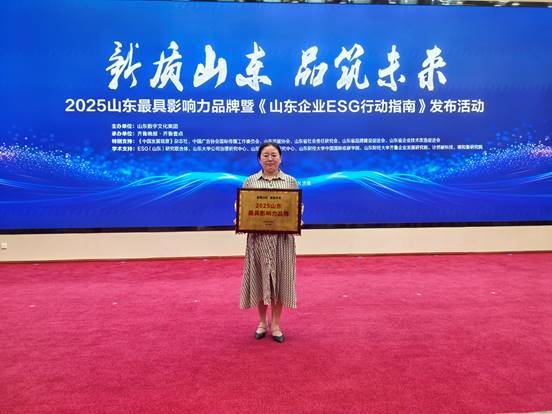
自有品种西甜瓜全年不断供!潍坊郭牌农业荣获山东最具影响力品牌
Qi Lu Wan Bao Wang· 2025-05-13 13:49
Group 1 - The event "New Quality Shandong Brands Build the Future" was held in Jinan, where the 2024 Shandong Brand Influence Report and the 2025 Most Influential Brands in Shandong were released, with Weifang Guopai Agricultural Technology Co., Ltd. awarded as the 2025 Most Influential Brand in Shandong [1][3] - Weifang Guopai Agricultural Technology Co., Ltd. focuses on the entire industry chain of the western sweet melon, having established the largest premium watermelon base in the country, with 11 standardized planting bases covering 30,000 acres across six provinces [3] - In 2024, the company sold 59 million seeds, cultivated 53 million seedlings, and produced 26,000 tons of watermelons, achieving an annual output value of nearly 340 million yuan, while creating employment for 12,000 people [3][5] Group 2 - The company has made significant technological innovations, collaborating with the National Western Sweet Melon Industry System Alliance to establish research centers and promote over 100 new technologies, including pollen storage and watermelon crack prevention [5] - Guopai Agricultural has applied for 167 national patents and invested 40 million yuan to introduce the first domestic "non-destructive intelligent detection and sorting production line" for western sweet melons, filling a domestic gap [5] - The recognition as the 2025 Most Influential Brand is seen as an acknowledgment of the company's quality, with plans to continue innovation and contribute to sustainable economic and social development [5]