
农产品贸易政策调整

Search documents
美国高粱出口提速,大豆出口低迷,中国新增巴西20船订单
Sou Hu Cai Jing· 2025-11-11 05:11
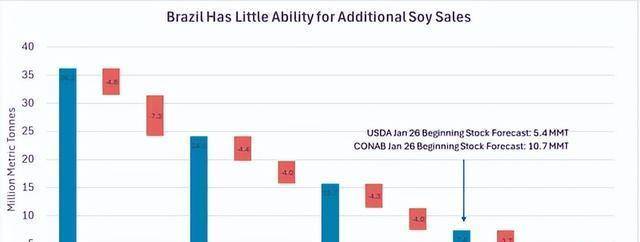
Core Insights - The article discusses the impact of tariff adjustments on the U.S. soybean market, highlighting the decline in China's tariff from 34% to 13% but noting that this has not yet translated into increased purchases from U.S. farmers [1][8] - The resumption of qualifications for three U.S. companies by Chinese customs is seen as a potential opportunity, yet the market remains competitive with Brazilian exports continuing to rise [3][4] - The article emphasizes the ongoing challenges faced by U.S. soybean farmers, including high inventory levels and limited processing capacity, which are exacerbated by low market prices [5][8] Tariff Adjustments - China's reduction of tariffs on U.S. soybeans from 34% to 13% has created a ripple effect in the market, but actual buying activity has not yet materialized [1][8] - The resumption of qualifications for U.S. companies CHS, Louis Dreyfus, and EGT by Chinese customs is a significant development, potentially opening new avenues for trade [3][4] Market Dynamics - Brazilian soybean exports are increasing, with statistics showing higher export volumes compared to the previous year, indicating strong competition for U.S. soybeans [3][5] - The price differential between U.S. and Brazilian soybeans is a critical factor in determining market orders, with U.S. prices still holding a premium [4][7] Supply Chain Challenges - U.S. soybean farmers are facing pressure from high inventory levels, with processing capacity having increased by 14%, yet the market is unable to absorb the excess supply [3][5] - The demand for soybean products like biodiesel has not kept pace with production increases, leading to a supply-side constraint [5][8] Information Asymmetry - There is a notable disconnect between optimistic reports from U.S. media regarding Chinese purchases and the lack of confirmation from Chinese buyers, creating uncertainty in the market [7][8] - The article highlights the complexities of global supply chains, where pricing and timing are critical in determining market outcomes [8]

欧盟将取消对乌克兰农产品免关税政策
news flash· 2025-05-23 01:32
Core Points - The European Commission announced that it will not extend the wartime "autonomous trade measures" that have allowed Ukrainian agricultural products to enter the EU tariff-free since 2022 [1] - The current tariff exemption policy for Ukraine will expire on June 5, and from June 6, trade in agricultural products between the EU and Ukraine will revert to the framework established by the trade agreement signed in 2017 [1]
