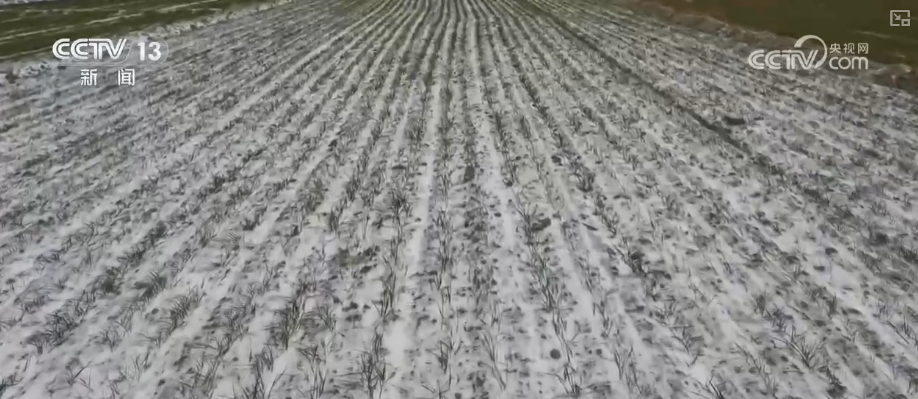
农作物防寒抗冻

Search documents
以“动”制“冻”!直击寒潮下的农作物“保卫战”
Yang Shi Xin Wen· 2025-12-14 02:47
Group 1: Impact on Agriculture - The recent cold wave and snowfall have led to a significant drop in temperatures across northern regions, affecting crop management and winter wheat growth [1][3] - In Hebei's Xingtai, farmers are being guided to enhance the cold resistance of winter wheat through targeted fertilization and management practices, covering approximately 120,000 acres [3] - Experts from the Ministry of Agriculture suggest that the cold weather can benefit wheat growth by improving soil moisture and killing pests, although they warn of potential risks like freezing temperatures after snowfall [7] Group 2: Livestock Management - The cold wave has also impacted livestock farming, prompting local agricultural centers to provide specific strategies for poultry and livestock management to ensure their safety during winter [8][10] - In Shandong, technical staff are advising poultry farmers to maintain optimal temperatures in chicken coops and manage ventilation to protect around 1.2 million egg-laying hens [10] - In Inner Mongolia and Gansu, livestock farmers are being instructed on shelter reinforcement and disease prevention to ensure the safety of their herds during extreme weather [12][14] Group 3: Vegetable Supply Stability - The cold weather has not hindered the production of broccoli in Zhejiang's Taizhou, which is a major production and processing hub, with an annual output nearing 100,000 tons [15][21] - The local supply chain for broccoli includes comprehensive support from seed supply to post-harvest logistics, ensuring quality and market readiness despite adverse weather conditions [17][19] - The dual focus on domestic and international markets for broccoli helps secure farmers' incomes, with exports reaching markets like Singapore and South Korea [21]


加强管理、除雪保温 打好应对寒潮“组合拳”保障粮油作物平稳越冬
Yang Shi Wang· 2025-12-13 03:30
Group 1 - The current cold wave and snowfall are beneficial for winter wheat and winter oilseed crops, as they help replenish soil moisture and break up soil compaction [1] - Experts warn of potential frost damage due to low temperatures and insufficient soil moisture, particularly for late-sown crops in 2025 [3] - Recommendations include enhancing field management to ensure crops can withstand winter, particularly focusing on promoting weak seedlings to stronger ones [3] Group 2 - The cold wave has shifted vegetable production from northern to southern regions, with northern areas relying more on facility-based supply [5] - Adequate light and temperature are crucial for vegetable growth, and the cold wave may delay vegetable development due to lower temperatures and poor light conditions [5] - Experts suggest scientific management of temperature and humidity in greenhouses, including heating, lighting, and snow removal to ensure the safety and productivity of vegetable facilities [6]