
农民稳定增收

Search documents
人民网评:精准帮扶常态化,把资源用在刀刃上
Ren Min Wang· 2026-02-10 07:10
Group 1 - The core viewpoint of the articles emphasizes the systematic deployment of "regular precise assistance" to promote stable income growth for farmers, marking a shift from temporary measures to a long-term mechanism [1] - The document integrates regular assistance into the rural revitalization strategy, providing guidance to address the persistent income growth challenges faced by farmers [1] - The implementation of regular precise assistance is a proactive measure to tackle new challenges, ensuring that support policies are stable and continuous while directing resources to those in greatest need [1] Group 2 - A combination of policy measures is being implemented to promote stable income growth for farmers, focusing on agricultural fundamentals, industry upgrades, and labor income [2] - The policies aim to protect and incentivize farmers' engagement in agriculture, enhance the profitability of grain production, and support the development of local industries [2] - There is a strong emphasis on the responsibility of government departments to ensure effective policy implementation, alongside collaboration from various sectors to support rural revitalization [2]

理响中国·聚焦2026“三农”工作丨积极促进农民稳定增收 中央一号文件这样强调
Yang Guang Wang· 2026-02-08 07:44
Core Viewpoint - The central government's first document of the year emphasizes the importance of promoting stable income growth for farmers, outlining a comprehensive set of measures to achieve this goal [1][14]. Group 1: Income Growth Measures - The document proposes a series of policies aimed at increasing farmers' income, including the use of minimum purchase prices and target prices to stabilize agricultural product prices [4]. - It emphasizes the need for effective implementation of subsidies for farmland protection, corn and soybean producers, and rice [4]. - The document encourages local governments to initiate special loan interest subsidy trials for grain and oil planting [4]. Group 2: Industry Development - The focus is on cultivating and expanding county-level industries that benefit the population, promoting a unified development of industry, strong counties, and wealth for farmers [6]. - It highlights the importance of preventing homogenization and excessive competition in agricultural projects, while also developing agricultural brands and extending the industrial chain [6]. - The document calls for a complete policy and standard system to regulate agricultural product live streaming and enhance rural tourism [6]. Group 3: Employment Support for Migrant Workers - The document outlines measures to support stable employment for migrant workers, including the implementation of vocational skills training that aligns with job market needs [11]. - It stresses the importance of ensuring timely payment of wages to migrant workers and combating malicious wage defaults [12]. - The document also emphasizes organized labor output and employment services to facilitate the return of workers to their jobs after the holiday season [12]. Group 4: Rural Consumption Expansion - The document aims to enhance rural consumption by improving infrastructure and service levels, promoting new consumption models such as harvest markets and leisure camping [13]. - It supports the modernization of rural distribution infrastructure and encourages the introduction of new energy vehicles and smart home appliances into rural areas [13]. - The document calls for strict legal actions against the production and sale of counterfeit goods in rural regions [13].


视频丨首提“常态化精准帮扶” 专家解读2026年中央一号文件
Yang Shi Xin Wen Ke Hu Duan· 2026-02-04 09:50
Core Viewpoint - The central government has released the 14th guiding document on "agriculture, rural areas, and farmers" since the 18th National Congress, focusing on modernizing agriculture and promoting comprehensive rural revitalization [1] Group 1: Agricultural Modernization - The document emphasizes the goal of anchoring agricultural and rural modernization, planning annual work with a focus on strengthening the agricultural foundation and addressing modernization shortcomings [1] - By 2025, China's grain production is expected to stabilize at over 1.4 trillion jin for two consecutive years, with a focus on enhancing agricultural production capacity and quality [2] Group 2: Agricultural Production and Quality - The key measures include maintaining grain planting areas and improving the yield of grain and oil crops to ensure food security [3] - The document stresses the need to transform agricultural development methods to better align with consumer demand for agricultural products [3] Group 3: Income Stability for Farmers - The document highlights the importance of promoting stable income for farmers, targeting a per capita disposable income of 24,456 yuan by 2025, representing a 6% real growth from the previous year [6] - It outlines strategies to enhance both operational and wage income for farmers [6] Group 4: Continuous Support Mechanisms - The concept of "normalized precise assistance" is introduced, transitioning from a focus on poverty alleviation to ongoing support for previously impoverished areas and populations [4] - The document calls for tailored assistance strategies, including safety nets for those unable to work and development-oriented support for those who can [6] Group 5: Rural Development Strategies - The document advocates for a "localized" approach to rural construction, emphasizing the need to respect local conditions and resources [10] - It suggests optimizing village layouts and construction methods based on local characteristics and population dynamics [11]
国新办发布会将解读中央一号文件亮点 几个关键词抢先看
Yang Shi Xin Wen· 2026-02-04 01:45
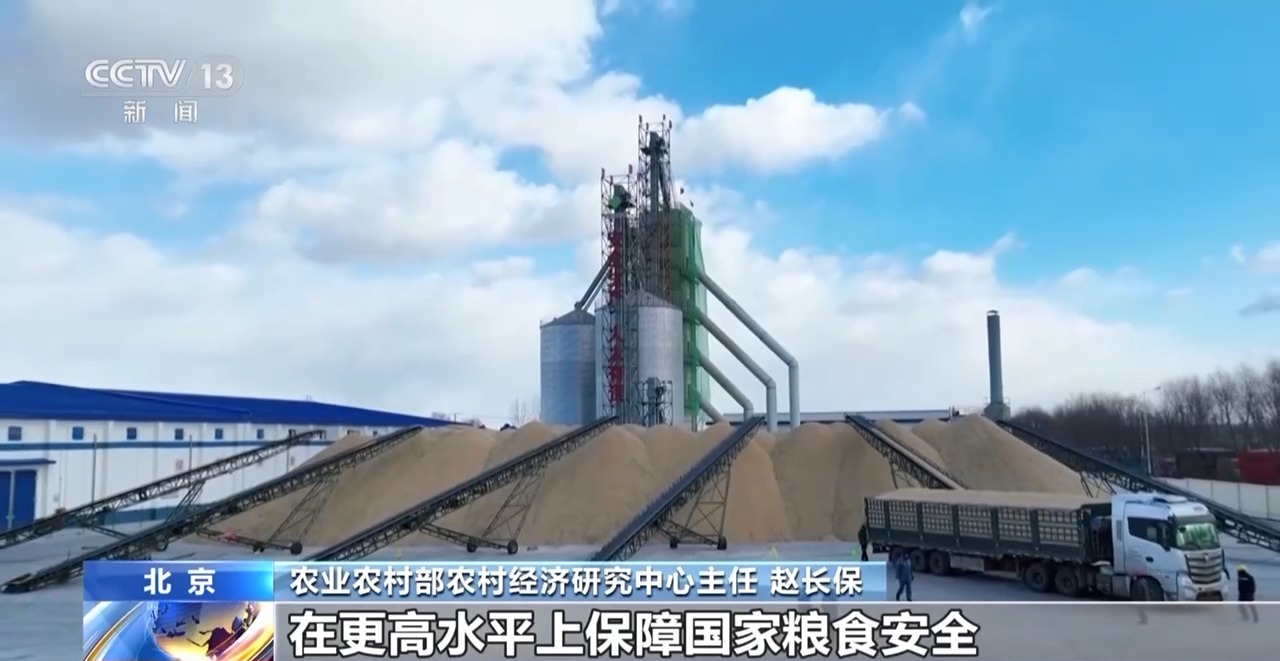
Core Viewpoint - The 2026 Central No. 1 Document emphasizes the modernization of agriculture and rural areas, aiming for comprehensive rural revitalization Group 1: Food Security - The document highlights the importance of "rice bags" and "vegetable baskets," with China's grain production remaining stable at over 1.4 trillion jin for two consecutive years. The focus is on maintaining national food security and enhancing the quality and efficiency of the "vegetable basket" industry to enrich the diet of the populace [1] Group 2: Precision Assistance - A new term "normalization of precise assistance" is introduced, marking the first systematic deployment of this significant initiative in the Central No. 1 Document. By the end of 2025, the goal is to effectively connect the consolidation of poverty alleviation achievements with rural revitalization, ensuring that responsibilities are firmly established to prevent a return to poverty [2] Group 3: Farmers' Income - The document places a strong emphasis on actively promoting stable income growth for farmers. While farmers' income has seen steady growth, the foundation for continued income stability remains fragile. The focus is on exploring various avenues for income enhancement, including processing, circulation, specialty industries, agricultural product consumption, and employment [3] Group 4: Local Adaptation - The document stresses the importance of "local adaptation" in promoting the construction of livable and workable beautiful villages. This approach aims to leverage local advantages and is a key area of interest for stakeholders [4]