
冬季民航运行保障

Search documents
民航华北局监督检查首都机场航空器除防冰工作
Zhong Guo Min Hang Wang· 2025-12-14 02:52
Core Viewpoint - The article discusses the implementation of winter operational safety measures in the aviation sector in Beijing, particularly focusing on the recent snowfall and its impact on aircraft operations [1]. Group 1: Inspection and Oversight - A joint inspection team from the Civil Aviation Administration of China (CAAC) and the Beijing Regulatory Bureau conducted on-site checks at Beijing Capital International Airport to ensure effective de-icing operations during the first snowfall of the winter [1]. - The inspection focused on key risk points related to snow and ice operations, verifying the implementation of the CAAC's guidelines for winter operations, including personnel scheduling, equipment functionality, and de-icing fluid reserves [1]. Group 2: Highlights of De-icing Operations - All three de-icing units inspected adhered strictly to the CAAC's "Five Early" requirements for winter operations, demonstrating organized preparation and execution of de-icing tasks [2]. - Key highlights included sufficient resource reserves meeting "dual backup" standards, efficient operational processes combining fixed-point and gate de-icing, and smooth collaboration among airlines, de-icing units, and airport management [2]. - The inspection team emphasized the importance of de-icing as the "first line of safety defense" in winter operations, urging continuous risk assessment and optimization of operational processes [2].
直面风雪护长空 甘肃民航以万全之备迎战冬季极端天气
Zhong Guo Min Hang Wang· 2025-12-02 06:04
Core Viewpoint - Gansu Province faces severe winter weather challenges impacting civil aviation operations, necessitating comprehensive preparation and safety measures to ensure smooth and secure air travel [1][3]. Group 1: Winter Weather Challenges - Gansu experiences extreme winter conditions, including temperatures nearing -28°C, heavy snowfall up to 23mm, and average wind speeds of 28.3m/s, which can reduce visibility to below 500 meters [1]. - The region's harsh climate poses significant risks to aviation infrastructure and operations, requiring robust contingency plans [1][3]. Group 2: Preparation and Safety Measures - The Gansu Airport Group emphasizes a "safety first" approach, implementing a comprehensive strategy for winter operations that includes preemptive measures, rapid response, and collaborative efforts [1][3]. - Specific measures include optimizing operational plans, conducting equipment maintenance, training personnel, and ensuring adequate material reserves [3][4]. Group 3: Equipment and Personnel Readiness - A thorough inspection and upgrade of critical equipment are conducted, including the replacement of low-temperature hydraulic fluids and the enhancement of communication and navigation systems [4]. - A dynamic monitoring system is established for equipment performance, utilizing IoT technology for preventive maintenance [4]. Group 4: Collaborative Efforts - The group fosters collaboration across various departments to enhance operational efficiency, establishing a comprehensive "early warning-response-保障" system to address extreme weather challenges [6]. - Strategic partnerships with meteorological departments are formed to share data and improve weather forecasting accuracy [6]. Group 5: Risk Management - The Gansu Airport Group identifies eight core risks associated with winter operations and implements a detailed management system to mitigate these risks [10][11]. - Regular assessments of runway conditions and strict adherence to safety protocols are enforced to ensure operational safety [10].
民航吉林监管局全面部署吉林辖区冬季运行工作
Zhong Guo Min Hang Wang· 2025-11-26 06:08
Core Viewpoint - The Civil Aviation Administration of Jilin Province is implementing comprehensive measures to ensure safe and efficient winter operations in response to the specific challenges posed by severe weather conditions, particularly for the winter tourism season in 2025-2026 [1][2] Group 1: Winter Operations Strategy - The Jilin Civil Aviation Regulatory Bureau is conducting a winter operations deployment meeting to address the unique weather challenges in the region, including severe cold, snow, and low visibility [1] - A total of 25 operational measures have been discussed, focusing on meteorological services, collaborative operations, and snow removal tasks, with clear responsibilities assigned to various departments [1] - The principles of safety, precise assessment, detailed strategies, dynamic response, collaborative action, and closed-loop efficiency will guide the entire winter operation process [1] Group 2: Weather Response Enhancements - To improve the handling of adverse weather conditions, the leadership of the Jilin Civil Aviation Regulatory Bureau is leading tabletop exercises to simulate the entire process of weather alerts, risk assessments, information dissemination, and on-site inspections [1] - The exercises specifically address high-frequency scenarios such as runway snow removal, aircraft de-icing, large-scale flight delays, and passenger stranding during snow events [1] - The outcomes of the deployment meeting and exercises will be integrated to refine adverse weather response procedures and enhance regulatory processes for low visibility, snow, and extreme cold conditions [2] Group 3: Economic Contribution - The efforts aim to create a safe and convenient air passage for winter tourism in Jilin Province, contributing to the high-quality economic development of the region through enhanced civil aviation capabilities [2]
民航安徽监管局督导东航安徽分公司开展除防冰应急演练
Zhong Guo Min Hang Wang· 2025-11-24 08:11
Group 1 - The core viewpoint of the article emphasizes the importance of winter operational safety in civil aviation, particularly through emergency response drills to ensure flight safety during winter conditions [1][2][3] Group 2 - The Anhui Regulatory Bureau adheres to a "safety first, prevention-oriented" approach, prioritizing emergency drill supervision as a key aspect of winter safety measures [2] - The emergency drill involved comprehensive preparation, including the refinement of emergency plans and operational standards for de-icing, ensuring that the drill closely simulated real operational scenarios [2] - The regulatory bureau aims to enhance inter-departmental collaboration and improve processes for adverse weather responses, emphasizing strict adherence to flight delay communication and passenger service requirements [2] Group 3 - The Anhui Regulatory Bureau will continue to strengthen winter operation supervision, focusing on maintaining a flight regularity rate of no less than 88% and preventing large-scale passenger incidents due to delays [3] - The bureau will conduct on-site supervision of de-icing operations and emergency responses, promptly reporting typical issues and urging corrective actions to ensure passenger travel safety [3]


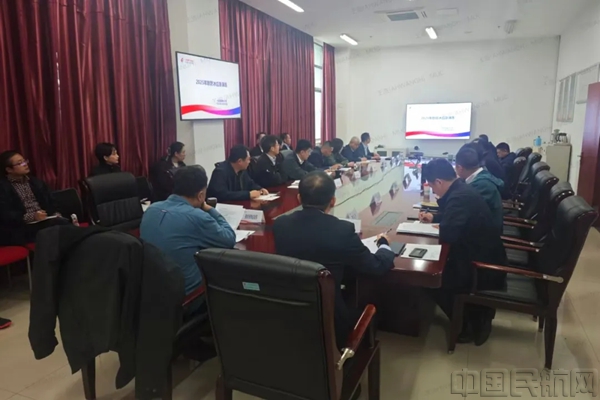
民航局印发《2025年冬季民航运行保障总体方案》
Zhong Guo Min Hang Wang· 2025-11-11 05:04
Core Insights - The Civil Aviation Administration of China (CAAC) has issued the "2025 Winter Civil Aviation Operation Guarantee Overall Plan" to enhance safety and efficiency during the winter season [2] Group 1: Operational Principles - The plan emphasizes three operational principles: "safety as the foundation, precise assessment," "refined measures, dynamic response," and "collaborative linkage, closed-loop efficiency" [2] - A comprehensive risk prevention, resource scheduling, and multi-party collaboration system is established to ensure smooth operations [2] Group 2: Performance Goals - The plan sets a target for the average flight punctuality rate to be no less than 88% and the average takeoff delay time to be less than 8 minutes from December 2025 to February 2026 [2] - Strict control standards are established for major airports and domestic passenger airlines regarding long delays, in-flight delays, and flight cancellations [2] Group 3: Core Measures - Eight core measures are outlined, including seasonal operation preparation, capability assessment, adverse weather response, flight dynamic adjustment, operational organization coordination, delay information communication, service guarantee collaboration, and post-event review [3] - The plan highlights the need for risk assessment, scenario planning, and resource preparation, including de-icing materials and equipment [3] Group 4: Coordination and Responsibility - The plan mandates strict implementation of responsibilities by regional management bureaus, airlines, airport companies, and air traffic control agencies, relying on a three-tiered collaborative mechanism [4] - Regulatory bodies are required to enhance oversight of key processes and ensure effective implementation of measures to safeguard aviation safety and passenger experience [4]