脉动阵列

Search documents
英伟达的最大威胁:谷歌TPU凭啥?
半导体行业观察· 2025-12-26 01:57
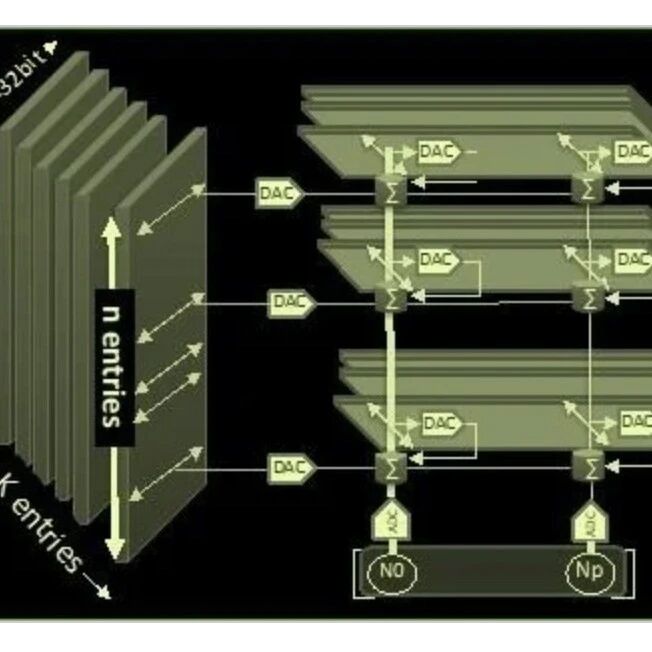
Core Viewpoint - The article discusses the rapid development and deployment of Google's Tensor Processing Unit (TPU), highlighting its significance in deep learning and machine learning applications, and how it has evolved to become a critical infrastructure for Google's AI projects [4][5][10]. Group 1: TPU Development and Impact - Google developed the TPU in just 15 months, showcasing the company's ability to transform research into practical applications quickly [4][42]. - The TPU has become essential for various Google services, including search, translation, and advanced AI projects like AlphaGo [5][49]. - The TPU's architecture is based on the concept of systolic arrays, which allows for efficient matrix operations, crucial for deep learning tasks [50][31]. Group 2: Historical Context and Evolution - Google's interest in machine learning began in the early 2000s, leading to significant investments in deep learning technologies [10][11]. - The Google Brain project, initiated in 2011, aimed to leverage distributed computing for deep neural networks, marking a shift towards specialized hardware like the TPU [13][15]. - The reliance on general-purpose CPUs for deep learning tasks led to performance bottlenecks, prompting the need for dedicated accelerators [18][24]. Group 3: TPU Architecture and Performance - TPU v1 was designed for inference tasks, achieving significant performance improvements over traditional CPUs and GPUs, with a 15x to 30x speedup in inference tasks [79]. - The TPU v1 architecture includes a simple instruction set and is optimized for energy efficiency, providing a relative performance per watt that is 25 to 29 times better than GPUs [79][75]. - Subsequent TPU versions, such as TPU v2 and v3, introduced enhancements for both training and inference, including increased memory bandwidth and support for distributed training [95][96].



冯诺依曼架构的新替代方案
半导体行业观察· 2025-12-24 02:16
Core Viewpoint - The semiconductor industry is struggling to meet the immense demand for computing power driven by artificial intelligence (AI), particularly in data centers that consume significant electricity. The traditional computing architectures, such as the von Neumann architecture, are inadequate for the parallel processing needs of AI systems, necessitating a new approach to chip design [1][4][19]. Group 1: Challenges in Current Architectures - The traditional von Neumann architecture is inefficient for neural networks due to its sequential instruction processing, which does not align with the matrix-based structure of AI models [2][4]. - Large language models (LLMs) require extensive computations, with inference potentially needing between 100 billion to 10 trillion operations, highlighting the limitations of memory access times in von Neumann architectures [4][5]. - The inherent memory access issues in traditional CPUs and GPUs hinder their performance and power efficiency, as they cannot place sufficient memory close enough to the arithmetic logic units (ALUs) [5][6]. Group 2: Innovative Solutions - The exploration of alternative architectures, such as pulse arrays, aims to better align computing structures with neural network topologies, but previous attempts have faced challenges in practical implementation [6][8]. - Ambient Scientific's DigAn technology enables the creation of configurable matrix computers, which optimize the processing of AI workloads by integrating memory and computation more effectively [9][11]. - The new architecture features a novel computing unit called the analog MAC, which addresses the memory and computation separation issue inherent in von Neumann designs, allowing for significant improvements in efficiency [11][13]. Group 3: Performance and Power Efficiency - The DigAn architecture dramatically reduces the number of cycles needed for neural network operations, achieving a performance increase of over 100 times compared to typical microcontroller units (MCUs) while consuming less than 1% of the power of conventional GPUs [13][19]. - The GPX series chips, utilizing this innovative architecture, are designed for high performance and low power consumption, making them suitable for embedded systems and edge AI applications [14][16]. - The GPX10 Pro model features clusters of MX8 cores, providing a complete system-on-chip (SoC) solution that supports mainstream machine learning frameworks, facilitating easier model training and deployment [18][19].