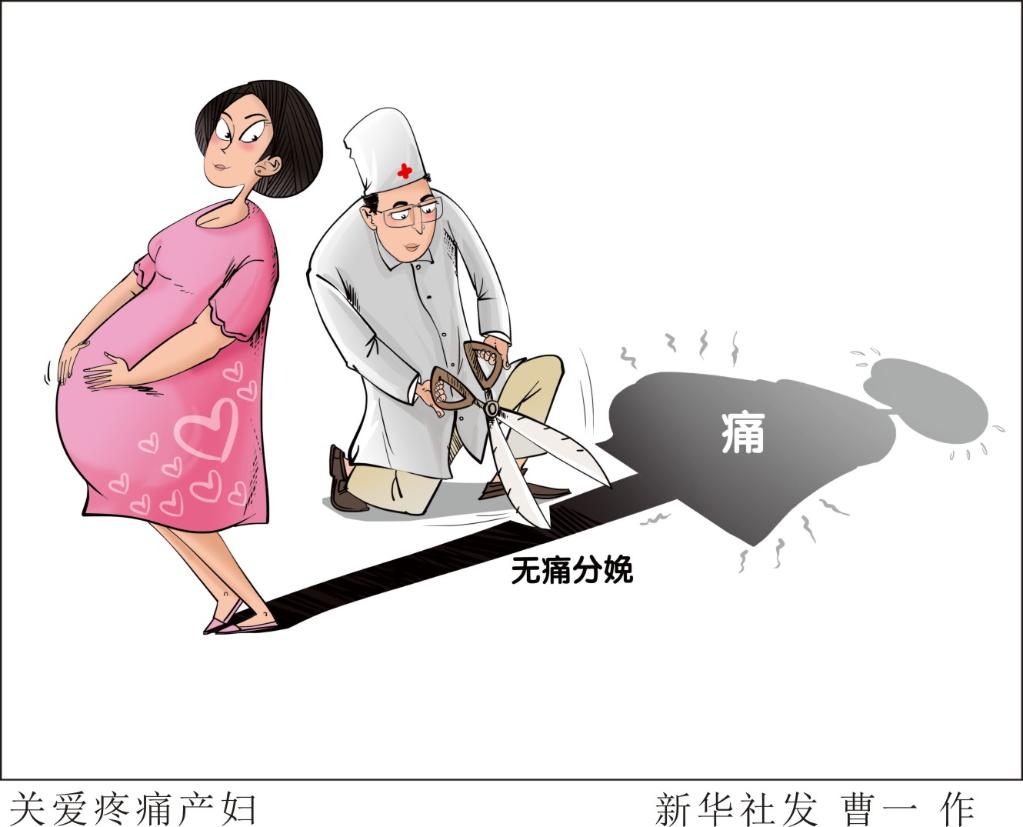
分娩镇痛

Search documents
7 全面提速!全国将普及“无痛”分娩服务
Xin Lang Cai Jing· 2025-12-31 21:05
Core Viewpoint - The Chinese government is advancing the implementation of labor analgesia services in maternity healthcare institutions, aiming for comprehensive availability by 2027 [3] Group 1: Policy Implementation - By the end of 2025, all tertiary medical institutions providing obstetric services will be required to offer labor analgesia services [3] - By 2027, all secondary and above medical institutions providing obstetric services will also be mandated to provide labor analgesia [3] Group 2: Infrastructure and Training - Medical institutions must meet basic technical requirements for labor analgesia, enhance infrastructure, and ensure proper equipment and drug availability [3] - There will be a focus on training specialized personnel in labor analgesia and establishing collaboration mechanisms between obstetrics and anesthesiology departments [3] Group 3: Oversight and Quality Assurance - Local health administrative departments will coordinate with relevant agencies to provide policy support and strengthen daily supervision of labor analgesia services [3] - The aim is to ensure the quality and safety of labor analgesia medical services [3]

二〇二五,身心安泰就是福
Ren Min Ri Bao Hai Wai Ban· 2025-12-29 01:09
Group 1: Health Awareness and Lifestyle Changes - Increasing awareness of health has led to more people incorporating proactive health measures into their daily lives, such as regular exercise and balanced nutrition [1] - The "New Chinese Health Preservation" trend is gaining popularity among young people, emphasizing traditional Chinese medicine principles combined with modern lifestyles [7] - The concept of weight management has become a national focus, with initiatives promoting regular monitoring and healthy eating habits [2] Group 2: Policy and Support Initiatives - The government has implemented various policies to enhance public health, including the establishment of a national psychological assistance hotline and the promotion of pain relief during childbirth [1][4] - The "Blood Fee Waiver" initiative aims to simplify the process for blood donors, allowing them to receive fee waivers without needing to visit blood stations [6] - The National Health Commission has set a goal for all tertiary medical institutions to provide pain relief services for childbirth by 2025 [5] Group 3: Mental Health Services - Mental health issues are increasingly recognized as a significant concern, with a focus on providing accessible psychological services across different demographics [3] - The establishment of a national psychological assistance hotline has facilitated over 70,000 calls and nearly 10,000 crisis interventions [3] Group 4: Technological Integration in Health - AI health applications are becoming more prevalent, offering users immediate health advice and guidance through mobile platforms [8] - The integration of AI in health services aims to make professional health support accessible to everyone, enhancing the overall health management experience [9]
二〇二五,身心安泰就是福(年终盘点)
Ren Min Ri Bao Hai Wai Ban· 2025-12-28 22:48
Group 1: Health Trends and Initiatives - The concept of "proactive health" is increasingly integrated into daily life, with more individuals focusing on regular exercise, weight management, and nutrition [5][7] - The "Weight Management Year" initiative is gaining traction, promoting tools like scales and waist measurement devices as household essentials, and encouraging healthy eating habits among the youth [8] - Mental health services are becoming more accessible, with the establishment of a national psychological assistance hotline and numerous mental health awareness events [9] Group 2: Maternal Health and Pain Management - The promotion of painless childbirth, known as "epidural analgesia," is being accelerated, with a goal for all tertiary hospitals to provide this service by 2025 [10][11] - The overall prevalence of painless childbirth in China was only 30% as of the end of 2022, indicating room for growth in this area [10] Group 3: Blood Donation and Cost Reduction - A new policy allows blood donors to process fee waivers without needing to visit blood donation centers, streamlining the process significantly [12] - The establishment of a national database for blood donors facilitates easier access to fee waivers across different regions [12] Group 4: Traditional Chinese Medicine and Health Applications - "New Chinese health practices" are becoming popular among young people, integrating traditional Chinese medicine with modern lifestyles [13] - AI health applications are increasingly prevalent, providing users with immediate health advice and support through mobile technology [14]

四川将分娩镇痛纳入医保报销
Si Chuan Ri Bao· 2025-12-22 03:16
Core Viewpoint - Sichuan province has officially included painless childbirth (analgesia during delivery) in its medical insurance reimbursement, aiming to alleviate the financial burden on mothers during childbirth [1][2] Group 1: Policy Implementation - The Sichuan Provincial Medical Insurance Bureau has established a separate project for painless childbirth, which is now eligible for insurance reimbursement [1] - Over 500 medical institutions in Sichuan have completed preparations to provide this service, creating a comprehensive "comfortable childbirth" support network [1] Group 2: Service Details - Painless childbirth services involve administering medication into the spinal canal to significantly reduce labor pain, with the decision to proceed based on professional assessments by obstetricians and anesthesiologists [1] - By the end of 2025, all tertiary medical institutions providing obstetric services nationwide are expected to offer painless childbirth services, with secondary institutions following by 2027 [1] Group 3: National Context - Other provinces, including Jiangsu, Zhejiang, Guangxi, Jilin, and Shanghai, have also incorporated painless childbirth into their medical insurance reimbursement systems [2]
“无痛”分娩会影响宝宝智力吗?
Xin Hua Wang· 2025-06-07 13:34
Core Viewpoint - The article discusses the implementation and safety of "painless" childbirth, highlighting the benefits of pain relief methods during labor and addressing common concerns regarding their effects on mothers and infants [1][5][6]. Group 1: Pain Relief Techniques - Labor pain is intense and can radiate to various body parts, but it can be alleviated through techniques such as epidural anesthesia, which is widely recognized as effective [2][5]. - The epidural method involves injecting medication into the spinal area to block pain sensations below the waist, allowing for a significant reduction in discomfort during childbirth [5][6]. - Medications like bupivacaine and ropivacaine are commonly used, with ropivacaine allowing for pain relief while preserving motor function [5][6]. Group 2: Safety and Efficacy - Painless childbirth techniques have been proven safe and effective, with studies indicating they can reduce physical and psychological trauma for mothers and lower early neonatal mortality rates [6][9]. - The concentration of pain relief medications used during labor is significantly lower than that used in general surgeries, minimizing risks to both mother and child [9][10]. - Concerns about post-delivery back pain are often unfounded, as such pain is more likely related to hormonal changes and physical strain during labor rather than the anesthesia itself [9][10]. Group 3: Implementation and Accessibility - The National Health Commission has initiated measures to promote the widespread adoption of painless childbirth services across medical institutions, with nearly a thousand hospitals already participating in pilot programs [11]. - The recent notification emphasizes the need for improved infrastructure, training for medical staff, and collaboration between obstetrics and anesthesia departments to enhance the quality of pain relief services [10][11]. - There is an ongoing effort to include painless childbirth services in health insurance reimbursement schemes, which is expected to increase the accessibility and prevalence of these services [11].