利率曲线控制(YCC)

Search documents
美欧日国债风暴-YCC箭在弦上
2026-01-22 02:43
Summary of Key Points from Conference Call Industry Overview - The conference call discusses the global bond market, particularly focusing on the U.S., Japan, and Europe, highlighting concerns over fiscal discipline and the implications of potential monetary policy changes [1][2][3]. Core Insights and Arguments - **Rising Bond Yields**: Japan's fiscal expansion policy has raised concerns about its fiscal discipline, with the newly issued 40-year Japanese government bond yield soaring to historical highs, intensifying doubts about the sustainability of Japanese bonds [1][3]. - **Supply-Demand Imbalance**: There is an increasing imbalance in global government bond supply and demand, driven by expanding fiscal deficits in major countries, such as the U.S. and Japan, which leads to increased bond supply while geopolitical risks and changes in central bank policies weaken demand [1][4]. - **Potential Policy Responses**: In response to economic pressures, both the U.S. and Japan may implement substantial Yield Curve Control (YCC) measures. The U.S. might expand its bond-buying program, while Japan could restart YCC to manage rising bond yields [1][6]. - **Global Liquidity Environment**: The global liquidity environment is expected to become more accommodative, benefiting from potential YCC policies in the U.S., which may lead to a marginal improvement in dollar liquidity and an appreciation of the Chinese yuan, positively impacting the Chinese stock market [1][7]. - **Valuation of Chinese Stocks**: Chinese stocks are currently undervalued relative to global peers, and in the context of global easing policies, they are likely to attract more international capital, enhancing profitability and valuation levels [1][7]. Additional Important Content - **Risks of High-Leverage Basis Trades**: High-leverage basis arbitrage trading poses a potential risk, as the supply-demand imbalance in U.S. and Japanese bonds could lead to increased market volatility, triggering cross-asset sell-offs and systemic risks [1][8]. - **Impact of Geopolitical Tensions**: Recent geopolitical tensions, including punitive tariffs announced by the U.S. on European countries, have contributed to significant sell-offs in developed market bonds, affecting asset prices across markets [3][4]. - **Long-Term Market Support**: While short-term risks may prompt countries to adopt more accommodative monetary policies, such measures are expected to support global asset prices in the long run, mitigating the negative impacts of short-term shocks [2][8].
中金:美国“金融抑制”进程加速 利好企业估值和盈利
智通财经网· 2026-01-15 01:11
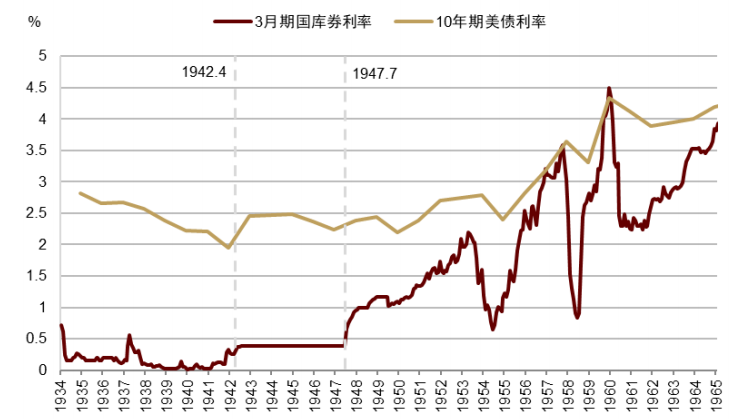
Core Viewpoint - The report from CICC indicates that the process of "financial repression" in the U.S. is likely to accelerate at the beginning of 2026, driven by high debt levels, industrial hollowing, and global geopolitical competition pressures. The Trump administration is expected to implement measures such as balance sheet expansion, quantitative easing (QE), and yield curve control (YCC) to forcefully lower financing costs, which will benefit corporate valuations and profits while stimulating asset bubbles [1][2]. Group 1: Financial Repression Mechanisms - The Trump administration is likely to initiate "financial repression" through various measures, including balance sheet expansion, QE, and YCC, to suppress financing costs amid high debt and industrial challenges [2][3]. - The report suggests that the administration may introduce policies to lower costs for consumer loans and small business loans, accelerate deregulation in the banking sector, and manage key energy resource prices to stimulate the economy [2][4]. Group 2: Economic and Market Implications - The anticipated environment of fiscal and monetary easing will shift the dollar liquidity cycle from tight to loose, positively impacting corporate valuations and profits, and accelerating asset bubbles [6]. - The report highlights that such conditions are expected to favor major global markets, particularly the Chinese stock market, as well as precious metals like gold and copper, while being negative for the dollar [6][22]. Group 3: Policy Objectives and Challenges - The Trump administration's clear policy objectives include addressing long-term debt pressures and industrial hollowing while ensuring controllable inflation and affordable consumer loans and mortgage rates ahead of the 2026 midterm elections [4][5]. - The report indicates that achieving these objectives may require moving beyond conventional policy frameworks towards "financial repression," which could involve implementing YCC and administrative measures to stabilize inflation [4][5]. Group 4: Historical Context and Precedents - "Financial repression" was first introduced by economists in the 1970s and refers to government policies that direct funds to itself by artificially lowering interest rates for public financing [3]. - Historical examples, such as the U.S. government's use of financial repression in the 1940s to fund wartime expenditures, illustrate the potential effectiveness of such measures in managing high debt levels [3].