
国债

Search documents
流动性跟踪与地方债策略专题:4月资金面关注什么
Guolian Minsheng Securities· 2026-04-01 06:29
Group 1 - The report indicates that the liquidity environment remains stable, with short-term rates continuing to decline, benefiting from a stable liquidity environment [5][8] - For April, the report highlights that the initial liquidity is expected to ease, with a focus on the government bond issuance plan, particularly the long-term supply schedule [5][8] - The report notes that the total issuance of local government bonds is expected to reach 31,988 billion yuan by April 5, 2026, with 16,618 billion yuan in long-term bonds, accounting for 52% of the total [12][39] Group 2 - The report anticipates that the local government bond issuance plan for the second quarter will be significant, with a total planned issuance of 21,100 billion yuan [13][40] - It is mentioned that the issuance of replacement bonds is progressing slower than in the same period of 2025, which may lead to a higher actual issuance scale in the second quarter [13][40] - The report identifies potential investment opportunities in the long-term local government bonds, particularly focusing on the yield spread between 30-year and 20-year bonds [41][42] Group 3 - The report tracks the interbank certificate of deposit (CD) market, noting that the issuance increased to 7,705 billion yuan from March 23 to March 27, 2026, with a net financing of 723 billion yuan [53][54] - The report highlights that the overall issuance success rate for CDs remains high at 93%, with the highest success rate for 9-month CDs at 97% [53][54] - The report indicates that the secondary market for CDs has maintained low yields, with rates for various maturities showing slight declines [74]
每日债市速递 | 霍尔木兹海峡又有大消息
Wind万得· 2026-04-01 05:45
Group 1: Monetary Policy and Market Operations - The People's Bank of China conducted a 7-day reverse repo operation of 32.5 billion yuan at a fixed rate of 1.40%, with a net injection of 15 billion yuan after accounting for maturing repos [3][4]. - The interbank market is experiencing a very loose liquidity environment, with the weighted average rate of DR001 falling over 3 basis points to around 1.27% [5]. - The latest transaction for one-year interbank certificates of deposit is around 1.51%, unchanged from the previous day [6]. Group 2: Economic Indicators and Government Actions - The PBOC's monetary policy committee discussed the integration of incremental and stock policies to maintain liquidity and align social financing scale with economic growth and price expectations [13]. - The Ministry of Finance announced arrangements for the issuance of various government bonds, including a 30-year bond on April 3 [13][14]. - Data from the Ministry of Finance shows that from January to February, state-owned enterprises reported total operating income of 12,565.5 billion yuan, a year-on-year increase of 0.2%, while total profits decreased by 2.0% [13]. Group 3: Global Economic Context - U.S. officials report that President Trump is willing to end military actions against Iran even if the Strait of Hormuz remains largely closed, indicating a shift towards diplomatic pressure [16]. - The European Central Bank's council member Müller suggests that the ECB's baseline scenario may be overly optimistic, with potential interest rate increases in the coming quarters if energy prices remain high [16]. Group 4: Bond Market Developments - Agricultural Development Bank plans to issue up to 14 billion yuan in financial bonds on April 1 [18]. - Morgan Stanley has downgraded its global equity rating from overweight to neutral while upgrading U.S. Treasury and cash ratings from neutral to overweight [19]. - A series of negative events in the bond market have been reported, including downgrades and delays in ratings for various issuers [20].


固定收益定期:四月:持续修复
GOLDEN SUN SECURITIES· 2026-04-01 02:32
1. Report Industry Investment Rating No information provided in the text. 2. Core Viewpoints of the Report - The bond market in the second quarter may continue to oscillate and recover. The term spread is expected to gradually decline, and the credit spread may fluctuate at a low level. It is recommended to continue leveraging, selecting rides, and appropriately extending the duration. The 10 - year Treasury bond yield is expected to fall to around 1.6% - 1.7% around the middle of the year [5][36]. 3. Summary by Relevant Catalogs 3.1 March Bond Market: Oscillation, Widened Term Spread, and Narrowed Credit Spread - In March, the long - term bonds oscillated and adjusted. The term spread widened, and the credit spread narrowed. The yields of 10 - year and 30 - year Treasury bonds increased by 4.2bps and 7.9bps respectively to 1.82% and 2.35%. The current 30 - year and 1 - year Treasury bond spread is as high as 113.1bps, and the spread between 30 - year and 10 - year bonds is 53.5bps, almost the highest level since 2023. Except for 3 - year and 5 - year Tier 2 capital bonds, the spreads between other credit bonds and the same - term China Development Bank bonds are basically around or within the 20th percentile since 2023 [1][9]. - The current bond market differentiation and the weak long - term bond situation are the result of multiple factors. Rising prices have led to market concerns about inflation pressure pushing up interest rates, which is more evident in long - term bonds. The short - end is relatively stable due to loose funds. The instability of long - term bonds has led institutions to shorten the duration, and the decrease in inter - bank deposit rates has made wealth management and money market funds increase bond allocation, reducing short - term credit rates [1][9]. 3.2 Fundamentals: Continued Stability with Increased K - shaped Differentiation - The Spring Festival factor has boosted the economic data from January to February to some extent, and the economy has basically remained stable. After excluding the Spring Festival factor, the real recovery momentum of the economic fundamentals has not significantly strengthened. The Spring Festival in 2026 was late, driving up data such as industrial added value and exports. The Spring Festival factor increased exports by 6.1 percentage points. In March, affected by the delayed resumption of work after the festival, relevant economic data may decline [2][13]. - In March, the manufacturing PMI rebounded to 50.4%, returning above the boom - bust line. There is a certain seasonality in the rebound, and the current level is comparable to the seasonal average. The service and construction industry PMIs also rebounded, but their absolute levels are low. Overall, the economy shows a stable trend [17]. - The rise in prices has not effectively translated into investment and financing demand and interest rate - rising pressure. PPI is likely to turn positive in March, but the rise has significant structural characteristics. The PPI of industries related to non - ferrous metals and crude oil has rebounded significantly, while the PPI of mid - and downstream industries is still under pressure. The rebound in PPI has not led to a comprehensive improvement in corporate profits. There is a significant K - shaped differentiation in corporate profits, with only a few industries seeing large profit increases, while the profit growth rates of other industries are still low, resulting in low financing demand [21]. - In April, the financing demand may decline seasonally, which will further widen the bank's asset gap and increase the bond - allocation demand. The issuance of government bonds in April is usually the lowest in a year, and the social financing scale remains low, resulting in insufficient asset supply. On the demand side, the gap between bank deposit growth and loan growth is still large, and the weak loan trend may continue, which will drive banks to increase bond - allocation [23]. 3.3 Short - term Factors Drive the Intensification of Long - Short - end Differentiation, which May Not Last in the Long Run - The recent long - short - end differentiation is mainly due to short - term factors such as inflation sentiment and end - of - quarter bank institutional behavior adjustments, rather than fundamental and capital factors. Inflation itself should not trend - wise push up long - term interest rates. The current long - term bond's greater reaction to prices is inconsistent with historical experience. The current price increase is mainly due to imported factors, which will not increase corporate investment and financing demand and has no trend - wise impact on interest rates [33]. - After the end of the quarter, the bank's bond - allocation power will recover, and combined with loose funds, the market may continue to recover. The previous bond market adjustment before the end of the quarter was mainly related to bank institutional behavior. Banks may sell bonds to realize floating profits at the end of the quarter and adjust their bond - holding structures due to end - of - quarter indicator assessments. After the end of the quarter, the bank's bond - allocation demand is expected to recover, and the short positions of trading institutions will be closed, driving the market to recover [34].
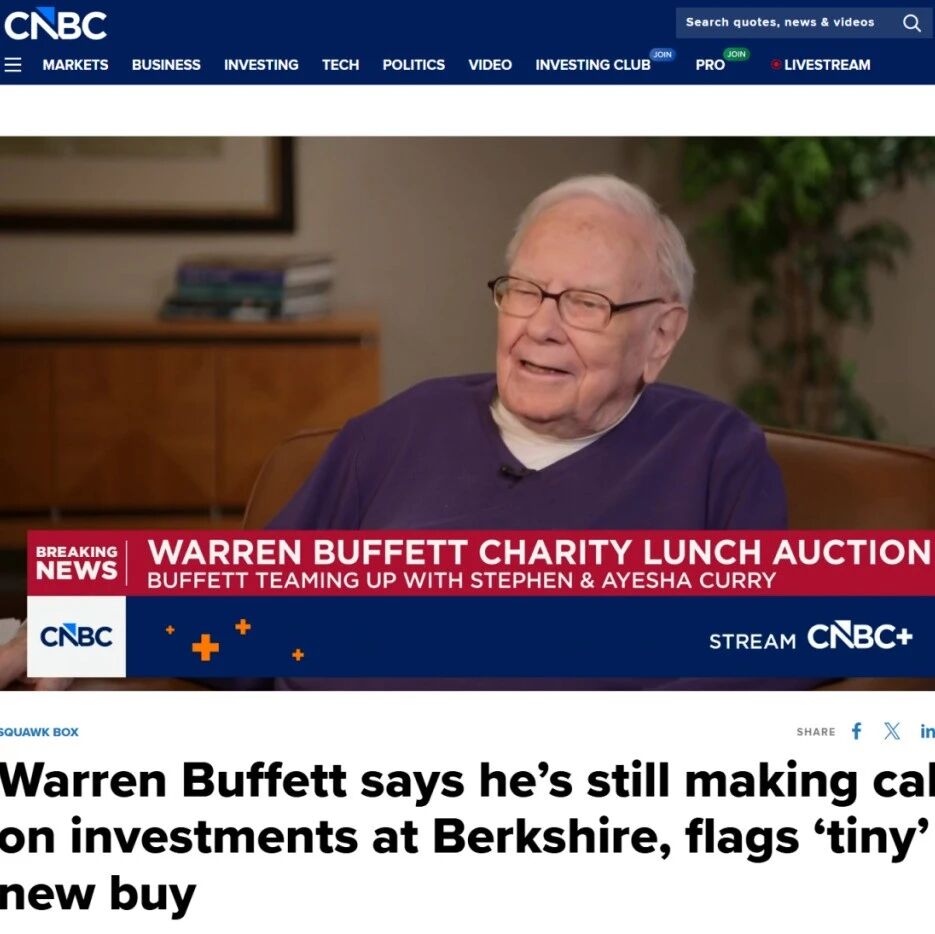
95岁巴菲特,最新发声!现在的波动“不值一提”,卖苹果卖早了!携手库里重启“慈善午餐”
证券时报· 2026-04-01 01:53
Market Insights - Warren Buffett believes current market valuations lack attractiveness, stating that recent market declines are insignificant compared to historical downturns [2][4] - Berkshire Hathaway has not found many large-scale investment opportunities during this year's market downturn, but Buffett hinted at a potential small-scale new investment [4] - Berkshire Hathaway purchased $17 billion in government bonds this week, with cash equivalents exceeding $370 billion, primarily in government bonds [5] Leadership Transition - Buffett will hand over the CEO position to Greg Abel in early 2026 but continues to work daily and maintain high market sensitivity [6][7] - He emphasizes that he will remain involved in investment decisions and will not make any investments that Abel disagrees with [7] Apple Investment - Buffett's investment in Apple has yielded over $100 billion in profits, and it remains Berkshire's largest holding [8] - He expressed regret over selling Apple shares too early and indicated a willingness to buy more if the stock price becomes attractive [8] Philanthropy Initiatives - Buffett announced the relaunch of a charity lunch auction in collaboration with NBA star Stephen Curry, with proceeds supporting vulnerable groups and children's development projects [12][13] - The auction will start on May 7, with a historical fundraising total exceeding $50 million over 20 years, and the 2022 auction set a record of $19 million [14] Personal Relationships - Buffett has distanced himself from Bill Gates since the Jeffrey Epstein incident, stating he does not want to be involved in any legal implications [10][11]

长江期货市场交易指引-20260401
Chang Jiang Qi Huo· 2026-04-01 01:24
1. Report Industry Investment Ratings - **Macro Finance**: Bullish on stock indices in the medium to long term, suggesting buying on dips; expecting government bonds to move in a sideways pattern [1][5] - **Black Building Materials**: Short - term trading for coking coal; range trading for rebar; shorting on rebounds for glass [1][8][10] - **Non - ferrous Metals**: Holding short positions moderately on rallies for copper; strengthening observation for aluminum; suggesting waiting and seeing for nickel; range trading for tin; expecting gold, silver and lithium carbonate to move in a sideways pattern [1][14][20][24] - **Energy Chemicals**: Bullish - biased sideways movement for PVC, caustic soda, styrene, polyolefin, and rubber; shorting on rallies for soda ash; range trading for urea and methanol [1][25][27][32] - **Cotton Textile Industry Chain**: Bullish - biased sideways movement for cotton and cotton yarn; expecting apples and jujubes to move in a sideways pattern [1][38][39] - **Agricultural and Livestock**: Rolling short positions at high levels for the 05 and 07 contracts of live pigs; shorting cautiously on weak rebounds of near - month contracts for eggs; hedging cautiously on weak rebounds of near - month contracts for corn; paying attention to the support performance at 2900 - 2950 for the 05 contract of soybean meal; bullish - biased sideways movement and rolling long strategy for oils and fats [1][43][45][47] 2. Core Views of the Report The report provides trading suggestions and market outlooks for various futures products based on comprehensive analysis of macro - economic factors, geopolitical situations, supply - demand relationships, and cost - profit conditions. It emphasizes the impact of factors such as the Middle East conflict on global markets, and suggests corresponding trading strategies according to the different characteristics of each product [1][5][15] 3. Summaries by Relevant Catalogs Macro Finance - **Stock Indices**: Expected to move in a bullish - biased sideways pattern. The willingness of the US and Iran to end the Middle East conflict has led to a sharp rise in US stocks, and stock indices may be bullish - biased [5] - **Government Bonds**: Expected to move in a sideways pattern. After the end of the quarter, the proportion of bonds in asset allocation may gradually increase [6] Black Building Materials - **Coking Coal and Coke**: Expected to move in a sideways pattern. The total inventory of coking coal has slightly increased, and the inventory transfer of coking coal and coke is smooth [8][9] - **Rebar**: Expected to move in a sideways pattern. The futures price is below the electric - furnace valley - electricity cost, and the demand is still recovering [10] - **Glass**: Expected to be weak. The hype of coal cost has weakened, and the demand in the peak season is not good [11] Non - ferrous Metals - **Copper**: High - level sideways movement. Affected by macro - factors, there is a downward risk, but domestic inventory reduction and the consumption peak season will provide support [14][15] - **Aluminum**: High - level sideways movement. Supply concerns may boost the price, and attention should be paid to the development of the situation [17] - **Nickel**: Sideways movement. The support at the ore end is strong, but the lack of demand and macro - disturbances limit the upward drive [18][19] - **Tin**: Sideways movement. The supply of tin ore is tight, and the downstream demand is in a state of rigid procurement [20] - **Silver and Gold**: Sideways movement. Affected by the Middle East situation and economic data, the medium - term price center has moved up [21][22][23] - **Lithium Carbonate**: Range - bound sideways movement. Supply and demand are both increasing, and attention should be paid to supply disturbances [24] Energy Chemicals - **PVC**: Bullish - biased sideways movement. Although the current supply - demand situation is weak, there are opportunities for short - term rebound and long - term industrial upgrading [25] - **Caustic Soda**: Bullish - biased sideways movement. Supported by spring maintenance and downstream replenishment, exports may increase [27] - **Styrene**: Bullish - biased sideways movement. Supported by cost and with low inventory pressure, it is expected to maintain de - stocking [28] - **Polyolefin**: Bullish - biased sideways movement. Supported by cost and with marginal improvement in supply - demand [29][30] - **Rubber**: Bullish - biased sideways movement. In the short term, it is in a game between synthetic rubber support and inventory pressure [31] - **Urea**: Bullish - biased sideways movement. Supply is at a high level, and demand is supported by agricultural and compound fertilizer needs, with smooth de - stocking [32][33] - **Methanol**: Bullish - biased sideways movement. The supply - demand situation is relatively stable, and inventory has decreased [34] - **Soda Ash**: Shorting on rallies. Supply is in excess, and the price may continue to be under pressure [35][36] Cotton Textile Industry Chain - **Cotton and Cotton Yarn**: Bullish - biased sideways movement. Global cotton supply is increasing, but domestic consumption is strong, and the price of chemical fiber has a positive impact [38] - **Apples**: Sideways movement. The market is polarized, with good - quality goods being in high demand [39] - **Jujubes**: Sideways movement. The raw material acquisition in the production area is based on quality, and the enthusiasm of merchants to restock is not high [41] Agricultural and Livestock - **Live Pigs**: Bottom - building sideways movement. In the short term, the supply exceeds the demand, and in the long term, the price may rise after the supply tightens [43] - **Eggs**: Bearish - biased sideways movement. In the short term, the price increase is weak, and in the long term, it is in a state of bottom - building [45] - **Corn**: Range - bound sideways movement. The supply - demand situation is relatively balanced, and the near - month contract can be hedged on weak rebounds [47] - **Soybean Meal**: High - level sideways movement. The 05 contract should pay attention to the support at around 2900 [47] - **Oils and Fats**: Bullish - biased sideways movement. Supported by palm oil de - stocking and the B50 plan in Indonesia, but the supply will be relatively loose in the second quarter [53]
资金面继续向宽,债市大幅走强
Dong Fang Jin Cheng· 2026-03-31 12:21
Report Summary 1. Investment Rating The provided text does not mention the industry investment rating. 2. Core View On March 30, the liquidity continued to loosen, with major repo rates declining; the bond market rallied significantly; the convertible bond market corrected following the equity market, with most convertible bond issues falling; yields on U.S. Treasuries across all tenors generally declined, and yields on 10-year government bonds of major European economies also generally declined [1][2]. 3. Summary by Directory 3.1 Bond Market News - **Domestic News** - The Ministry of Finance reported that in 2025, the number of local government financing platforms and the scale of implicit debt decreased significantly. It also strengthened the management of the whole process of replacing existing implicit debt and was "zero-tolerant" of new implicit debt [4]. - The State Administration for Market Regulation required efforts to prevent and control "involution-style" competition in key industries and fields such as platform economy, photovoltaic, lithium batteries, and new energy vehicles [5]. - In 2025, the six major state-owned banks achieved year-on-year growth in both revenue and net profit attributable to shareholders, with a total net profit of 1.42 trillion yuan. Their asset sizes also increased steadily [6]. - **International News** - Fed Chairman Powell's dovish remarks eased market concerns, and traders began to bet on a small probability of a rate cut this year [7]. - **Commodities** - International crude oil futures prices continued to rise, while NYMEX natural gas futures prices turned down. WTI May crude oil futures rose 3.25% to $102.88 per barrel, and Brent May crude oil futures rose 0.18% to $112.78 per barrel. Spot gold rose 0.22% to $4,503.88 per ounce, and NYMEX May natural gas futures prices fell 6.33% to $2.886 per million British thermal units [8]. 3.2 Liquidity - **Open Market Operations** - On March 30, the central bank conducted 269.5 billion yuan of 7-day reverse repurchase operations at a fixed interest rate, with a net injection of 261.5 billion yuan after 8 billion yuan of reverse repurchases matured [10]. - **Funding Rates** - On March 30, the liquidity continued to loosen, and major repo rates declined. DR001 fell 0.67bp to 1.311%, and DR007 fell 1.05bp to 1.429% [11]. 3.3 Bond Market Dynamics - **Interest Rate Bonds** - **Spot Bond Yield Trends** - On March 30, the bond market rallied significantly. The yield of the 10-year Treasury bond active issue 250022 fell 0.80bp to 1.8100%, and the yield of the 10-year CDB bond active issue 250220 fell 1.75bp to 1.9530% [14]. - **Bond Tendering** - Information on the tendering of several bonds, including the 1-year, 3-year, and 10-year bonds, is provided, including the issue scale, winning yield, and other details [15]. - **Credit Bonds** - **Secondary Market Transaction Abnormalities** - On March 30, the trading prices of 3 industrial bonds deviated by more than 10%. "H1 Vanke 04" fell more than 10%, "22 Vanke MTN004" fell more than 38%, and "H1 Vanke 02" rose more than 86% [15]. - **Credit Bond Events** - Multiple companies announced events such as debt repayment uncertainties,逾期有息负债, bond payment arrangement adjustments, and issues related to bond fundraising use and information disclosure [16]. - **Convertible Bonds** - **Equity and Convertible Bond Indexes** - On March 30, the three major A-share indexes showed mixed performance. The convertible bond market corrected following the equity market, with the CSI Convertible Bond Index, Shanghai Stock Exchange Convertible Bond Index, and Shenzhen Stock Exchange Convertible Bond Index falling 0.93%, 0.89%, and 0.98% respectively. Most convertible bond issues fell [18]. - **Convertible Bond Tracking** - On March 30, KeMa Technology's application for issuing convertible bonds was approved by the CSRC [20]. - **Overseas Bond Markets** - **U.S. Bond Market** - On March 30, yields on U.S. Treasuries across all tenors generally declined. The 2-year U.S. Treasury yield fell 6bp to 3.82%, and the 10-year U.S. Treasury yield fell 9bp to 4.35%. The yield spread between the 2-year and 10-year U.S. Treasuries narrowed by 3bp to 53bp, and the yield spread between the 5-year and 30-year U.S. Treasuries widened by 2bp to 94bp [21][22]. - **European Bond Market** - On March 30, yields on 10-year government bonds of major European economies generally declined. The 10-year German government bond yield fell 6bp to 3.04%, and the 10-year government bond yields of France, Italy, and Spain fell 8bp, 8bp, and 4bp respectively [24]. - **Price Changes of Chinese Dollar Bonds** - Information on the daily price changes of Chinese dollar bonds as of the close on March 30 is provided, including the yields and price changes of various bonds [26].
2026年一季度债券行情回顾:收益率曲线陡峭化,信用利差普遍收窄
Guoxin Securities· 2026-03-31 09:49
1. Report Industry Investment Rating No information provided in the given content. 2. Core Viewpoints of the Report - In Q1 2026, the bond market showed an oscillating trend driven by multiple factors such as the stock - bond seesaw, central bank operations, and geopolitics. The long - and short - end yields were significantly differentiated, with the yield curve becoming steeper. The credit bond yields fluctuated in the same direction as the treasury bond yields, and the yields of low - grade and medium - term credit bonds declined more significantly. The credit spreads of all grades generally narrowed, and the default risk decreased compared to previous years [8][36]. 3. Summary According to Relevant Catalogs 3.1 Valuation Curve: Yields First Declined and Then Rose - Most treasury bond yields of various tenors generally declined, while the yields of ultra - long - term treasury bonds increased. The yield curve showed a steepening feature. The credit bond yields also declined, with the yields of low - grade and medium - term credit bonds declining more significantly. The credit spreads of credit bonds of all tenors and ratings narrowed, and the narrowing amplitude of medium - and low - grade credit bonds was generally higher than that of high - grade ones [9]. - Specifically, as of March 27, 2026, the 1 - year treasury bond, 10 - year treasury bond, 10 - year policy - bank bond, and 30 - year treasury bond yields changed by -9BP, -3BP, -4BP, and 8BP respectively. The yields of 3 - year AAA, 3 - year AA+, 3 - year AA, and 3 - year AA - changed by -12BP, -16BP, -21BP, and -19BP respectively. The credit spreads of 3 - year AAA, 3 - year AA+, 3 - year AA, and 3 - year AA - narrowed by 6BP, 10BP, 15BP, and 13BP respectively [9]. 3.2 Treasury Bond Yields Oscillated and the Curve Became Steeper - The bond market in Q1 2026 presented an "oscillating and multi - factor intertwined" trend. The short - end yields were mainly affected by the loose capital market and oscillated downward, while the long - end yields were affected by equity fluctuations, risk - aversion sentiment, and inflation expectations and showed range - bound oscillations. The 1 - year and 10 - year treasury bond yields can be divided into five stages [10]. - Early January: After the New Year's Day holiday, the equity market soared, and bond market sentiment was under pressure. The 10 - year treasury bond yield rose above 1.90%, while the 1 - year treasury bond yield only rose slightly by about 2BP [11]. - From early January to before the Spring Festival: The regulatory authorities introduced equity "cooling" measures, and the central bank implemented a structural interest - rate cut. The bond market recovered, and the 10 - year treasury bond yield declined. The 1 - year treasury bond yield dropped below 1.25% under the expectation of loose liquidity [11]. - After the Spring Festival: The capital interest rate increased marginally, and the A - share market strengthened. The 10 - year treasury bond yield rose back above 1.80%, and the 1 - year treasury bond yield returned above 1.32% [11]. - From late February to early March: The military strike between Israel, the US, and Iran triggered risk - aversion sentiment, and the 10 - year treasury bond yield dropped below 1.78% [11]. - From early March to the end of March: The intensifying conflict between the US and Iran pushed up oil prices, and the long - end treasury bonds weakened under the expectation of imported inflation. The 10 - year treasury bond yield rose back to around 1.82%. The loose capital market drove the short - end yields to oscillate downward, and the yield curve became steeper [12]. 3.3 Credit Spreads: Credit Spreads of All Grades Generally Narrowed - In early January, affected by the soaring equity market and the pressure on bond market sentiment, the yields of credit bonds and treasury bonds rose simultaneously, but the increase in treasury bond yields was more obvious, leading to a rapid compression of credit spreads [15]. - From early January to the end of February, with the implementation of equity cooling measures and the central bank's structural interest - rate cut, the bond market recovered, and the decline in credit bond yields was greater than that of treasury bonds. The credit spreads of all grades narrowed slightly. At the end of February, affected by the increase in capital interest rates and the strengthening of the equity market, the spreads rebounded briefly [15]. - After early March, the intensifying US - Iran conflict pushed up oil prices and inflation expectations. The long - end treasury bond yields rose, the short - term bonds strengthened, and the yields of 3 - year - old credit bonds also declined. The credit spreads of 3 - year - old bonds of all grades fluctuated and narrowed with the market rhythm [15]. - Overall, in Q1 2026, the credit spreads of all grades generally showed a narrowing trend, with a brief rebound and then continued to narrow. The narrowing amplitude of short - end credit spreads was less than that of long - end spreads, and the narrowing amplitude of high - grade credit spreads was less than that of low - grade spreads [16]. 3.4 Risk of Implicit Rating Downgrade in the ChinaBond Market Increased - In Q1 2026, the amount of credit bonds with implicit rating downgrades in the ChinaBond market was 194 billion yuan, a significant increase compared with the same period last year. The total amount of credit bonds with implicit rating upgrades was 23.1 billion yuan, significantly lower than the same period last year [19]. - Among the above - mentioned upgraded and downgraded samples, the proportion of urban investment bonds in Q1 2026 was 29.3% and 0.5% respectively. Compared with the same period last year, the proportion of upgraded urban investment bonds increased, and the proportion of downgraded urban investment bonds decreased [19]. 3.5 Default: Default Risk Decreased and the Default Rate of Real - Estate Bonds Declined - In Q1 2026, there were no new first - time default issuers. According to the broad default standard, the default amount was 1.1 billion yuan, and the default rate was 0.002%. The annualized default rate decreased significantly compared with previous years [24]. - Structurally, the defaulting entities in Q1 2026 were still concentrated in real - estate bonds, and the defaulting real - estate enterprises were public enterprises. The default rate of real - estate bonds in Q1 was 0.1%, and the default scale and annualized default rate of real - estate bonds decreased significantly both quarter - on - quarter and year - on - year. The default rate of private enterprises in Q1 was 0%, and the annualized default rate continued to decline quarter - on - quarter [29]. 3.6 Recovery Rate Remained Low - In Q1 2026, the defaulted bonds recovered a principal of 1.07 billion yuan. The corresponding issuers included Sunac Real Estate, Greenland Holdings, and Country Garden, which self - compensated part of the interest or principal [32]. - From 2014 to the present, the defaulted bonds have paid a total principal of 144.7 billion yuan, and the payment rate of overdue principal is 13.7% [32]. 3.7 Summary - In Q1 2026, the bond market yields showed an oscillating trend of first declining and then rising, with significant differentiation between the long - and short - ends. The credit bond yields fluctuated in the same direction as the treasury bond yields, and the yields of low - grade and medium - and long - term credit bonds declined more significantly. The credit spreads of all grades generally narrowed, and the narrowing amplitude of medium - and low - grade credit spreads was higher than that of high - grade spreads, and the short - end narrowing amplitude was less than the long - end [36]. - The default risk further decreased compared with previous years, with no new first - time default issuers. The defaulting entities were still concentrated in real - estate bonds, and the default scale and annualized default rate of real - estate bonds decreased significantly both quarter - on - quarter and year - on - year. The amount of implicit rating downgrades in the ChinaBond market increased significantly year - on - year, and the amount of upgrades was significantly lower than the same period last year. The proportion of urban investment bonds in the upgraded samples increased, and the proportion in the downgraded samples decreased [37]. - In Q1 2026, the defaulted bonds recovered a principal of 1.07 billion yuan, and some issuers self - compensated part of the interest or principal. From 2014 to the present, the payment rate of overdue principal of defaulted bonds is 13.7% [37].
一季度债券市场及基本面回顾
East Money Securities· 2026-03-31 06:32
Group 1 - In Q1 2026, bond yields exhibited an "N" shaped trend, with significant upward movement in 30Y yields, influenced by pre- and post-Spring Festival market dynamics and rising inflation expectations [10][11]. - The bond market experienced a "sharp drop followed by slow recovery" before the Spring Festival, with a notable "see-saw effect" between equity and bond markets [10]. - The issuance of special bonds accelerated in Q1, with a year-on-year increase of approximately 200 billion yuan, indicating a proactive approach to financing [37][41]. Group 2 - The economic performance at the beginning of 2026 was strong, with a notable recovery in the manufacturing sector as indicated by the March PMI returning to the expansion zone [48][63]. - In January and February, the production sector showed significant strength, with fixed asset investment growth turning positive at 1.8%, supported by infrastructure and manufacturing investments [59][62]. - The EPMI index saw a substantial increase in March, reflecting robust production recovery and strong demand, with production volume and procurement significantly improving [63][67]. Group 3 - The bond market is expected to remain in a volatile and slightly bearish state in Q2, with a continuation of the steepening curve pattern, suggesting potential trading opportunities in the long end [75].
利率曲线陡峭化之后,重点看什么?
CAITONG SECURITIES· 2026-03-31 05:46
Report Industry Investment Rating - Not provided in the given content Core Viewpoints of the Report - A steepening bond market trend in the past is a reference. In the first half of 2009, there was a notable "short - end down, long - end up" situation in 1y and 10y treasury bonds, similar to March this year. The key is to judge the trend of credit expansion. If credit expansion is weak, the long - end interest rate has a clear ceiling and will reverse after adjustment. For now, the weak bill rate in March indicates that credit投放 momentum is hard to sustain, and the net financing of government bonds has no significant increase. So, the social financing growth rate is likely to decline in the second quarter, presenting a long - end trend opportunity [1]. - After the curve steepens, two key factors are the central bank's support and credit expansion. Without credit expansion, economic stabilization may not be sustainable, and long - end yields are likely to decline, leading to a "compressing spread" (bull steepening) scenario [2][10]. Summary of Each Section According to the Table of Contents 1 Curve Steepening: Key Considerations - The situation in March this year is similar to that in the first half of 2009. The central bank's sufficient liquidity injection and continuous support led to short - end yields following the funds and moving lower. Meanwhile, long - end yields oscillated upward as they were influenced by economic recovery and inflation expectations [7][8]. - After the curve steepens, two crucial factors are the central bank's stance and credit expansion. As long as the global political situation is complex and the financial market is volatile, the central bank is likely to maintain stability. Credit expansion is crucial for economic recovery, and it can crowd out bond - allocating funds and affect market expectations. Without credit expansion, long - end rates are more likely to decline, and the bond market still has trend opportunities [2][10][11]. 2 Steepening Market in the First Half of 2009 2.1 Prelude: Policy Shift Caused by the 2008 Subprime Mortgage Crisis and Curve "Bull Steepening" - In July 2008, the Politburo meeting focused on controlling inflation. However, after the subprime mortgage crisis fully erupted in September 2008, economic data deteriorated significantly, and the policy shifted to "stable growth" [13][14]. - The government adopted "broad fiscal + broad monetary" policies. The central bank cut the reserve requirement ratio three times, lowered interest rates four times, and carried out open - market operations. The government also launched a 4 - trillion - yuan stimulus plan, leading to an increase in long - term bond issuance. The yield curve showed a bull - steepening pattern starting from October 2008 [16][17][20]. 2.2 How Did the Bull Steepening Market in 2009 Unfold? 2.2.1 Steepening from January to July 2009: "Stable Low - level Funding Rates + Recovery Expectations" - Short - end: The release of reserve - requirement - cut funds and the high degree of deposit current - account conversion led to low - level funding rates. Although the central bank did not cut the reserve requirement ratio or interest rates in the first half of 2009, it continued to support the market. The 1 - year treasury bond rate oscillated in the range of 0.90% - 1.00% from March to June, after adjustments in January and February [28][29]. - Long - end: The market was caught in a tug - of - war over "recovery expectations." At the beginning of the year, the better - than - expected credit data led to a short - term recovery trade in the bond market. However, due to the ample funds of allocation - oriented investors, long - term bond rates oscillated until the end of May when they started to rise again [32]. 2.2.2 From July to December 2009: The Central Bank Exited "Excessive Easing" + Long - Term Bonds Were Traded Based on Economic Recovery Expectations - Short - end: In July, the central bank restarted the issuance of 1 - year central bank bills, indicating a shift from excessive easing to a tighter monetary policy. The 1 - year short - term bond rate rose from around 0.98% to around 1.49% by the end of the year [39]. - Long - end: Interest rates oscillated upward following economic expectations. The 10 - year treasury bond rate fluctuated due to factors such as economic data, bond supply, and inflation expectations. By the end of December, the 10 - year treasury bond yield was around 3.64% [42][45][46].
二季度政府债供给怎么看?
China Post Securities· 2026-03-31 04:28
Report Industry Investment Rating No information provided in the content. Core Viewpoints - In Q1 2026, government bond issuance continued the front - loading trend, with total issuance expanding year - on - year but net financing declining due to increased repayment. In Q2, fiscal policy will remain proactive, and government bond supply will be strong with an optimized rhythm. The net financing scale of government bonds in Q2 is expected to be around 4 trillion yuan, and attention should be paid to the impact of special treasury bond issuance on the market and the long - term bond reception capacity [2][3][34]. Summary by Directory 1. Q1 Review: Total Government Bond Volume Increased Year - on - Year, and Net Financing Declined Relatively 1.1 Scale and Rhythm: Longer Maturity of Treasury Bond Issuance, Slower Year - on - Year Growth of Local Refinancing Bonds - In Q1 2026, government bond issuance continued the front - loading feature. The total issuance increased by 5490.72 billion yuan year - on - year, but net financing decreased by 5637.03 billion yuan due to higher repayment. Treasury bond issuance was front - loaded, with a net financing progress of 21.55% of the annual expected scale, similar to the same period in 2025. Local bond issuance was also front - loaded, with a net financing progress of 40.32%, the fastest in the past five years. New special local bonds had a faster issuance progress, and local ordinary refinancing bonds were issued faster while special refinancing bonds were slower [9][10][12]. 1.2 Term Structure and Issuance Sentiment: Expansion of Medium - and Long - Term Treasury Bonds, Increase in 10Y and 30Y Local Bonds - Treasury bond issuance expansion was concentrated in the 7 - 10Y medium - and long - term, with the overall duration lengthened. The issuance sentiment was stable, and the market's reception capacity was maintained. Local bond term structure was more concentrated in 10Y and 30Y, and although the weighted duration decreased, the supply pressure at key long - term points increased. The long - term concentrated issuance of local bonds affected market participation, but the pricing stability was strong [18][20][22]. 2. Q2 Outlook: Fiscal Policy Remains Front - Loaded, and Supply in Q2 is Strong 2.1 Supply Side: Front - Loaded Treasury Bond Issuance, Smooth Local Bond Issuance - In Q2, fiscal policy will remain proactive, and government bond supply will be strong with an optimized rhythm. Treasury bond issuance is expected to increase, with a total issuance of about 45088.60 billion yuan and a net financing of 20983.30 billion yuan, reaching about 50% of the annual net financing progress by the end of Q2. Local bond issuance will be smooth, with a peak in May. The total issuance is expected to be about 29370.10 billion yuan, and the net financing is about 19021.61 billion yuan [25][27][30]. 2.2 Sentiment Side: Pay Attention to the Potential Impact of Special Treasury Bond Issuance on the Market - The special treasury bond issuance arrangement is not fully clear. Historically, the announcement of the issuance plan has easily led to short - term gaming, and the supply shock is mainly concentrated in the T + 1 to T + 5 window, with a stronger impact on the 30Y interest rate than the 10Y [35][37]. 2.3 Demand Side: Pay Attention to the Reception Capacity of Allocation - Oriented Investors for Ultra - Long - Term Treasury Bonds - In Q1 2026, insurance funds' willingness to allocate long - term treasury bonds was significantly weaker than in the same period last year, while the demand for long - term and ultra - long - term local bonds was more stable. In Q2, more attention should be paid to the market's reception capacity for ultra - long - term treasury bonds [38][40][41].