制度重构

Search documents
外国人在中国买买买,背后是场消费基建革命
Sou Hu Cai Jing· 2026-02-27 06:07
Core Insights - The article discusses a significant transformation in the consumer experience for foreign visitors in China, driven by a reduction in friction points such as visa issues and payment limitations [3] - The increase in inbound foreign tourists is projected to grow by 26.4% by 2025, with over 70% of these visitors benefiting from visa-free entry [3] - The sales volume of tax refund goods has surged by 95.9%, with the number of tax refund applicants increasing by 305%, indicating a structural change in the system [3] Group 1 - The easing of visa restrictions to 48 countries and the expansion of visa-free transit ports to 65 has opened the flow of tourists, but the real value lies in the seamless payment systems and tax refund processes [3] - The integration of payment methods, including large card transactions, small QR code payments, and cash options, has created a comprehensive payment ecosystem that enhances the consumer experience [3] - The improvement in the overall experience for inbound tourists is likened to a well-coordinated dining set rather than a single chopstick, emphasizing the importance of interconnected services [3] Group 2 - The article highlights a 300% increase in bookings for intangible cultural heritage projects, showcasing a shift in consumer preferences towards authentic experiences [3] - Despite existing challenges in cross-border after-sales services, the trend indicates a decrease in transaction costs and an increase in consumer trust [3] - The author posits that enhancing consumer experience is a vital component of national competitiveness, suggesting that this consumer infrastructure revolution is just beginning [3]


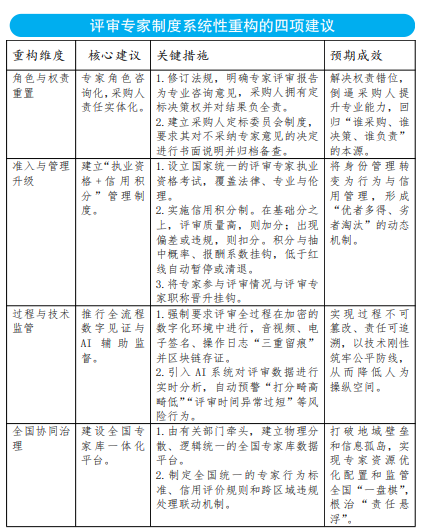
探讨评审专家制度结构性失灵缘由及重构路径
Xin Lang Cai Jing· 2026-02-26 14:32
Core Viewpoint - The article emphasizes the need for a systematic reform of the evaluation expert management system in government procurement to enhance professionalism, accountability, and efficiency in the procurement process [1]. Group 1: Structural Issues in the Evaluation Expert System - The evaluation expert system has experienced structural failures, leading to procurement risks due to inadequate oversight and accountability [2]. - The initial design aimed to introduce independent experts to mitigate the risks of procurement decisions, but it has devolved into a system where expert qualifications are formalized without ensuring ongoing professional development [3]. - There is a significant imbalance between the absolute discretion experts have in decision-making and the weak accountability mechanisms in place, allowing experts to evade responsibility for their actions [4]. Group 2: Lack of Institutional Safeguards - Current reliance on moral integrity is insufficient; a robust institutional framework is necessary to ensure accountability and transparency in the evaluation process [5]. - The evaluation process lacks transparency, with insufficient recording and documentation of discussions and decisions made by experts, leading to a disconnect between individual opinions and final outcomes [6]. - There is a lack of mechanisms to trace and hold experts accountable for their decisions, making it difficult to address issues that arise post-evaluation [6]. Group 3: Recommendations for Systemic Reform - A comprehensive reform is needed to redesign the evaluation expert system, focusing on establishing clear roles and responsibilities, enhancing expert qualifications, and implementing a credit-based management system [12]. - The establishment of a national unified expert database and a standardized evaluation process is crucial to ensure consistent oversight and accountability across regions [12]. - The introduction of digital tools and AI for monitoring evaluations can help reduce manipulation and enhance the integrity of the procurement process [12].
司徒正襟:中国房地产市场的人口拐点、存量革命与制度重构
Sou Hu Cai Jing· 2025-08-14 13:20
Core Viewpoint - The Chinese real estate market is transitioning from a "high leverage, high turnover, high growth" model to a phase of "stock optimization" and "institutional restructuring" due to unprecedented structural challenges, including negative population growth and declining housing demand [1][3]. Group 1: Population Structure Changes - The birth rate in China has drastically declined, with 2023 recording only 9.02 million births, a birth rate of 6.39‰, down over 50% from 2016 [3][4]. - The core home-buying demographic (ages 25-39) is shrinking, with predictions indicating that by 2030, the annual birth rate may drop below 7 million, leading to sustained population decline [3][8]. - The demand for housing is shifting from "availability" to "quality," as the total housing demand decreases while the need for quality housing increases [9][10]. Group 2: Urbanization Process - China's urbanization rate is nearing its peak, with a current rate of 67%, indicating a shift from "incremental development" to "stock renewal" [12]. - The government is promoting high-quality urban renewal, with various innovative models being explored, such as comprehensive area updates and functional transformation [13]. - The residential quality standards are undergoing a revolution, with new regulations emphasizing safety, comfort, and sustainability [14]. Group 3: Institutional Challenges - The pre-sale system in real estate has led to significant issues, including unclear responsibilities and inadequate maintenance of common areas, reflecting systemic risks in the market [16][17]. - The public area allocation disputes and the binding of property management to developers have resulted in low service quality and operational inefficiencies [16][17]. Group 4: Land System Reform - International experiences suggest that flexible land use policies can better balance housing supply and demand, contrasting with the rigid controls seen in the U.S. [18][20]. - China's collective land system reform is exploring new models to activate "sleeping assets," with local innovations facing challenges in rights clarification and market circulation [22][23]. Group 5: Conclusion and Outlook - The future of the Chinese real estate market will be characterized by "decreasing total volume and differentiated structure," necessitating a shift from developers to comprehensive operators [24]. - Companies that respect demographic trends and focus on long-term operations will thrive, as the market increasingly values quality over quantity in housing [26].