制造本土化

Search documents
印度大力推动制造本土化,批准总价值46亿美元的电子元件制造项目
Feng Huang Wang· 2026-01-02 13:56
Core Insights - The Indian government has approved a manufacturing incentive program aimed at boosting domestic electronic component production, with a total investment of 418.63 billion rupees (approximately 4.64 billion USD) [1][2] Group 1: Government Initiatives - The government plans to invest 229.19 billion rupees (approximately 2.54 billion USD) in the approved projects [2] - The projects are distributed across eight states: Andhra Pradesh, Haryana, Karnataka, Madhya Pradesh, Maharashtra, Tamil Nadu, Uttar Pradesh, and Rajasthan, indicating a push for balanced geographical growth in the electronics manufacturing sector [2] Group 2: Economic Impact - The approved projects are expected to generate an output value of 2.58 trillion rupees (approximately 28.62 billion USD) and create around 34,000 direct jobs [2] - The Indian electronics manufacturing sector aims to achieve a production value of 125 billion USD by March 2025, with a target of increasing this figure to 500 billion USD by the fiscal year 2031 [2]
预警:今年全球贸易量或骤降18%
Sou Hu Cai Jing· 2025-06-09 11:02
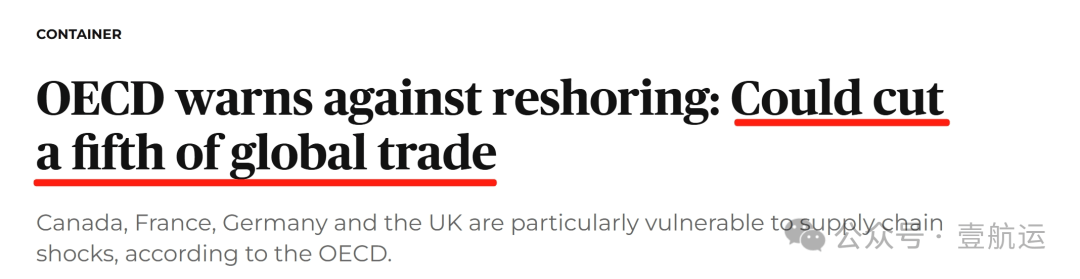
Group 1 - The OECD warns that the recent trend of de-globalization, exemplified by the U.S. tariff war, could lead to a reduction in global trade by up to 20% [1] - Countries like Canada, France, Germany, and the UK are particularly vulnerable to supply chain disruptions due to this trend [1][2] - The shift towards re-localization may result in GDP losses of up to 12% for certain countries compared to maintaining the current global trade system [2] Group 2 - The shipping industry is experiencing a significant increase in freight rates, with the SCFI index for the U.S. West Coast rising from $2,272 to $5,606, a 146.74% increase [3] - However, the high freight rates are expected to decline rapidly due to the recovery of shipping capacity and lower-than-expected cargo volumes [3][4] - Analysts predict that the surge in freight rates is a temporary phenomenon, and as supply chains stabilize and inventories increase, price pressures will diminish [4]