
券商融资

Search documents
广发证券折价融资61亿港元,H股一度大跌5%
第一财经· 2026-01-07 10:16
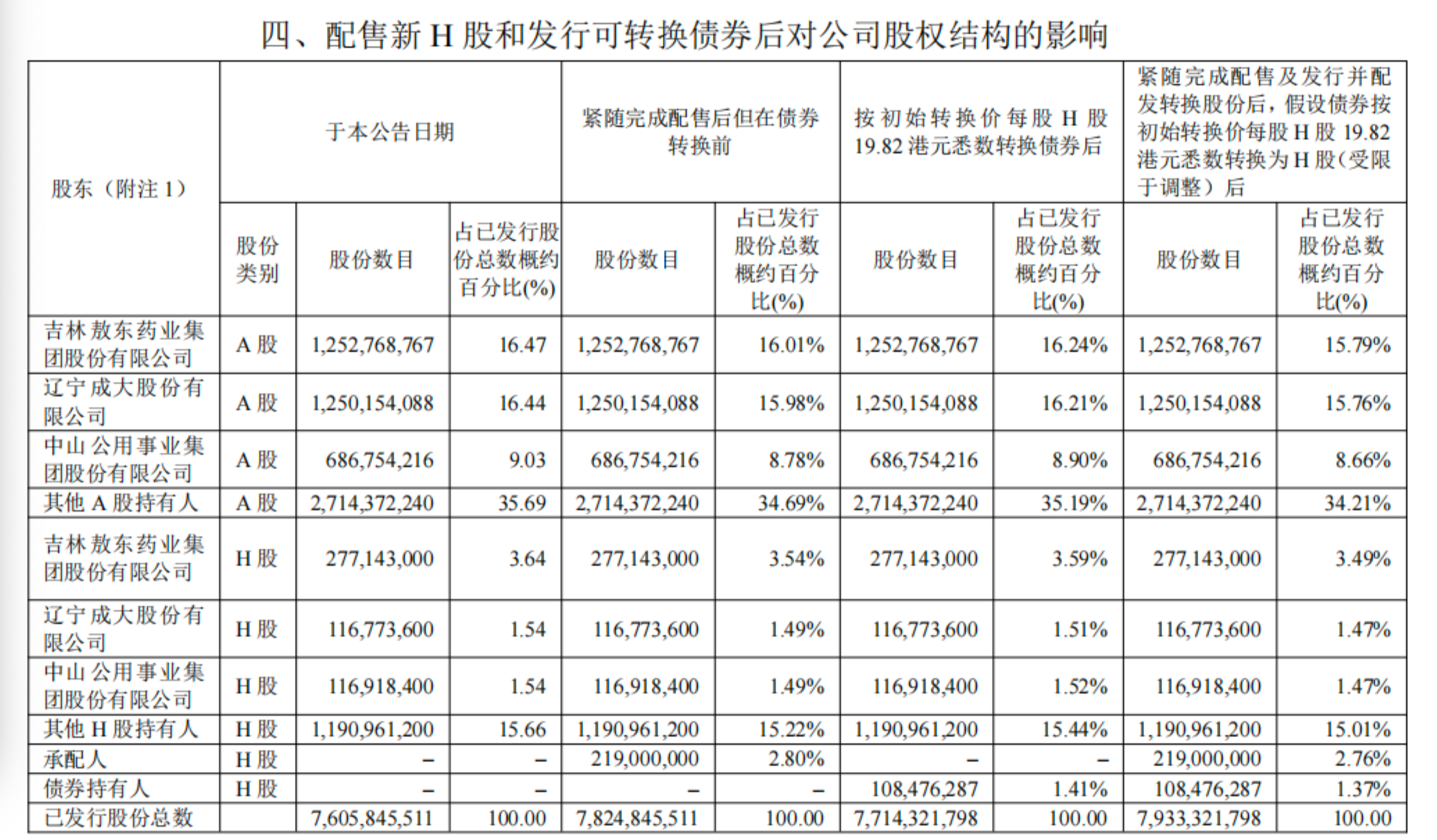
Core Viewpoint - Guangfa Securities plans to raise approximately HKD 61 billion through a share placement and convertible bonds, with a share price set at HKD 18.15, which has led to a short-term decline in stock prices for both H-shares and A-shares [3][4]. Group 1: Financing Details - The company intends to issue 219 million shares at HKD 18.15 each, aiming to raise about HKD 39.75 billion [3]. - Additionally, Guangfa Securities plans to issue zero-coupon convertible bonds with a conversion price of HKD 19.82, expected to raise around HKD 21.5 billion, bringing the total fundraising to approximately HKD 61 billion [3][4]. Group 2: Market Reaction - Following the announcement, Guangfa Securities' H-shares dropped over 5%, falling below HKD 19, while A-shares decreased by 2.61%, closing at CNY 23.16 [3]. - Market analysts suggest that while the current sentiment in A-shares and H-shares is positive, the dilution of existing shareholders' equity due to the placement may lead to short-term bearish sentiment [3][4]. Group 3: Company Performance - Guangfa Securities reported a revenue of CNY 26.164 billion for the first nine months of 2025, marking a year-on-year increase of over 41% [4]. - The net profit for the same period was CNY 10.934 billion, reflecting a nearly 62% year-on-year growth, while the net profit excluding non-recurring items reached CNY 10.711 billion, up over 65% [4].


广发证券折价融资61亿港元,H股一度大跌5%
Di Yi Cai Jing· 2026-01-07 08:47
Group 1 - The core announcement from GF Securities is the plan to raise a total of HKD 61 billion through a share placement at HKD 18.15 per share and the issuance of convertible bonds [1][2] - The share placement involves selling 219 million shares to at least six independent professional institutions, expected to raise approximately HKD 39.75 billion, while the convertible bonds are projected to raise HKD 21.5 billion with a conversion price of HKD 19.82 [1][2] - Following the announcement, GF Securities' H-shares experienced a decline of over 5%, dropping below HKD 19, while A-shares fell by 2.61% to close at CNY 23.16 [1] Group 2 - Market sentiment in both A-share and H-share markets is currently positive, and the capital replenishment by domestic brokerages aligns with industry practices, although the dilution of existing shareholders' equity is a concern [1][2] - Analysts suggest that the performance of brokerage stocks will ultimately depend on the fundamentals of the domestic market, with recent high trading volumes and margin financing balances indicating improving profit expectations for the sector [1][2] - Historical context shows that GF Securities was listed on the Hong Kong Stock Exchange in April 2015 at an IPO price of HKD 18.85, raising approximately HKD 28 billion, and has consistently paid annual cash dividends ranging from CNY 0.35 to CNY 0.8 per share [2]
年内券商境内发债925只 规模达1.8万亿元
Zheng Quan Ri Bao Zhi Sheng· 2025-12-12 16:40
Group 1 - The core viewpoint of the article highlights that capital strength has become a key factor influencing the operations and development of securities firms, leading them to actively issue bonds to supplement capital and enhance competitiveness in a favorable market environment [1][2]. Group 2 - Securities firms have significantly increased their bond issuance this year, with a total of 925 bonds issued, amounting to 1.8 trillion yuan, representing a 44.79% increase compared to the same period last year [2]. - The issuance includes 502 corporate bonds totaling 1.08 trillion yuan, 311 short-term financing bonds amounting to 540.87 billion yuan, and 112 subordinated bonds totaling 181.29 billion yuan [2]. - Factors driving this increase include a strong desire for business expansion, a low-interest-rate environment reducing financing costs, and the need to continuously supplement capital in response to increasing industry competition [2][3]. Group 3 - A total of 54 securities firms have successfully issued 70 technology innovation bonds this year, raising 82.44 billion yuan, with Guotai Junan leading at 18 billion yuan [2]. - The issuance of technology innovation bonds reflects the firms' commitment to supporting the real economy and aligning with national strategies [3]. Group 4 - Among the 75 firms that issued bonds, four major firms led the market with issuance exceeding 100 billion yuan, including China Galaxy at 146.9 billion yuan, Guotai Junan at 135.3 billion yuan, Huatai Securities at 125.6 billion yuan, and CITIC Securities at 102.7 billion yuan [3]. - Additionally, seven firms have issued 30 bonds in overseas markets, raising a total of 4.703 billion USD, a 33.12% increase from the previous year [3]. Group 5 - The industry is focusing on improving debt financing mechanisms and enhancing capital efficiency, with firms like Dongwu Securities and CITIC Securities implementing strategic frameworks for financing and capital management [4]. - The overall financing pace in the securities industry is expected to accelerate, with a shift towards high-capital and high-return businesses, potentially enhancing overall profitability and driving high-quality development [4].



申万宏源杠杆率指标居于行业前列 卖出回购金融资产款占有息负债的比例超50% 该融资模式有何利弊?
Xin Lang Cai Jing· 2025-11-27 08:29
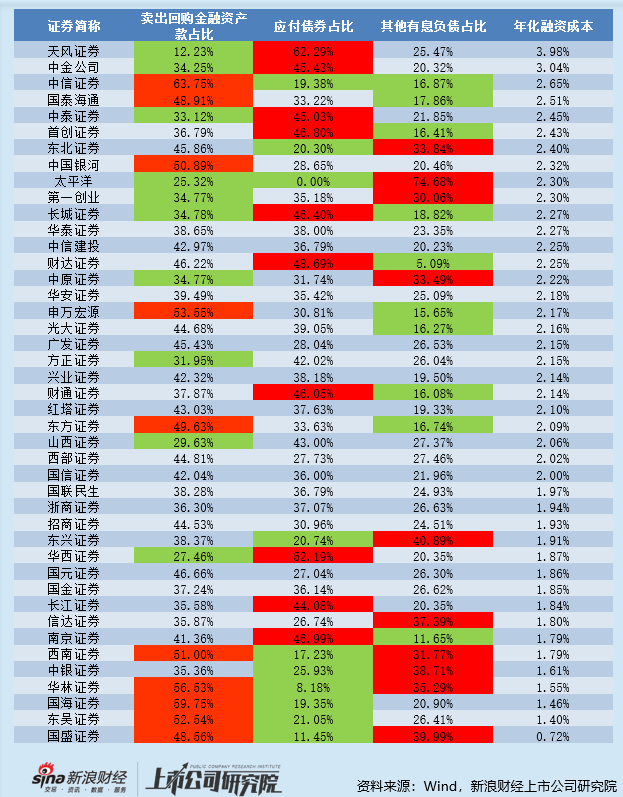
Core Insights - The A-share market has been strong since July 2025, leading to a significant increase in bond issuance by brokerages, with a total issuance exceeding 1.7 trillion yuan, a nearly 50% year-on-year increase [1] - The expansion of brokerages' balance sheets is driven by increased operational settlement funds due to market conditions and a strategic shift towards heavier asset management businesses [1] - Major brokerages like China Galaxy, Guotai Junan, and Huatai Securities have issued the most bonds this year, with issuance amounts of 138.9 billion, 127.3 billion, and 125.6 billion yuan respectively, yet their leverage ratios remain relatively low [1][2] Debt Structure and Financing Costs - As of Q3 2025, the equity multipliers (excluding client transaction margins) for the top three brokerages are 4.23, 4.69, and 3.86, ranking them ninth, sixth, and thirteenth among 43 listed brokerages [2] - The highest equity multipliers are held by CICC, Shenwan Hongyuan, and CITIC Securities, at 5.42, 5.26, and 4.83 respectively, indicating a reliance on interbank financing rather than bond issuance [3] - The sell-buyback financial assets account for 24.40% and 17.53% of total liabilities for the 43 listed brokerages, with other liabilities not exceeding 8% [3] Sell-Buyback Financing - Shenwan Hongyuan's sell-buyback financial assets account for 32.72% of its total liabilities, ranking third in the industry, indicating a strong reliance on this financing method [4] - The average financing cost for CITIC Securities is 2.65%, with a significant portion of its liabilities coming from sell-buyback agreements, which typically have lower interest rates compared to bond issuance [4] - The financing cost structure shows that brokerages with higher sell-buyback ratios tend to have lower overall financing costs, with the lowest costs observed in Guosheng Securities, Dongwu Securities, Guohai Securities, and Hualin Securities [5] Market Trends and Historical Context - The reliance on sell-buyback financing peaked in 2014, with a total of 788.6 billion yuan, but decreased significantly after 2015 due to tighter liquidity and regulatory changes [10] - Following the resolution of major health issues in 2022, the capital market entered a new "interest rate reduction" cycle, leading to a 25% increase in sell-buyback financial assets from 1.96 trillion yuan in 2022 to 2.46 trillion yuan in 2024 [11] - The current trend indicates that brokerages favor sell-buyback financing for its lower costs and flexibility, but this approach carries risks related to market volatility and liquidity [11]



“券商一哥”发债规模掉队的背后: 高额应付账款满足融资需求 优秀利率结构削弱债务置换需求
Xin Lang Cai Jing· 2025-11-14 10:39
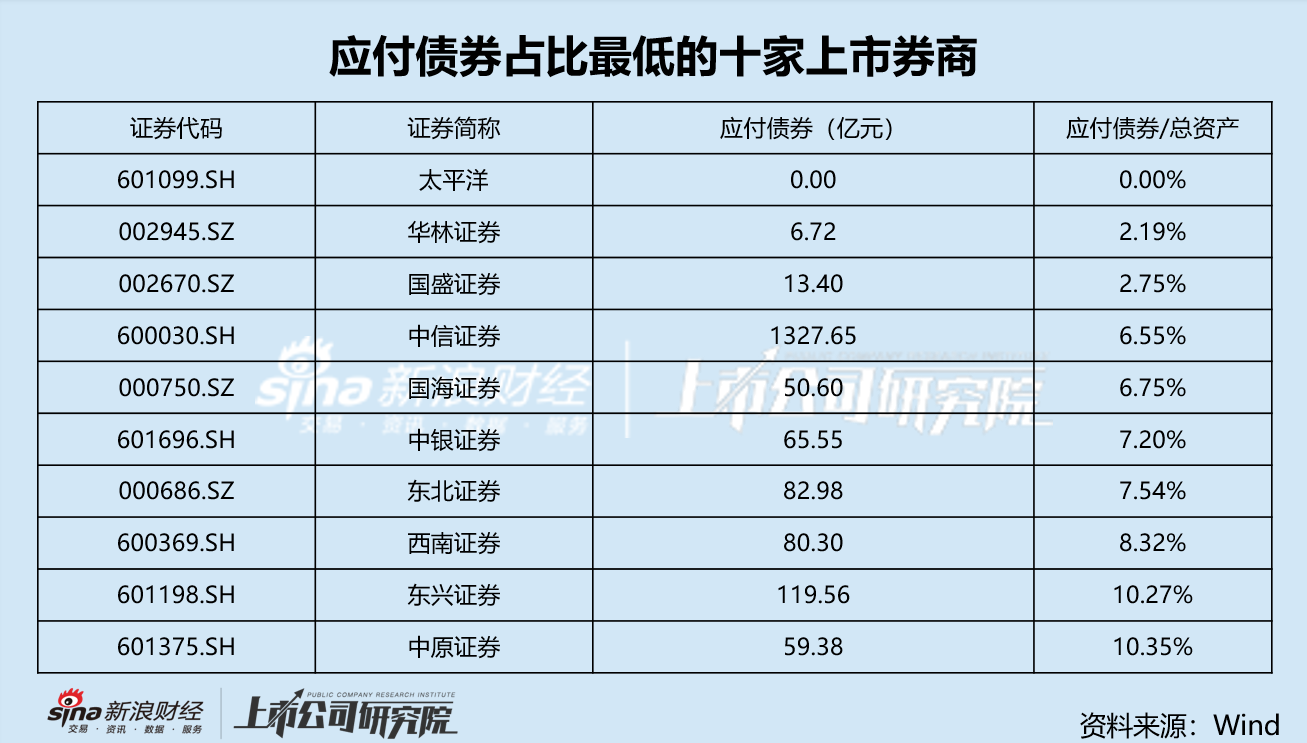
Core Insights - The A-share market has been strong since July 2025, leading to a significant increase in bond issuance by brokerages, with 73 brokerages issuing over 1.5 trillion yuan in domestic bonds, a year-on-year increase of nearly 60% [1][2] - CITIC Securities, a leading brokerage, has been less active in bond issuance compared to its peers, issuing 29 bonds totaling 87.7 billion yuan, ranking 9th in quantity and 5th in scale [1][2] - The lower reliance on credit bonds by CITIC Securities compared to other major brokerages indicates a different financing strategy, primarily through accounts payable [2][10] Group 1: Bond Issuance and Market Trends - The bond issuance by brokerages is driven by increased operational settlement funds and a shift towards heavy asset business allocation [1] - CITIC Securities' bond issuance is notably lower than that of its peers like Guotai Junan and Huatai Securities, which have issued 118.2 billion yuan and 126.9 billion yuan respectively [1][2] - The overall bond issuance trend reflects a broader industry strategy to manage debt costs and support business expansion [11] Group 2: Financial Structure and Debt Management - As of Q3 2025, CITIC Securities has a total asset of 2.0089 trillion yuan and total liabilities of 1.670 trillion yuan, with a significantly lower bond payable amount compared to Guotai Junan [2][10] - CITIC Securities ranks 4th in the industry for the lowest bond payable ratio, indicating a strong position in managing liabilities [2][8] - The reliance on accounts payable for financing is a key differentiator for CITIC Securities, with accounts payable amounting to 242.64 billion yuan, much higher than Guotai Junan's 98.34 billion yuan [2][10] Group 3: Debt Cost and Interest Rates - The current interest rate structure for CITIC Securities shows a higher proportion of lower-rate debt compared to Guotai Junan, which may result in lower overall financing costs [11][12] - The strategy of issuing bonds is not only for funding needs but also for refinancing existing debt to reduce costs, as seen in Guotai Junan's recent bond issuance plan [11]
东吴证券率先预喜:前三季度净利赶超去年全年;黄金主题ETF规模突破2000亿元 | 券商基金早参
Mei Ri Jing Ji Xin Wen· 2025-10-15 01:12
Group 1: East Wu Securities Performance - East Wu Securities is the first listed brokerage to announce a profit increase for the first three quarters of 2025, expecting a net profit of 2.748 billion to 3.023 billion yuan, a year-on-year increase of 50% to 65% [1] - The growth is driven by increased revenues from wealth management and investment trading, indicating strong operational performance [1] - The overall brokerage industry is expected to see a profit growth of over 50% year-on-year for the first three quarters, with the third quarter potentially nearing a 90% increase [1] Group 2: Gold-themed ETFs - The scale of gold-themed ETFs has surpassed 200 billion yuan, reaching 203.34 billion yuan, with a net inflow of 74.577 billion yuan this year, reflecting a growth of over 180% since the end of last year [2][3] - Five gold-themed ETFs have entered the "billion club," with Huaan Gold ETF leading at 73.816 billion yuan, having attracted 25.516 billion yuan this year [2] - The average unit net value growth rate for gold-themed ETFs is 64.55%, with several products seeing their net values double, indicating strong market optimism towards the gold industry [2][3] Group 3: China Galaxy Securities Bond Issuance - China Galaxy Securities has received approval to issue short-term corporate bonds not exceeding 15 billion yuan, highlighting regulatory support for leading brokerages [4] - The total bond issuance by brokerages this year has reached 1.29 trillion yuan, a year-on-year increase of 70.23%, indicating strong capital replenishment needs in the industry [4] - This bond issuance will enhance liquidity management and support business expansion for China Galaxy, contributing to a favorable financing environment for the brokerage sector [4] Group 4: Share Buybacks by Listed Brokerages - Listed brokerages and their major shareholders have repurchased shares exceeding 2.3 billion yuan this year, reflecting strong confidence in the industry [5][6] - The proactive management of market value by brokerages may lead to a reassessment of the sector's value, positively impacting stock valuations [6] - The actions of brokerages serve as a positive signal for the overall market, potentially boosting investor confidence in the capital market's medium to long-term outlook [6]

融资节奏加快 今年以来券商发债规模同比增逾七成
Zhong Guo Zheng Quan Bao· 2025-10-10 22:03
Core Viewpoint - The brokerage firms in China have significantly increased their bond issuance this year, with a total of 1.26 trillion yuan, marking a year-on-year growth of 75.42% [1][2][3] Group 1: Bond Issuance Details - As of October 10, 2023, several brokerages, including China International Capital Corporation (CICC), Industrial Securities, and Zhongyuan Securities, have announced progress in bond approvals or listings [1][2] - CICC plans to issue up to 10 billion yuan in corporate bonds, while Industrial Securities has received approval for a public issuance of up to 20 billion yuan [1][2] - China Galaxy Securities leads the bond issuance with 107.9 billion yuan, followed by Huatai Securities with 98.1 billion yuan, and Guotai Junan with 87 billion yuan [2] Group 2: Factors Driving Bond Issuance - The increase in bond issuance is attributed to a recovering market, rising capital-intensive businesses like margin trading and derivatives, and a slowdown in equity financing [3][4] - Company bonds have become the preferred method for brokerages, reflecting their long-term funding needs and the advantages of lower costs compared to equity financing [3][4] - Regulatory changes have also influenced the shift towards bond financing, as the pace of equity financing has slowed down due to new regulations promoting capital-efficient and high-quality development [4]



券商8月份发债创年内新高 自营、两融业务驱动“补血”需求激增
Zheng Quan Shi Bao Wang· 2025-09-14 23:25
Core Viewpoint - The demand for bond issuance by securities firms has surged in August, reaching a new high for the year, driven by active market trading, low interest costs, and policy encouragement [1] Group 1: Bond Issuance Trends - In August, securities firms experienced a wave of financing, with both the scale and number of bond issuances hitting a year-to-date high [1] - The bond issuance momentum continued into September, with several leading securities firms receiving regulatory approval for bond issuance plans amounting to hundreds of billions [1] Group 2: Driving Factors - The recent bond issuance activity is a strategic response to several factors, including active market trading, low interest costs, policy encouragement, and the development of proprietary trading and margin financing businesses [1] - The need for debt structure adjustment among securities firms has also contributed to the increased bond issuance [1]
券商发力多渠道融资 提升自身综合实力
Zheng Quan Ri Bao Zhi Sheng· 2025-05-06 16:40
Group 1 - Tianfeng Securities announced that its controlling shareholder intends to fully subscribe to the upcoming private placement shares and has committed not to transfer them for five years, which will strengthen the state-owned shareholder's control over the company [1] - The fundraising is expected to enhance the company's governance level and stabilize its equity structure, demonstrating the controlling shareholder's confidence in the company's high-quality development [1] - The securities industry is capital-intensive, and financing is crucial for enhancing comprehensive strength and risk resistance, as well as better serving the real economy [1] Group 2 - Several securities firms, including Guotai Junan and Guolian Minsheng, have successfully implemented private placements this year to raise funds for mergers and acquisitions, aiming for business expansion and integration [2] - As of May 6, 62 securities firms have issued a total of 229 bonds, with a combined issuance scale of 381.528 billion yuan, indicating a growing trend in bond issuance as a financing method [2] - Among the 62 firms, 11 have issued bonds exceeding 10 billion yuan, with Huatai Securities leading at 31.2 billion yuan, followed by GF Securities at 27.56 billion yuan [2] Group 3 - The advantages of bond issuance for financing include not diluting shareholder equity and lower costs in a relatively low-interest-rate environment, allowing firms to flexibly choose bond terms for short-term liquidity [3] - Funds raised through private placements typically provide long-term and stable financial support for the implementation of the company's long-term strategies [3]


