前沿组织

Search documents
微软中国CTO韦青:35岁危机是个伪命题,人能够驾驭机器是个真答案
3 6 Ke· 2025-11-19 12:54
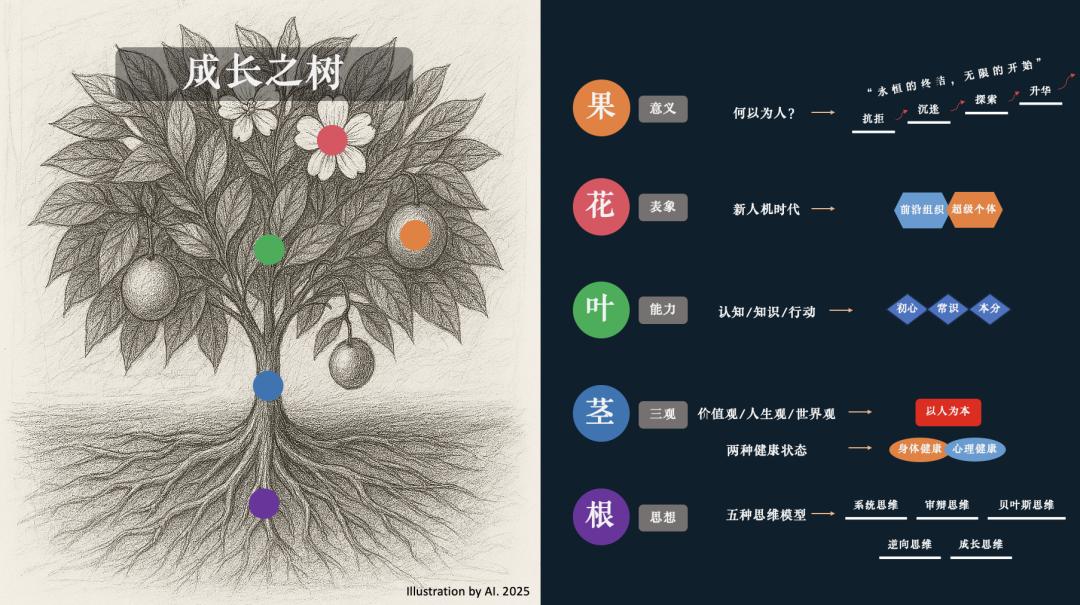
Core Insights - The future business blueprint consists of two main components: frontier organizations and super individuals [4][5][6] - The transition to a new operational paradigm is driven by the digital transformation of organizations, enabling AI to empower every process and individual within [4][6] - The concept of "Intelligence on Tap" signifies the ability to access intelligence anytime and anywhere, fundamentally changing organizational operations and business models [4][6] Summary by Sections Frontier Organizations - Frontier organizations emerge from successful digital transformation, where knowledge is converted into comprehensive data reserves [4][6] - These organizations will exhibit enhanced intelligence through human-machine collaboration, leading to a new operational phase [4][6] Super Individuals - The evolution of individuals will focus on becoming super individuals who can command knowledgeable machines to assist in tasks [5][6] - The ratio of humans to machines is expected to shift from 1:1 to 1:100, emphasizing the importance of human capability in this new landscape [6][8] Key Capabilities for Super Individuals - Super individuals must develop the ability to learn and adapt, moving from a mindset of "I can't" to "I can direct machines" [11][13] - The core competency of super individuals lies in leveraging human common sense and insights to guide machines effectively [14][16] Communication and Personal Branding - Effective communication, persuasion, and personal brand building are essential skills for super individuals in the information age [16][24] - The ability to manage one's digital footprint is crucial for distinguishing oneself in a competitive landscape [24][26] The Future of Work - The traditional age-related career milestones are shifting, with older individuals becoming increasingly valuable due to their retained agency and experience [35][36] - The focus is on providing exceptional value and exploring unknowns rather than merely fulfilling tasks [39][41] Philosophical Considerations - The ultimate goal transcends mere productivity; it involves exploring the meaning of existence and human purpose in the age of AI [31][39] - The challenge lies in maintaining human agency and avoiding the pitfalls of over-reliance on machines [30][31]


微软中国CTO韦青:35岁危机是个伪命题,人能够驾驭机器是个真答案
混沌学园· 2025-11-19 11:58
Core Insights - The future business blueprint consists of two main components: frontier organizations and super individuals [5][6] - The transition to AI and machine learning necessitates a focus on human capabilities and the importance of lifelong learning [2][4] Group 1: Frontier Organizations - Frontier organizations emerge from successful digital transformation, enabling AI to empower every process and individual within the organization [5][6] - The concept of "Intelligence on Tap" signifies that organizations can access intelligence anytime, fundamentally changing operational paradigms and business models [5][6] - The shift from rigid departmental structures to task-based organizational frameworks reflects the evolving needs of customers who seek solutions rather than departmental services [11][12] Group 2: Super Individuals - Super individuals will evolve to command machines, leveraging their unique human capabilities to enhance productivity and creativity [6][15] - The development of super individuals requires a mindset shift from "I can't" to "I can direct machines" [15][18] - The core ability of super individuals lies in their capacity to apply common sense and insights, which machines lack, to guide tasks and make judgments [18][19] Group 3: Communication and Personal Branding - Effective communication, persuasion, and personal branding are essential skills for super individuals in the information age [21][22] - The ability to express oneself clearly and persuasively is crucial for collaboration with both humans and machines [27][30] - Building a personal brand involves actively managing one's digital footprint, which is increasingly important in a world where traditional credentials are less reliable [39][40] Group 4: The Role of AI and Human Collaboration - AI should be viewed as a tool to assist humans in exploring the unknown rather than merely replacing human labor [56] - The future of work will require individuals to maintain their agency and not succumb to the allure of technology [44][45] - The challenge lies in balancing the benefits of AI with the need for human insight and ethical considerations [46][57]

新课预告|韦青:你的价值,不再是标准答案,而是提供“异常值”
混沌学园· 2025-11-12 11:58
Core Insights - The article discusses the evolution of organizations and individuals in the context of increasing machine capabilities, emphasizing the need for a shift in how human value is perceived and utilized [4][11][22] Group 1: Organizational Evolution - The concept of "Frontier Organizations" is introduced, which challenges traditional views on human value, suggesting that machines excel at standardization while humans should focus on providing "outliers" that machines cannot replicate [9][11] - The structure of organizations is shifting from rigid departmental divisions to fluid, task-based teams, necessitating new management approaches [12] - The foundation of "Frontier Organizations" is the cultivation of "Super Individuals," whose value is no longer defined by traditional resumes but by their digital footprints and contributions [13][15] Group 2: Future of Work - Recruitment processes are expected to evolve, with organizations analyzing candidates' digital presence rather than relying on resumes, marking a significant shift in hiring practices [16] - The article raises critical questions about the future of technology and its impact on human roles, questioning whether current trends are leading to meaningful advancements or merely fleeting phenomena [19][20] - The ultimate inquiry posed is about individual agency in the face of advancing technology, urging individuals to choose to be active contributors rather than passive participants [22][23]