
功率密度

Search documents
芯片互联,复杂性飙升
半导体芯闻· 2026-01-26 08:44
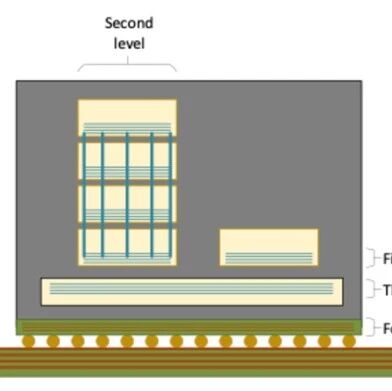
Core Insights - The article discusses the evolution of interconnect complexity in semiconductor devices, highlighting the shift from a two-level routing structure to a five-level structure, which enhances flexibility but increases complexity and decision-making requirements [1][19]. - It emphasizes the gradual nature of these changes, comparing it to the story of "boiling a frog," where the cumulative impact of incremental changes becomes apparent only in hindsight [1]. Group 1: Routing Structure and Challenges - The routing structure or platform is defined as the location of interconnections, historically represented by metal wiring in integrated circuits (IC) and printed circuit boards (PCB), both of which provide multi-layer wiring to maximize connectivity while managing costs [1]. - The differences between chip and PCB design have traditionally been significant, with chip designers focusing on internal wiring and PCB designers on connections to other components [3]. - Increasing the number of layers can reduce wiring density but also raises graphical complexity and sensitivity to lateral etching effects, necessitating careful design considerations [3]. Group 2: Power and Heat Management - The rise in chip power levels, reaching kilowatt levels, complicates heat dissipation, as traditional packaging methods struggle to manage the generated heat effectively [4]. - The increasing integration of circuits within chips leads to higher power density, exacerbating heat management challenges as more heat must be dissipated from smaller volumes [4]. - Flip-chip packaging has emerged as a solution, allowing chips to connect to substrate boards directly, improving heat dissipation and I/O interface availability [4][5]. Group 3: Stacked and 2.5D Integration Technologies - Stacked packaging, which involves vertically stacking multiple chips, presents significant thermal management challenges due to limited heat dissipation paths for chips in the middle of the stack [8]. - The development of 2.5D integration technology utilizes an intermediary layer as a "PCB," allowing for tighter line spacing and the installation of multiple chips, enhancing performance and reducing costs [9][10]. - The intermediary layer can be made from organic or silicon materials, with the latter allowing for finer dimensions, although at a higher cost [9][12]. Group 4: Design and Verification Complexity - The design and verification process for five-layer interconnect systems is significantly more complex than in the past, requiring integrated efforts from chip and packaging designers [12][16]. - Early-stage verification must encompass structural material analysis, layout planning, and thermal simulations, reflecting the need for a multi-physical field approach [16][17]. - The integration of power delivery and signal quality solutions has become more refined, with voltage regulation now occurring closer to the chip, enhancing performance [17][18]. Group 5: Future Implications - The evolution towards a five-layer interconnect structure may influence future chip development decisions, providing clearer insights into the growing flexibility and complexity of chip designs [19]. - The article concludes that while these changes are not revolutionary, they represent a significant shift in how semiconductor devices are designed and managed, impacting all levels of architecture [19].

AIDC行业深度:通胀的机会在哪里?
Tianfeng Securities· 2025-03-03 03:05
Investment Rating - The report maintains an investment rating of "Outperform" for the AIDC industry, consistent with the previous rating [3]. Core Insights - Major domestic and international manufacturers are making significant capital expenditures in the AIDC sector, indicating substantial growth potential in the infrastructure industry [4]. - The AIDC infrastructure can be categorized into internal and external components, with overseas value being higher compared to domestic counterparts [5]. - The AIDC sector is experiencing exponential growth in computing power and a significant increase in power consumption compared to traditional IDC [6]. - The report highlights the increasing capital expenditures by major players such as ByteDance, Tencent, and Alibaba in China, as well as the four major US tech giants (Microsoft, Meta, Google, and Amazon) [19][22]. Summary by Sections AIDC Infrastructure Composition - AIDC is designed specifically to support and accelerate AI applications, featuring high-performance computing resources and large-scale storage solutions [11]. - The key differences between AIDC and traditional IDC include a significant increase in power density and computing power, with AIDC cabinets typically ranging from 20-100 kW [15]. Internal AIDC Components - High-power AI servers create investment opportunities in power supply, liquid cooling, supercapacitors, and BBU [25]. - The global market for AI server power supplies is expected to exceed $5 billion by 2026, driven by increased power density and efficiency [6][40]. - Supercapacitors are gaining importance in AIDC for their dual functions of peak shaving and backup power, with a projected market increase due to their integration into NVIDIA's GB300 [55][56]. - Liquid cooling technologies are becoming essential as cabinet power densities exceed 20 kW, with various liquid cooling methods emerging to meet high thermal demands [63]. External AIDC Components - The demand for UPS, HVDC, diesel generators, transformers, and switchgear is expected to grow significantly due to AIDC requirements [8]. - The UPS market is projected to reach 19.1 billion yuan by 2025, with leading companies like Kehua and Huawei holding significant market shares [9]. - The diesel generator market for AIDC is anticipated to reach 238 billion yuan, indicating a vast market potential for domestic manufacturers [9]. Major Players and Investment Plans - ByteDance plans to increase its capital expenditure to 160 billion yuan by 2025, focusing on AI computing procurement and data center construction [20]. - Tencent's capital expenditure is projected to reach 230 billion yuan in 2024, reflecting a 176% year-on-year increase [19]. - Alibaba aims to invest over 380 billion yuan in cloud and AI hardware infrastructure over the next three years, significantly increasing its previous decade's total investment [20]. - Major US tech companies are also ramping up their investments in AI data centers, with total investments expected to reach $218 billion by the end of 2024 [22][23].
