动能回收

Search documents
比宇航员还稀有的F1车手,竟然不会开电动车?
电动车公社· 2026-03-26 19:27
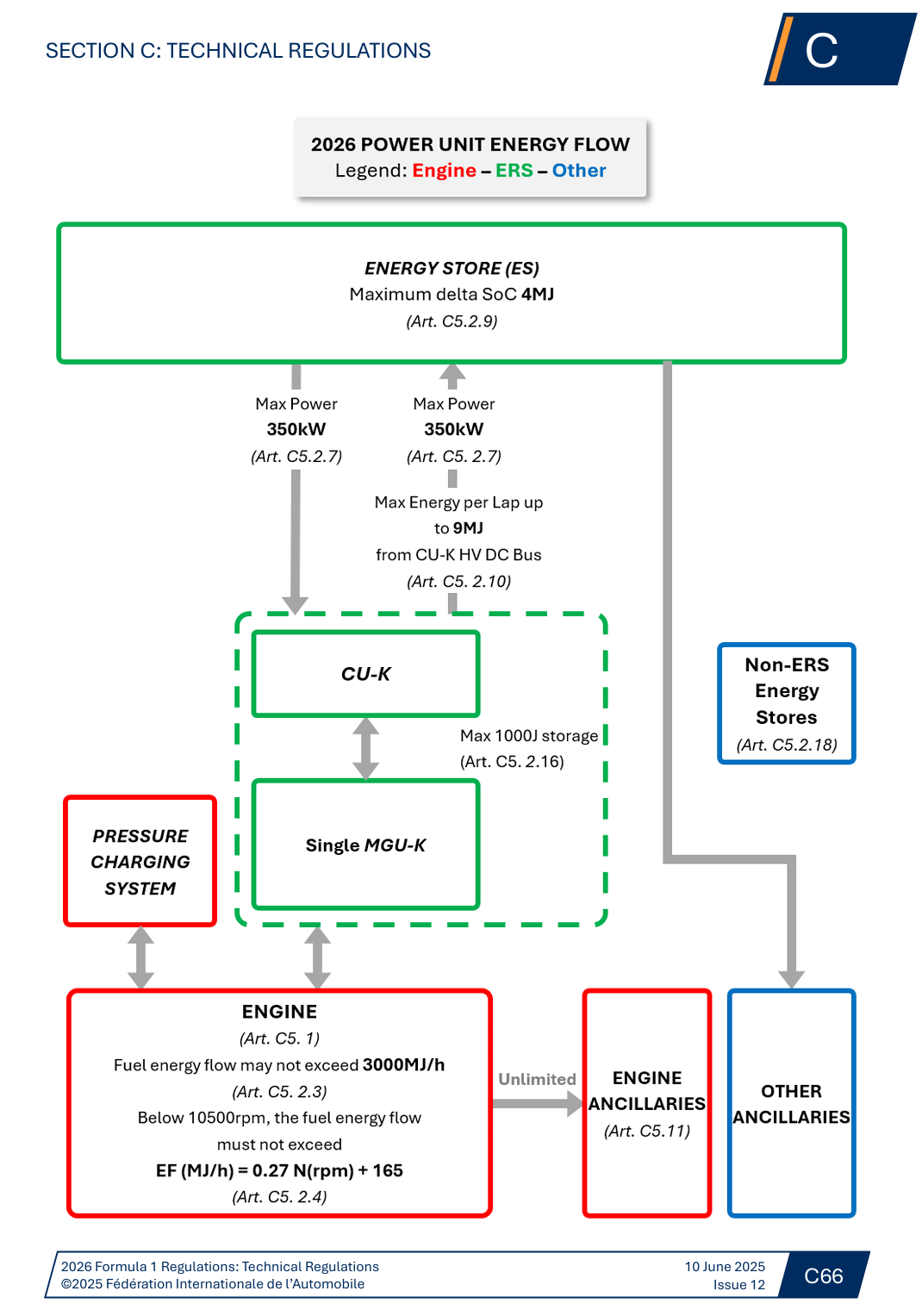
Core Viewpoint - The 2026 F1 season has undergone significant changes, particularly in its powertrain, leading to increased competition and excitement, despite initial struggles from drivers adapting to the new technology [21][51][81]. Group 1: Race Performance and Driver Reactions - The opening race of the 2026 season saw numerous driver errors, with notable incidents including Verstappen and Piastri crashing out early [3][5][7]. - Verstappen expressed frustration over the chaotic nature of the race, stating it did not reflect the essence of F1 [8]. - Despite the drivers' dissatisfaction, the audience turnout was unprecedented, with over 230,000 fans attending the Shanghai race, marking a new high for F1 in China [11][10]. Group 2: Changes in Racing Dynamics - The 2026 season has seen a dramatic increase in overtaking, with an average of 120-125 overtakes per race, compared to just 30.9 in the previous season, indicating a more competitive environment [19][15]. - The new powertrain configuration, which balances internal combustion and electric power, has transformed race strategies, making energy management crucial for success [21][27][37]. Group 3: Technological Innovations - The new F1 powertrain features a significant shift towards electric power, with the internal combustion engine's output reduced to approximately 400kW and the electric motor's output increased to 350kW, creating a near 1:1 power ratio [27][28]. - Energy recovery systems have become vital, with two main methods for recharging the battery during races, impacting braking and overall vehicle control [34][45]. Group 4: Industry Implications and Opportunities - The shift towards electric power in F1 presents opportunities for manufacturers, particularly Chinese companies like BYD, which is exploring entry into F1 due to its advanced electric vehicle technology [68][71]. - The high operational costs of F1 teams, estimated at over 3 billion yuan annually, pose challenges for new entrants, but the potential brand recognition benefits are significant [72][76]. - The introduction of sustainable fuels in F1, produced from renewable sources, marks a pivotal shift in the industry, aligning with global trends towards sustainability [81][83].

F1的1.6T发动机是如何输出近千马力的?
Zhong Guo Zhi Liang Xin Wen Wang· 2025-07-29 09:24
Core Viewpoint - The evolution of F1 engines has led to a significant reduction in displacement and cylinder count, yet advancements in technology have resulted in higher power output and efficiency compared to conventional road cars [1][5][19]. Group 1: Engine Specifications - The current F1 engine regulations, effective since 2014, mandate a 1.6L V6 engine with specific design constraints, including a maximum cylinder diameter of 80mm and a single turbocharger [4][5]. - The maximum engine speed is capped at 15,000 rpm, with a maximum fuel flow rate of 100 kg/h during races [6][14]. - F1 engines utilize advanced technologies such as kinetic energy recovery (MGU-K) and heat energy recovery (MGU-H), transforming traditional engines into power units [5][19]. Group 2: Performance Comparison - A typical F1 engine can produce up to 570 kW of power and 385 Nm of torque, significantly outperforming standard 2.0T engines from manufacturers like Volkswagen and BMW, which generally produce around 200 kW and 400 Nm [10][20]. - The efficiency of F1 engines is attributed to several factors, including rapid combustion, improved fuel injection pressure (up to 500 bar), and advanced materials that allow for higher RPMs [14][19]. Group 3: Design and Engineering Challenges - F1 engines are designed for high RPMs, necessitating shorter stroke lengths and lighter components, such as pistons weighing around 200g compared to 500g in typical road cars [16][17]. - The manufacturing tolerances for F1 components are extremely tight, requiring pre-heating before operation, which is not a concern for standard vehicles [17][19]. - The lifespan of an F1 engine is limited to approximately 1,000 km per season, allowing engineers to maximize performance without worrying about long-term durability [19].