
医养结合服务

Search documents
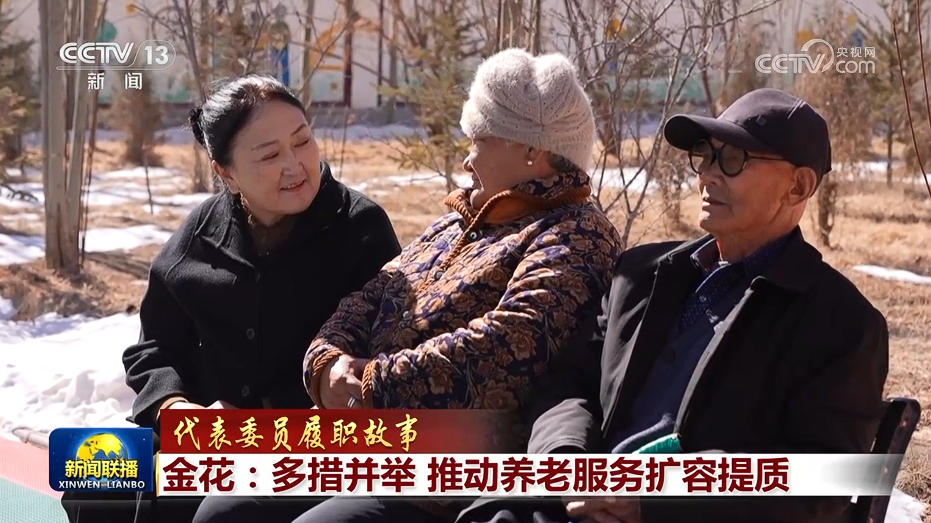
【代表委员履职故事】金花:多措并举 推动养老服务扩容提质
Yang Shi Wang· 2026-02-23 12:32
Group 1 - The core focus of the news is on the need for improved elderly care services in rural areas, particularly for disabled elderly individuals, as highlighted by the National Committee member Jinhua during the Two Sessions [1][3] - Jinhua emphasizes the importance of increasing investment in village-level mutual assistance elderly care facilities to address the challenges faced by elderly individuals living in remote areas [3] - The government has built over 140,000 rural mutual assistance elderly care facilities during the 14th Five-Year Plan period to address the shortcomings in rural elderly care services [3] Group 2 - There is a growing demand for care services for disabled elderly individuals, which has been recognized as a rigid need for families [5] - Despite increased government investment leading to sufficient nursing bed availability, issues such as low occupancy rates and a shortage of professional talent persist in the operation of medical and nursing combined institutions in high-altitude areas [5] - Jinhua plans to propose suggestions for enhancing the care level for disabled elderly individuals in high-altitude regions during the Two Sessions [5]

如何理解发展医育、医养结合服务
Xin Hua She· 2026-01-28 05:00
Group 1 - The core viewpoint of the article emphasizes the development of integrated medical education and elderly care services in response to China's demographic challenges, including declining birth rates and an aging population [1] Group 2 - The proposal is part of the recommendations from the Central Committee of the Communist Party of China regarding the formulation of the 15th Five-Year Plan for national economic and social development [1] - The focus on medical and elderly care services reflects a targeted approach to address the current and future demographic trends in the country [1]
学习规划建议每日问答|如何理解发展医育、医养结合服务
Xin Hua She· 2026-01-28 04:04
Core Viewpoint - The article emphasizes the development of integrated medical and educational services, as well as medical and elderly care services, in response to China's demographic challenges, including declining birth rates and an aging population [1] Group 1: Policy Recommendations - The proposal suggests enhancing inter-departmental collaboration and expanding effective supply through various channels, including public-private partnerships, to meet the basic service needs of residents [2] - It advocates for the establishment of a collaborative service network involving various healthcare institutions to ensure resource sharing and efficient coordination [2] Group 2: Operational Management - The article recommends creating a clear operational management mechanism tailored to local needs, defining responsibilities among participating units, and ensuring safe and effective service delivery [3] - It highlights the importance of integrating medical and educational services with the construction of medical alliances to facilitate communication and service delivery between different healthcare providers [3] Group 3: Safety and Regulation - The article stresses the need to establish a robust safety framework through multi-departmental coordination, regulatory clarity, and quality assessment systems to ensure the safety and quality of integrated services [3]
重点关注脱贫地区“一老一小”健康问题(专家点评)
Ren Min Ri Bao· 2025-11-30 22:01
Group 1 - The core focus post poverty alleviation is on key regions, populations, and diseases, establishing long-term mechanisms to prevent poverty due to illness and enhancing health service capabilities in impoverished areas [1] - There is a significant concern regarding the health issues of the elderly and children in poverty-stricken areas, particularly due to higher aging rates and the vulnerability of "empty nesters" and "lonely elderly" [1] - To prevent elderly individuals from falling back into poverty due to illness, it is essential to improve integrated medical and nursing services and establish comprehensive health service systems in these regions [1] Group 2 - To alleviate the financial burden on families caused by children's illnesses, it is recommended to implement targeted early development intervention projects in rural and impoverished areas, focusing on nutrition, development, and mental health [2] - Encouragement is given for the establishment of scientific parenting guidance funds in impoverished areas to support various forms of infant care guidance and promote early development support [2]
我国鼓励“银发力量”参与医养结合服务
Xin Hua She· 2025-11-04 07:20
Core Viewpoint - The announcement by the National Health Commission and other departments aims to enhance the integration of medical and elderly care services by leveraging retired medical professionals, thereby promoting high-quality development in this sector [1][2] Group 1: Policy and Implementation - The notification emphasizes principles such as practicality, voluntary participation, mutual selection, and meeting the needs of society in integrating medical and elderly care services [1] - It aims to combine the social demand for medical and elderly care services with the personal willingness, professional specialties, and experience of retired medical personnel [1] Group 2: Personnel and Service Scope - Eligible personnel include retired doctors, nurses, pharmacists, technicians, and administrative staff with relevant qualifications and good health [1] - The services provided will encompass diagnosis, rehabilitation, nursing, pharmaceutical care, palliative care, health education, and management, among others [1] Group 3: Regional Focus and Resource Development - The initiative will focus on ten provinces and municipalities, including Beijing, Hebei, and Jiangsu, to establish a talent resource pool for retired medical professionals [2] - A service platform will be developed to explore sustainable and replicable working models for the integration of medical and elderly care services [2]