医用耗材价格治理

Search documents
大批医疗耗材启动调价
2 1 Shi Ji Jing Ji Bao Dao· 2026-02-04 11:56
Core Insights - The medical consumables price governance has entered a nationwide implementation phase in January 2026, with multiple provinces rapidly releasing policies for price adjustments and procurement regulations [1][3][6] Group 1: Policy Implementation - Provinces such as Liaoning, Qinghai, Guangdong, and Zhejiang have issued policies for price adjustments and procurement standards, covering both high-value and commonly used low-value consumables [1][3] - Liaoning was the first to announce the price adjustment results for the fifth batch of consumables on January 30, 2026, followed by Qinghai, which implemented price changes for 807 medical consumables immediately [3][6] - The policies are characterized by rapid implementation, strong targeting, and deep alignment with national procurement rules, focusing on stabilizing clinical supply and ensuring quality [6][10] Group 2: Industry Transformation - The price governance is reshaping the competitive landscape of the medical consumables industry, with increased compliance costs for small and medium-sized enterprises, leading to potential market exits for those lacking cost control capabilities [9][10] - The industry is transitioning from price competition to innovation and quality competition, necessitating companies to enhance supply chain management and clinical services for sustainable growth [9][10] - The governance will drive two major transformations: a shift towards high-value, innovative products and a focus on comprehensive cost management across the supply chain [9][10] Group 3: Long-term Outlook - The ongoing price governance is not merely about reducing prices but aims to balance price reduction with industry development and clinical needs [10] - The year 2026 is expected to be pivotal for deepening price governance, with more provinces likely to adopt regular price linkage and limit policies, further refining the national regulatory framework [10] - Companies must optimize product lines, improve cost structures, and increase innovation investments to thrive in the evolving landscape, moving towards a new development phase centered on clinical value and innovation [10]

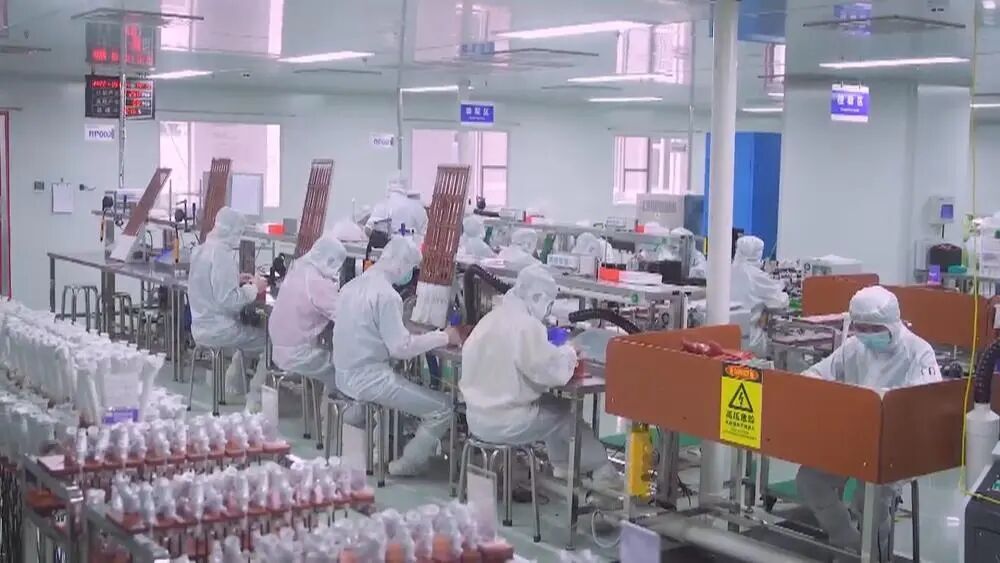
大批医疗耗材启动调价
21世纪经济报道· 2026-02-04 11:49
Core Viewpoint - The article discusses the rapid implementation of medical consumables price governance across multiple provinces in China, marking a shift towards a national integrated pricing system that emphasizes cost control and innovation-driven competition in the industry [3][5][6]. Group 1: Policy Implementation - Multiple provinces, including Liaoning, Qinghai, Guangdong, and Zhejiang, have swiftly released policies for price adjustments and procurement regulations for medical consumables, indicating a significant acceleration in policy rollout [3][5]. - Liaoning was the first to announce price adjustments for the fifth batch of consumables in 2026, with Qinghai following suit by implementing price changes for 807 products immediately [3][5]. - Guangdong has set new prices for 195 selected products starting February 2, while Zhejiang focuses on limiting prices for high-value consumables, addressing inflated pricing issues [3][5]. Group 2: Characteristics of Policy - The recent provincial actions exhibit three key characteristics: rapid implementation with minimal delay between policy announcement and execution, targeted approaches focusing on specific product categories, and alignment with national procurement rules to ensure quality and clinical needs are met [5][6]. - The introduction of a "benchmark price" mechanism in the sixth batch of national high-value consumables procurement aims to prevent malicious low-price competition and serves as a model for local price governance [6]. Group 3: Industry Impact - The ongoing price governance is expected to increase compliance costs for the industry, pressuring smaller companies with limited cost control capabilities, while larger firms with economies of scale are likely to capture more market share [8]. - The shift in competition from price-based to innovation and quality-driven strategies is evident, with companies needing to enhance supply chain management and clinical services to sustain growth [8]. - The long-term transformation of the industry will involve a shift towards higher-value, innovative consumables, as procurement policies favor products with clear clinical value [8][9]. Group 4: Future Outlook - The article suggests that 2026 will be a pivotal year for the deepening of medical consumables price governance, with more provinces expected to adopt regular price linkage and limit policies, further refining the national regulatory framework [9]. - The emphasis on price transparency and standardized competition is anticipated to lead the industry away from chaotic growth towards a new phase centered on clinical value, innovation, and balanced pricing [9].

多地耗材降价落地,最高降幅超97%
21世纪经济报道· 2026-01-06 10:47
Core Viewpoint - The article discusses the significant price reduction in medical consumables across China, driven by new policies aimed at addressing the issue of inflated prices, which is reshaping the competitive landscape of the pharmaceutical industry [4][6][10]. Policy Implementation - The current price governance features "full coverage and dynamic adjustment," with various regions implementing complementary policies to manage prices effectively [6][10]. - Ningxia's recent notification requires companies to confirm the national minimum effective price by January 28, 2026, targeting high-risk consumables [6]. - Jiangxi initiated a normalization of price linkage in November 2025, expanding management to all listed consumables, while Heilongjiang's policy covers all listed products [6][7]. Price Reduction Impact - Medical consumables are experiencing drastic price drops, with some products seeing reductions of over 97%, such as ultrasound endoscope water bags dropping from 4,400 yuan to 127.15 yuan [7]. - High-value consumables like coronary stents have decreased from an average of 13,000 yuan to around 700 yuan, a reduction exceeding 93% [7]. - The cumulative savings from the centralized procurement of coronary stents and artificial joints from 2020 to 2025 exceed 200 billion yuan and 150 billion yuan, respectively [8]. Industry Restructuring - The introduction of a "floor price" is accelerating the reshaping and transformation of the medical consumables industry, ending the previous model reliant on regional price differences [10]. - Companies that fail to adjust prices in a timely manner face suspension from listing, particularly affecting small and medium-sized manufacturers [10]. - The competitive landscape is shifting, with domestic brands outperforming foreign companies in procurement bids due to significantly lower pricing [10]. Market Regulation Mechanism - The new market regulation mechanism is characterized by "normalization and intelligence," allowing for real-time monitoring and automatic price comparisons across the country [11]. - The goal is to establish a unified national pricing system, enhancing transparency and efficiency in the industry [12]. - Companies are encouraged to adapt to a compliant and transparent market environment, focusing on cost control and increased R&D investment in high-value products [12]. Future Outlook - The ongoing price governance is seen as a necessary step towards high-quality development in the medical industry, balancing price control with innovation incentives [12]. - The industry is expected to transition towards a model that prioritizes innovation, quality, and patient value, moving away from rapid, unregulated growth [12].