
医用耗材

Search documents
医药健康行业研究医疗产业链提价专题原料药及耗材迎来提价契机,行业景气度有望回升
SINOLINK SECURITIES· 2026-03-24 00:35
Investment Rating - The report suggests a focus on the pharmaceutical raw materials sector and the medical consumables sector, particularly the nitrile gloves market, indicating potential for price increases and profit elasticity [6][22]. Core Insights - The pharmaceutical raw materials sector is experiencing significant price increases due to rising chemical product costs, which are expected to be passed down the supply chain, leading to potential price hikes in raw materials [2][12]. - The medical consumables sector, specifically nitrile gloves, is characterized by high barriers to entry and stable supply dynamics, with a potential for price recovery due to rising raw material costs and geopolitical tensions affecting supply [3][4]. Summary by Sections Pharmaceutical Raw Materials - Chemical product prices have risen significantly due to international oil price increases and high overseas energy costs, impacting the cost structure of downstream industries [2][12]. - The supply side is under pressure due to previous expansions in production capacity from 2020 to 2022, which may lead to gradual price transmission [14][15]. - Demand is expected to improve as customer inventory levels are low, indicating that any price increases could be sustained [19][22]. - Recommended stocks in this sector include Puluo Pharmaceutical, Aorite, Tianyu Co., Huahai Pharmaceutical, and Jiuzhou Pharmaceutical [6][22]. Medical Consumables - The nitrile gloves market is dominated by production in China and Malaysia, with significant market share and high manufacturing barriers, making it difficult for new entrants to scale quickly [3][4]. - The price of nitrile gloves is currently at historical lows, but geopolitical tensions are expected to drive raw material prices up, leading to a potential recovery in glove prices [3][4]. - Domestic leading companies are extending their supply chains upstream into nitrile latex production, enhancing their cost control and supply chain advantages during periods of rising raw material prices [4][6]. - Recommended stocks in this sector include YK Medical, Blue Sail Medical, and Zhonghong Medical [6][22].
医药行业专题研究:原料药及耗材迎来提价契机,行业景气度有望回升
SINOLINK SECURITIES· 2026-03-23 13:18
Investment Rating - The report suggests a focus on the pharmaceutical raw materials and medical consumables sectors, particularly highlighting the potential for price increases in raw materials due to rising costs in the chemical industry and the supply chain advantages of leading companies in the medical nitrile gloves market [6][22]. Core Insights - The pharmaceutical raw materials sector is expected to see price increases driven by rising costs of upstream raw materials, with downstream products likely to benefit from improved profit elasticity as customer inventory levels remain low [2][19]. - The medical consumables sector, particularly the nitrile gloves market, is characterized by high barriers to entry and stable supply dynamics, with potential for price recovery as raw material costs rise and supply-demand conditions improve [3][4][48]. Summary by Sections Pharmaceutical Raw Materials - The chemical products have seen significant price increases due to rising international oil prices and high overseas energy costs, which are expected to drive up costs in downstream industries such as pharmaceutical intermediates and raw materials [2][12]. - The supply side has experienced pressure due to concentrated capacity expansion from 2020 to 2022, leading to a gradual transmission of cost pressures downstream [14][15]. - Demand-side factors indicate that customer inventory levels have been low for an extended period, suggesting that any price increases will likely be sustainable [19][22]. Medical Consumables - The nitrile gloves market is dominated by production in China and Malaysia, with significant barriers to entry due to the need for long-term investment in production capabilities and technology [3][4]. - The price of medical nitrile gloves is currently at historical lows, but is expected to rise due to geopolitical tensions affecting raw material prices and improving supply-demand dynamics [3][4][48]. - Leading companies in this sector are extending their operations upstream into nitrile latex production, which enhances their supply chain advantages and cost control capabilities [4][61]. - The report highlights that the global demand for disposable gloves is expected to stabilize and grow, driven by increased health awareness and regulatory standards in the medical industry [63].
千万级医用耗材招标被曝造假
21世纪经济报道· 2026-03-19 02:45
Core Viewpoint - The article highlights a significant case of fraud in the medical consumables bidding process, revealing manipulation of scores by evaluators, which underscores the need for improved regulatory oversight in the medical procurement sector [1][3]. Group 1: Case Details - A procurement project for medical consumables worth several million yuan was manipulated, where a leading global company was unfairly scored due to evaluator interference, resulting in a last-place finish [1][3]. - The bidding involved eight companies, including a top-ranked global firm and a newly established company that had only recently obtained its business license [3][4]. - The evaluation process showed clear anomalies, with the leading company receiving the lowest scores, particularly in quality, which should have been its strength [3][4]. Group 2: Issues Identified - The case reveals three core issues in the medical consumables procurement process: 1. High concentration of power in the evaluation process, allowing for manipulation by key individuals [5]. 2. Lack of standardized evaluation processes, leading to subjective scoring and potential for bias [5]. 3. Long-term relationships between hospitals and suppliers creating invisible barriers to entry for new, high-quality companies [5]. Group 3: Regulatory Response - The exposure of this case aligns with the upcoming comprehensive upgrade of national medical insurance inspections in 2026, signaling a crackdown on irregularities in the medical procurement sector [6][7]. - Recent policies have been introduced to regulate bidding behaviors, including the establishment of a "blacklist" system for bribery and risk assessments for evaluators [7]. - The 2026 national medical insurance inspections will incorporate advanced methods such as big data screening and in-depth audits to uncover hidden violations in the bidding process [7][8]. Group 4: Implications for the Industry - Hospitals are expected to enhance their internal bidding management systems and establish mechanisms to prevent conflicts of interest and ensure fair evaluations [9]. - Leading companies with strong technical and quality advantages will benefit from a more equitable competitive environment, while those relying on unethical practices may be phased out [9]. - Stricter regulations are anticipated to shift the focus of medical consumables procurement back to cost-effectiveness, benefiting both patients and the medical insurance fund [9].


明天起!大批耗材价格调整、取消资格(附清单)
Xin Lang Cai Jing· 2026-02-04 12:20
Core Insights - Multiple provinces in China, including Shandong, Fujian, Guangdong, and Liaoning, have initiated special governance on medical consumable prices, indicating a nationwide acceleration in price regulation for 2026 [1][8] - The focus is on standardizing the online prices of non-selected products in the centralized procurement system, with strict compliance required from companies [2][9] Group 1: Price Governance Initiatives - Shandong's healthcare bureau announced a special adjustment for non-selected products in the centralized procurement system, effective from February 3, 2026 [2][8] - From February 4 to March 15, 2026, all non-selected products must adhere to a price ceiling, with non-compliance leading to suspension from the procurement system [9] - Fujian's healthcare bureau has mandated that companies clarify their provincial online prices by February 10, 2026, or face automatic adjustment to the national minimum price [9] Group 2: Specific Actions by Provinces - Guangdong initiated price governance for specific medical consumables on February 2, 2026, targeting single-use devices [9] - Liaoning announced new procurement prices for 851 consumable products, effective February 4, 2026 [4][9] - Nanjing launched its first price governance action for 2026, covering all categories of medical consumables, with a commitment that lower prices will only apply within the city [10] Group 3: Implications for Companies - The rapid implementation of price governance indicates a shrinking response window for companies, where any delay in compliance could result in loss of market access [11] - Companies must apply for a 10% price reduction based on the current national minimum price to retain their procurement qualifications after the seventh batch of public notices [10]
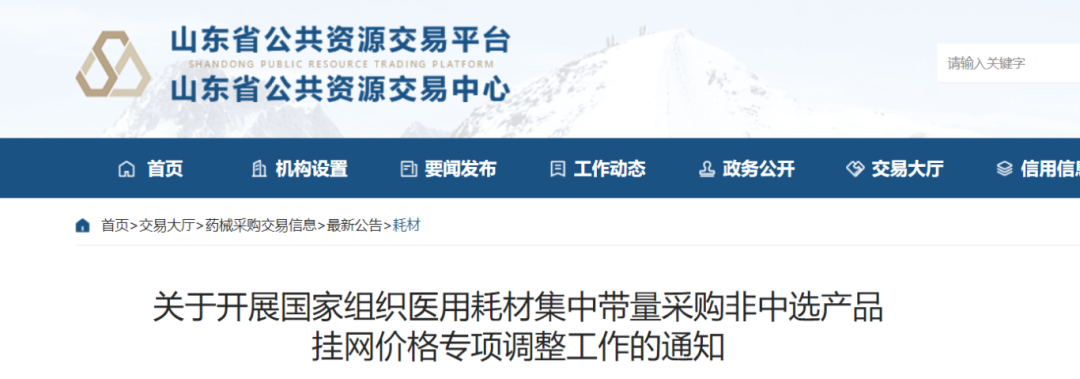
大批医疗耗材启动调价
2 1 Shi Ji Jing Ji Bao Dao· 2026-02-04 11:56
Core Insights - The medical consumables price governance has entered a nationwide implementation phase in January 2026, with multiple provinces rapidly releasing policies for price adjustments and procurement regulations [1][3][6] Group 1: Policy Implementation - Provinces such as Liaoning, Qinghai, Guangdong, and Zhejiang have issued policies for price adjustments and procurement standards, covering both high-value and commonly used low-value consumables [1][3] - Liaoning was the first to announce the price adjustment results for the fifth batch of consumables on January 30, 2026, followed by Qinghai, which implemented price changes for 807 medical consumables immediately [3][6] - The policies are characterized by rapid implementation, strong targeting, and deep alignment with national procurement rules, focusing on stabilizing clinical supply and ensuring quality [6][10] Group 2: Industry Transformation - The price governance is reshaping the competitive landscape of the medical consumables industry, with increased compliance costs for small and medium-sized enterprises, leading to potential market exits for those lacking cost control capabilities [9][10] - The industry is transitioning from price competition to innovation and quality competition, necessitating companies to enhance supply chain management and clinical services for sustainable growth [9][10] - The governance will drive two major transformations: a shift towards high-value, innovative products and a focus on comprehensive cost management across the supply chain [9][10] Group 3: Long-term Outlook - The ongoing price governance is not merely about reducing prices but aims to balance price reduction with industry development and clinical needs [10] - The year 2026 is expected to be pivotal for deepening price governance, with more provinces likely to adopt regular price linkage and limit policies, further refining the national regulatory framework [10] - Companies must optimize product lines, improve cost structures, and increase innovation investments to thrive in the evolving landscape, moving towards a new development phase centered on clinical value and innovation [10]
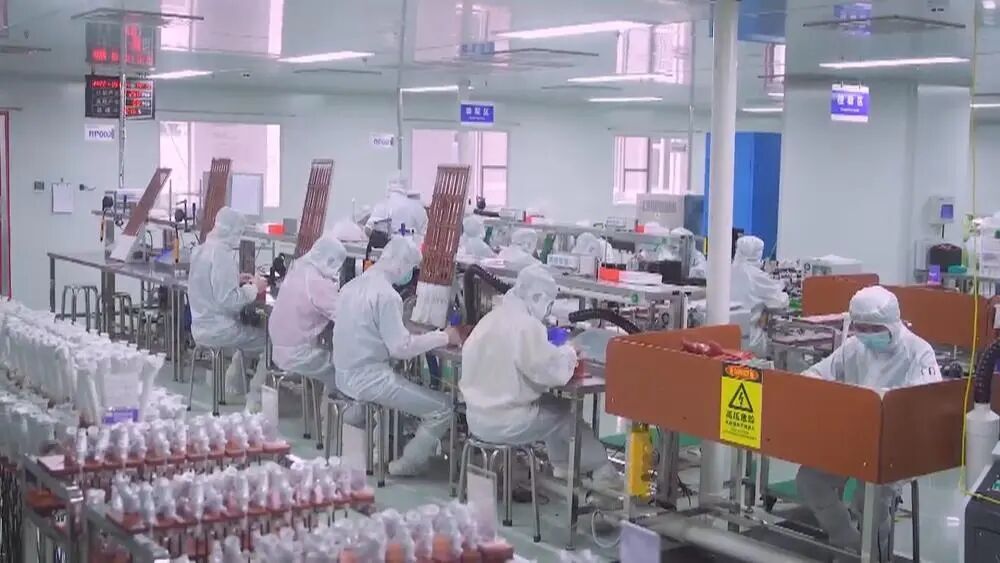
大批医疗耗材启动调价
21世纪经济报道· 2026-02-04 11:49
Core Viewpoint - The article discusses the rapid implementation of medical consumables price governance across multiple provinces in China, marking a shift towards a national integrated pricing system that emphasizes cost control and innovation-driven competition in the industry [3][5][6]. Group 1: Policy Implementation - Multiple provinces, including Liaoning, Qinghai, Guangdong, and Zhejiang, have swiftly released policies for price adjustments and procurement regulations for medical consumables, indicating a significant acceleration in policy rollout [3][5]. - Liaoning was the first to announce price adjustments for the fifth batch of consumables in 2026, with Qinghai following suit by implementing price changes for 807 products immediately [3][5]. - Guangdong has set new prices for 195 selected products starting February 2, while Zhejiang focuses on limiting prices for high-value consumables, addressing inflated pricing issues [3][5]. Group 2: Characteristics of Policy - The recent provincial actions exhibit three key characteristics: rapid implementation with minimal delay between policy announcement and execution, targeted approaches focusing on specific product categories, and alignment with national procurement rules to ensure quality and clinical needs are met [5][6]. - The introduction of a "benchmark price" mechanism in the sixth batch of national high-value consumables procurement aims to prevent malicious low-price competition and serves as a model for local price governance [6]. Group 3: Industry Impact - The ongoing price governance is expected to increase compliance costs for the industry, pressuring smaller companies with limited cost control capabilities, while larger firms with economies of scale are likely to capture more market share [8]. - The shift in competition from price-based to innovation and quality-driven strategies is evident, with companies needing to enhance supply chain management and clinical services to sustain growth [8]. - The long-term transformation of the industry will involve a shift towards higher-value, innovative consumables, as procurement policies favor products with clear clinical value [8][9]. Group 4: Future Outlook - The article suggests that 2026 will be a pivotal year for the deepening of medical consumables price governance, with more provinces expected to adopt regular price linkage and limit policies, further refining the national regulatory framework [9]. - The emphasis on price transparency and standardized competition is anticipated to lead the industry away from chaotic growth towards a new phase centered on clinical value, innovation, and balanced pricing [9].

威高股份一业务员被通报行贿百万 拆解85亿元资产关联腾挪术
Xi Niu Cai Jing· 2026-01-28 09:37
Group 1 - The core issue revolves around a bribery case involving a sales employee from Weigao Co., which has exposed a network of corruption spanning nine years, involving kickbacks totaling 1.1912 million yuan across 18 departments in hospitals [2] - Weigao Co. is also involved in a controversial asset maneuvering operation, where 8.5 billion yuan worth of assets were transferred, raising concerns about inflated valuations and financial practices [2] - The bribery case reflects broader issues within the industry, highlighting systemic problems in compliance and ethical conduct [2] Group 2 - Weigao Blood Purification, which recently went public, announced plans to acquire Weigao Co.'s subsidiary, Weigao Purui, for 8.511 billion yuan, representing a nearly 200% increase in valuation [3] - The acquisition is strategically beneficial as Weigao Purui is projected to generate a net profit of 581 million yuan in 2024, surpassing Weigao Blood Purification's own earnings [3] - The company's net profit margin has declined from 20.3% in 2022 to 15.91% in the first half of 2025, indicating pressure from price reductions in low-value medical supplies [3] Group 3 - The company is advised to focus on product innovation and compliance rather than engaging in financial maneuvers, as the core competitiveness in the medical industry lies in quality and technological barriers [4]

2026年全省首家!苏州相城本土培育企业爱舍伦北交所上市
Yang Zi Wan Bao Wang· 2026-01-24 09:08
Group 1 - Jiangsu Aisheren Medical Technology Group Co., Ltd. officially listed on the Beijing Stock Exchange on January 21, 2026, marking it as the first A-share listed company in Jiangsu Province and the first company from Xiangcheng to be listed on the Beijing Stock Exchange [1] - The IPO involved the issuance of 16.9198 million shares at a price of 15.98 yuan per share, raising a total of 270 million yuan, primarily for the construction of the Kaipule Public Health Medical Supplies Industrial Park [1] - Aisheren specializes in disposable medical consumables and ranks among the top ten exporters of padding medical dressings in China, supported by nearly 80 patents and a network of nine factories globally, exporting to over 50 countries [1] Group 2 - Xiangcheng District emphasizes the importance of corporate listings and actively supports companies in their listing efforts, providing real-time solutions and policies to meet corporate needs [1] - The district has implemented the "Seedling Plan" and established a "five-tier" cultivation model to enhance the connection between enterprises and the capital market, holding various meetings to coordinate essential resources for companies [1] - As of now, there are 20 listed companies in the district, with a total market value of approximately 130 billion yuan [1]
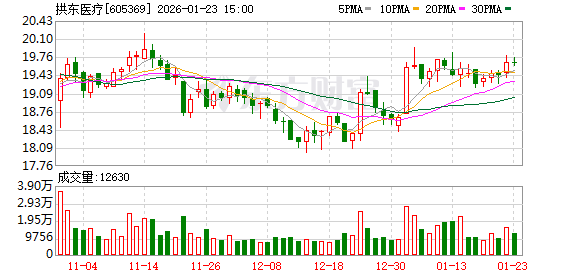
拱东医疗:2025年净利同比预降67.37%-74.36%
Zhong Guo Zheng Quan Bao· 2026-01-23 08:51
Core Viewpoint - Gongdong Medical (605369) has announced a significant decline in its expected net profit for 2025, forecasting a drop of 67.37% to 74.36% year-on-year, with net profit projected between 44 million to 56 million yuan [4]. Financial Performance - The expected non-recurring net profit for 2025 is estimated to be between 54 million to 66 million yuan, reflecting a year-on-year decrease of 60.75% to 67.89% [4]. - As of January 23, the company's price-to-earnings ratio (TTM) is approximately 77.37 to 98.47 times, with a price-to-book ratio (LF) of about 2.52 times and a price-to-sales ratio (TTM) of around 3.85 times [4]. Reasons for Performance Decline - The decline in performance is attributed to several factors: 1. **Goodwill Impairment**: The company has recognized signs of impairment related to goodwill from its acquisition of Trademark Plastics Inc. (TPI), with an estimated impairment amount between 24 million to 30 million yuan due to TPI's operational challenges influenced by international trade policies and shipping cost fluctuations [13]. 2. **Gross Margin Decrease**: The gross margin has been affected by the slowdown in demand for certain products due to U.S. tariff policies and domestic medical procurement policies [14]. 3. **Exchange Rate Fluctuations**: Financial expenses related to exchange rate fluctuations have significantly reduced, contributing to the decline in net profit. Additionally, losses from investments in a controlled entity have impacted non-operating income by approximately 11 million yuan [15].

威高股份销售员行贿案背后:医药回扣链条暴露上市公司治理与合规风险
Xin Lang Cai Jing· 2026-01-22 08:40
Core Viewpoint - The recent bribery case involving a sales representative from Shandong Weigao Co., Ltd. highlights systemic risks within the company's sales structure, especially in the context of ongoing national efforts to combat commercial bribery and promote centralized procurement of medical supplies [1][6]. Group 1: Bribery Details - The bribery actions of the representative, totaling over 1.58 million yuan, were characterized by long-term and multi-department penetration, affecting nearly 20 departments in a hospital [2][7]. - A significant portion of the bribes, amounting to 1.1912 million yuan, was directed towards various medical departments, with individual bribe amounts ranging from thousands to hundreds of thousands of yuan [2][7]. - The National Healthcare Security Administration emphasized that such practices disrupt normal medical practices and distort competition, shifting the focus from quality and price to "rebate-driven" sales [2][7]. Group 2: Corporate Governance Concerns - Weigao has not publicly disclosed any information regarding the bribery case, raising concerns about its transparency and internal control mechanisms [3][8]. - The company operates a vast sales network with 25 sales offices and 170 city representatives, yet multiple bribery incidents indicate significant management and compliance training gaps [3][8]. - The actions of local employees directly impact the company's brand and legal risks, suggesting that without strengthened internal controls, similar incidents may recur, potentially leading to regulatory investigations and penalties [3][8]. Group 3: Industry Transformation Challenges - The National Healthcare Security Administration has stated that commercial bribery inflates the prices of medical supplies, with the excess not contributing to legitimate profits or innovation [4][9]. - Companies like Weigao, which have relied on high margins and rebates, face significant challenges as centralized procurement and price transparency become the norm [4][9]. - There is a growing emphasis on ESG (Environmental, Social, and Governance) principles, making compliance and ethical sales practices critical for long-term investment value [4][9]. Conclusion - The bribery case serves as a reflection of the governance shortcomings in the pharmaceutical sales sector, emphasizing the need for companies to move away from rebate dependency and focus on product quality and efficiency to ensure sustainable growth [5][11].