医疗自动化

Search documents
零溶血率:智能采血机器人破解全球医疗“隐形难题” 打开精准医疗与自动化投资新蓝海
Quan Jing Wang· 2025-12-17 09:06
Core Viewpoint - The article highlights the significant impact of hemolysis on diagnostic results in clinical laboratories, with 40%-70% of errors originating from pre-analytical phases, and emphasizes the revolutionary potential of automated blood collection robots in addressing this issue [1] Group 1: Clinical Value - The introduction of smart blood collection robots not only liberates human resources but also upgrades the quality system of hospital laboratories [2] - The robots enhance accuracy by preventing red blood cell rupture through constant pressure collection and standardized mixing, leading to results that better reflect the patient's physiological state [2] - Full automation standardizes the process, eliminating sample quality fluctuations caused by human error, thus laying the foundation for precision medicine [2] - The success rate of punctures exceeds 94%, reducing pain and increasing patient acceptance, while non-contact operation minimizes the risk of needle-stick injuries for healthcare workers [2] Group 2: Market Dynamics - China's healthcare system faces dual pressures from a shortage of nursing resources and an aging population, with only 4.16 registered nurses per 1,000 people as of the end of 2024, significantly lower than in developed countries [3] - The national "14th Five-Year Plan" supports the development of innovative medical devices, with blood collection robots aligning with policy directions and addressing clinical needs, indicating clear market growth potential [3] - Industry reports predict that the global blood collection robot market could exceed $30.7 billion by 2032, with a compound annual growth rate of over 8.5% [3] Group 3: Investment Perspective - In the domestic smart blood collection robot sector, the company Minase has demonstrated a leading position with significant technological advantages [4] - Minase's product received NMPA Class III medical device certification in 2019, establishing a technology gap of over five years compared to similar products under development abroad [4] - The company is the only one globally to have passed clinical trials and obtained Class III medical device registration, indicating high compliance and strong implementation capabilities [4] - With over 40 patents related to vascular measurement and puncture control, Minase has built a solid technological moat [4] - The company has gained clinical recognition and is already present in top-tier hospitals across Beijing, Shanghai, and Zhejiang, with a growing demonstration effect [4] Group 4: Conclusion - The value of smart blood collection robots extends beyond addressing labor shortages, marking a shift in diagnostic medicine from "passive error correction" to "active prevention," driving the healthcare system towards standardization, digitization, and precision [5] - For investors, this technology represents a crucial component of medical device automation and is essential infrastructure within smart hospitals, precision medicine, and tiered diagnosis systems [5] - In the context of the integration of health and digital medicine, those who can overcome pre-analytical quality control bottlenecks are likely to occupy a key position in the upcoming wave of medical automation [5]

零溶血率:智能采血机器人破解全球医疗“隐形难题” 打开精准医疗与自动化投资新蓝海
Quan Jing Wang· 2025-12-15 08:00
Core Insights - The issue of hemolysis in blood samples is a significant problem in medical diagnostics, contributing to 40%-70% of pre-analytical errors, which can lead to misdiagnosis and missed diagnoses [1] - Technological innovations, particularly the automated blood collection robot developed by Zhongshan Hospital affiliated with Fudan University, have the potential to reduce hemolysis rates to nearly 0%, significantly improving testing quality [1] Clinical Value - The smart blood collection robot not only alleviates labor but also upgrades the quality system of hospital laboratories, enhancing accuracy and standardizing processes [2] - The robot's automated operation eliminates sample quality fluctuations caused by human error, establishing a standardized workflow from collection to mixing and tracking [2] - Patient experience is improved with a success rate of over 94% for punctures, reduced pain, and a non-contact operation that minimizes risks for healthcare workers [2] Market Dynamics - China's healthcare system faces challenges due to a shortage of nursing resources and an aging population, with only 4.16 registered nurses per 1,000 people as of 2024, which is below developed country levels [3] - The national "14th Five-Year Plan" supports the development of innovative medical devices, positioning blood collection robots as a key solution to clinical needs and aligning with policy directions [3] - The global blood collection robot market is projected to exceed $30.7 billion by 2032, with a compound annual growth rate (CAGR) of over 8.5% [3] Investment Perspective - The company Minass has established a leading position in the domestic smart blood collection robot market, having received NMPA Class III medical device certification in 2019, creating a technology gap of over five years compared to similar products [4] - Minass is the only project globally to have passed clinical trials and obtained Class III medical device registration, indicating high compliance and strong implementation capabilities [4] - The company holds over 40 patents related to vascular measurement and puncture control, creating a solid technological moat [4] Conclusion - The smart blood collection robot signifies a shift in diagnostic medicine from reactive error correction to proactive quality control, driving the healthcare system towards standardization, digitization, and precision [5] - This technology is a crucial component of automated medical devices, smart hospitals, and tiered diagnosis systems, positioning itself as an essential infrastructure in the era of health and digital integration [5] - Companies that can overcome pre-analytical quality control challenges are likely to play a key role in the upcoming wave of medical automation, with smart blood collection robots leading the charge [5]
36氪首发丨「凯瑞医疗」完成Pre-A+轮融资,泸州国资体系半年内再次加注
3 6 Ke· 2025-09-16 06:29
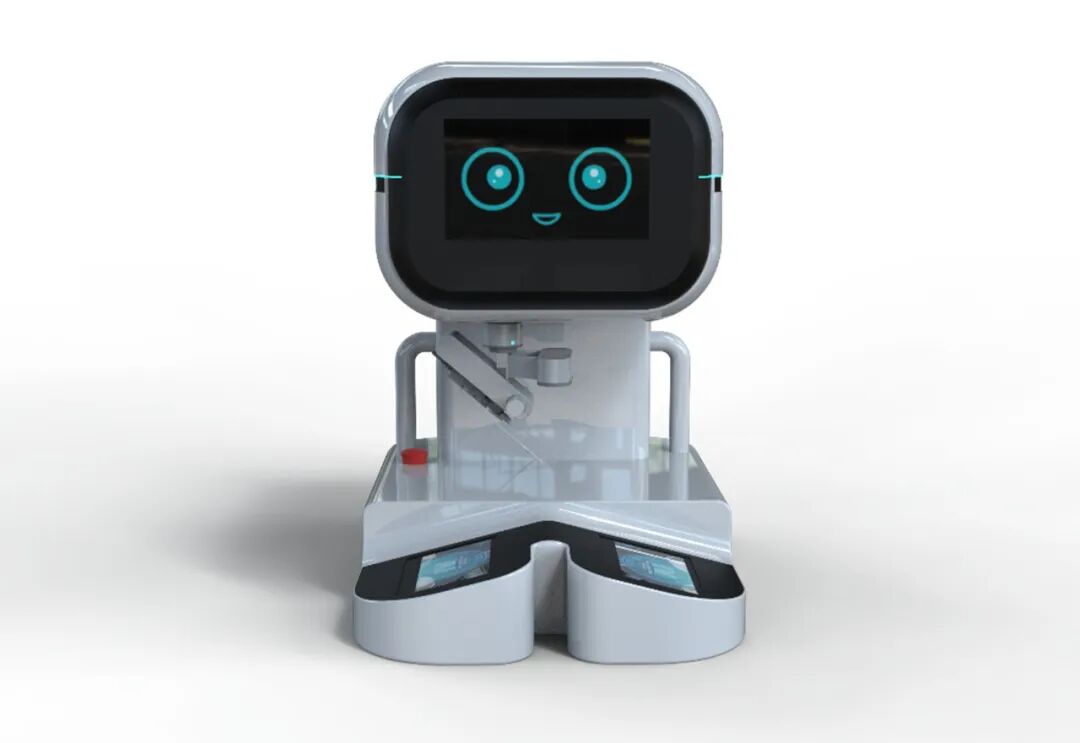
Group 1 - Chengdu Kairui Medical Technology Co., Ltd. has completed a Pre-A+ round of financing, with a valuation exceeding 250 million yuan after this round [1] - The investment was exclusively made by Huaxi Silver Peak Investment Co., Ltd., a wholly-owned subsidiary of Luzhou Laojiao Group [1] - Kairui Medical focuses on multimodal humanoid medical robots, addressing pain points in repetitive and high-intensity tasks in the medical field [1][3] Group 2 - The company's core product is the intelligent blood collection robot (M series), with the first product M1Pro having completed clinical trials and currently undergoing the registration process for Class III medical devices [1][3] - The portable blood collection robot (M1mini) is in the research and development phase, targeting a significant market space of over 200 billion yuan globally [3][5] Group 3 - Kairui Medical's blood collection robots aim to reduce pain and improve efficiency in blood collection, with a full process time of approximately 90 seconds [3][5] - The robots utilize dual infrared and ultrasound technology to enhance precision in blood vessel targeting, achieving sub-millimeter accuracy [5][6] Group 4 - The company is expanding its AI vision technology to various applications, including a collaboration with Beijing Scar Hospital to develop the S1 scar intelligent detection system [5][6] - The S1 system assists in monitoring scar treatment through multi-dimensional quantitative assessments [5] Group 5 - The recent financing will primarily be used for establishing clinical demonstration centers and accelerating data accumulation and product optimization [5][6] - Kairui Medical plans to promote a new medical scenario combining self-service blood collection and rapid report generation [5][6] Group 6 - The company aims to address public concerns about robot-assisted blood collection by enhancing user experience and comfort, including the development of a "pain-free needle" [6] - Kairui Medical emphasizes precision as a core technology, showcasing strong clinical adaptability across different age groups [6][7] Group 7 - Huaxi Silver Peak expressed confidence in the potential of intelligent puncture technology in medical automation, highlighting its social value and commercial potential [7]

CareCloud(CCLD) - 2025 Q1 - Earnings Call Transcript
2025-05-06 13:32
Financial Performance - Revenue for Q1 2025 was $27.6 million, an increase from $26 million in Q1 2024, reflecting ongoing demand for integrated AI-enabled RCM solutions [8][29] - GAAP net income was $1.9 million, a significant turnaround from a net loss of $241,000 in Q1 2024 [8][30] - Adjusted EBITDA rose to $5.6 million, up 52% year over year, representing 20% of revenue [9][31] - Free cash flow for Q1 2025 was $3.6 million, with a significant reduction in dividend obligations from $3.9 million to approximately $1.5 million per quarter following the conversion of Series A preferred stock [11][29] Business Lines and Market Data - Recurring technology-enabled business solution revenue was $17.7 million, up approximately $400,000 year over year, while non-recurring professional services revenue from MSR increased by approximately $1.5 million [29] - Remote Patient Monitoring (RPM) and Chronic Care Management (CCM) revenue grew by approximately 25-30% year over year, although it still represents a small portion of overall revenue [67] Company Strategy and Industry Competition - The company has re-entered the M&A market, completing two strategic acquisitions in early 2025, which are expected to be accretive within 90 days [13][14] - The launch of the AI Center of Excellence aims to position the company at the forefront of intelligent healthcare automation, with plans to scale the team to 500 AI professionals by the end of the year [12][17] - The company is focused on transforming the care journey through intelligent automation across clinical workflows and revenue cycle operations [17][22] Management Commentary on Operating Environment and Future Outlook - Management expressed confidence in the company's ability to drive sustainable value for shareholders and clients, reaffirming guidance for 2025 with expected revenue of approximately $111 million to $114 million [32][34] - The company does not anticipate significant pressure on demand for its services due to external economic factors such as tariffs or inflation [32] Other Important Information - The company has improved its financial position significantly over the past year, returning to profitability and generating strong free cash flow [34] - The AI initiatives are fully self-funded through operating cash flow, reflecting the strength of the underlying business model [17][18] Q&A Session Summary Question: Key factors for revenue growth and expectations for the quarter - Management noted that the revenue growth was driven by a large project in MedSR and emphasized a focus on existing client sales and new opportunities facilitated by specialty-specific EHRs [36][38] Question: Timeline for AI product development - Management indicated that they will provide quarterly updates on AI projects and progress, with ongoing improvements in backend processes and various AI initiatives already in development [42][44] Question: Seasonality of the business - Management acknowledged that Q1 is typically lower due to deductibles but expressed optimism about achieving overall revenue targets for the year [45][46] Question: Capital allocation priorities - The company plans to prioritize reinvestment in the business, particularly in AI, while also pursuing tuck-in acquisitions that align with existing capabilities [50][52] Question: Expense efficiencies and targeted areas - Management highlighted that AI will play a key role in driving efficiencies, particularly in automating revenue cycle functions and improving internal workflows [55][60] Question: Remote patient monitoring and chronic care management opportunities - Management expressed excitement about RPM and CCM growth, noting it as a natural fit for upselling and expanding revenue opportunities, although it remains a small portion of overall revenue [66][68] Question: Sustainability of cost of goods sold and tax rate - Management indicated that the decline in cost of goods sold as a percentage of revenue is sustainable and that the low tax rate is expected to remain consistent due to sufficient NOLs [70][76]