智能采血机器人

Search documents
零溶血率:智能采血机器人破解全球医疗“隐形难题” 打开精准医疗与自动化投资新蓝海
Quan Jing Wang· 2025-12-17 09:06
Core Viewpoint - The article highlights the significant impact of hemolysis on diagnostic results in clinical laboratories, with 40%-70% of errors originating from pre-analytical phases, and emphasizes the revolutionary potential of automated blood collection robots in addressing this issue [1] Group 1: Clinical Value - The introduction of smart blood collection robots not only liberates human resources but also upgrades the quality system of hospital laboratories [2] - The robots enhance accuracy by preventing red blood cell rupture through constant pressure collection and standardized mixing, leading to results that better reflect the patient's physiological state [2] - Full automation standardizes the process, eliminating sample quality fluctuations caused by human error, thus laying the foundation for precision medicine [2] - The success rate of punctures exceeds 94%, reducing pain and increasing patient acceptance, while non-contact operation minimizes the risk of needle-stick injuries for healthcare workers [2] Group 2: Market Dynamics - China's healthcare system faces dual pressures from a shortage of nursing resources and an aging population, with only 4.16 registered nurses per 1,000 people as of the end of 2024, significantly lower than in developed countries [3] - The national "14th Five-Year Plan" supports the development of innovative medical devices, with blood collection robots aligning with policy directions and addressing clinical needs, indicating clear market growth potential [3] - Industry reports predict that the global blood collection robot market could exceed $30.7 billion by 2032, with a compound annual growth rate of over 8.5% [3] Group 3: Investment Perspective - In the domestic smart blood collection robot sector, the company Minase has demonstrated a leading position with significant technological advantages [4] - Minase's product received NMPA Class III medical device certification in 2019, establishing a technology gap of over five years compared to similar products under development abroad [4] - The company is the only one globally to have passed clinical trials and obtained Class III medical device registration, indicating high compliance and strong implementation capabilities [4] - With over 40 patents related to vascular measurement and puncture control, Minase has built a solid technological moat [4] - The company has gained clinical recognition and is already present in top-tier hospitals across Beijing, Shanghai, and Zhejiang, with a growing demonstration effect [4] Group 4: Conclusion - The value of smart blood collection robots extends beyond addressing labor shortages, marking a shift in diagnostic medicine from "passive error correction" to "active prevention," driving the healthcare system towards standardization, digitization, and precision [5] - For investors, this technology represents a crucial component of medical device automation and is essential infrastructure within smart hospitals, precision medicine, and tiered diagnosis systems [5] - In the context of the integration of health and digital medicine, those who can overcome pre-analytical quality control bottlenecks are likely to occupy a key position in the upcoming wave of medical automation [5]

零溶血率:智能采血机器人破解全球医疗“隐形难题” 打开精准医疗与自动化投资新蓝海
Quan Jing Wang· 2025-12-15 08:00
Core Insights - The issue of hemolysis in blood samples is a significant problem in medical diagnostics, contributing to 40%-70% of pre-analytical errors, which can lead to misdiagnosis and missed diagnoses [1] - Technological innovations, particularly the automated blood collection robot developed by Zhongshan Hospital affiliated with Fudan University, have the potential to reduce hemolysis rates to nearly 0%, significantly improving testing quality [1] Clinical Value - The smart blood collection robot not only alleviates labor but also upgrades the quality system of hospital laboratories, enhancing accuracy and standardizing processes [2] - The robot's automated operation eliminates sample quality fluctuations caused by human error, establishing a standardized workflow from collection to mixing and tracking [2] - Patient experience is improved with a success rate of over 94% for punctures, reduced pain, and a non-contact operation that minimizes risks for healthcare workers [2] Market Dynamics - China's healthcare system faces challenges due to a shortage of nursing resources and an aging population, with only 4.16 registered nurses per 1,000 people as of 2024, which is below developed country levels [3] - The national "14th Five-Year Plan" supports the development of innovative medical devices, positioning blood collection robots as a key solution to clinical needs and aligning with policy directions [3] - The global blood collection robot market is projected to exceed $30.7 billion by 2032, with a compound annual growth rate (CAGR) of over 8.5% [3] Investment Perspective - The company Minass has established a leading position in the domestic smart blood collection robot market, having received NMPA Class III medical device certification in 2019, creating a technology gap of over five years compared to similar products [4] - Minass is the only project globally to have passed clinical trials and obtained Class III medical device registration, indicating high compliance and strong implementation capabilities [4] - The company holds over 40 patents related to vascular measurement and puncture control, creating a solid technological moat [4] Conclusion - The smart blood collection robot signifies a shift in diagnostic medicine from reactive error correction to proactive quality control, driving the healthcare system towards standardization, digitization, and precision [5] - This technology is a crucial component of automated medical devices, smart hospitals, and tiered diagnosis systems, positioning itself as an essential infrastructure in the era of health and digital integration [5] - Companies that can overcome pre-analytical quality control challenges are likely to play a key role in the upcoming wave of medical automation, with smart blood collection robots leading the charge [5]
政企共沏“投资盖碗茶”,助力成都电子信息产业腾飞
Sou Hu Cai Jing· 2025-11-14 13:17
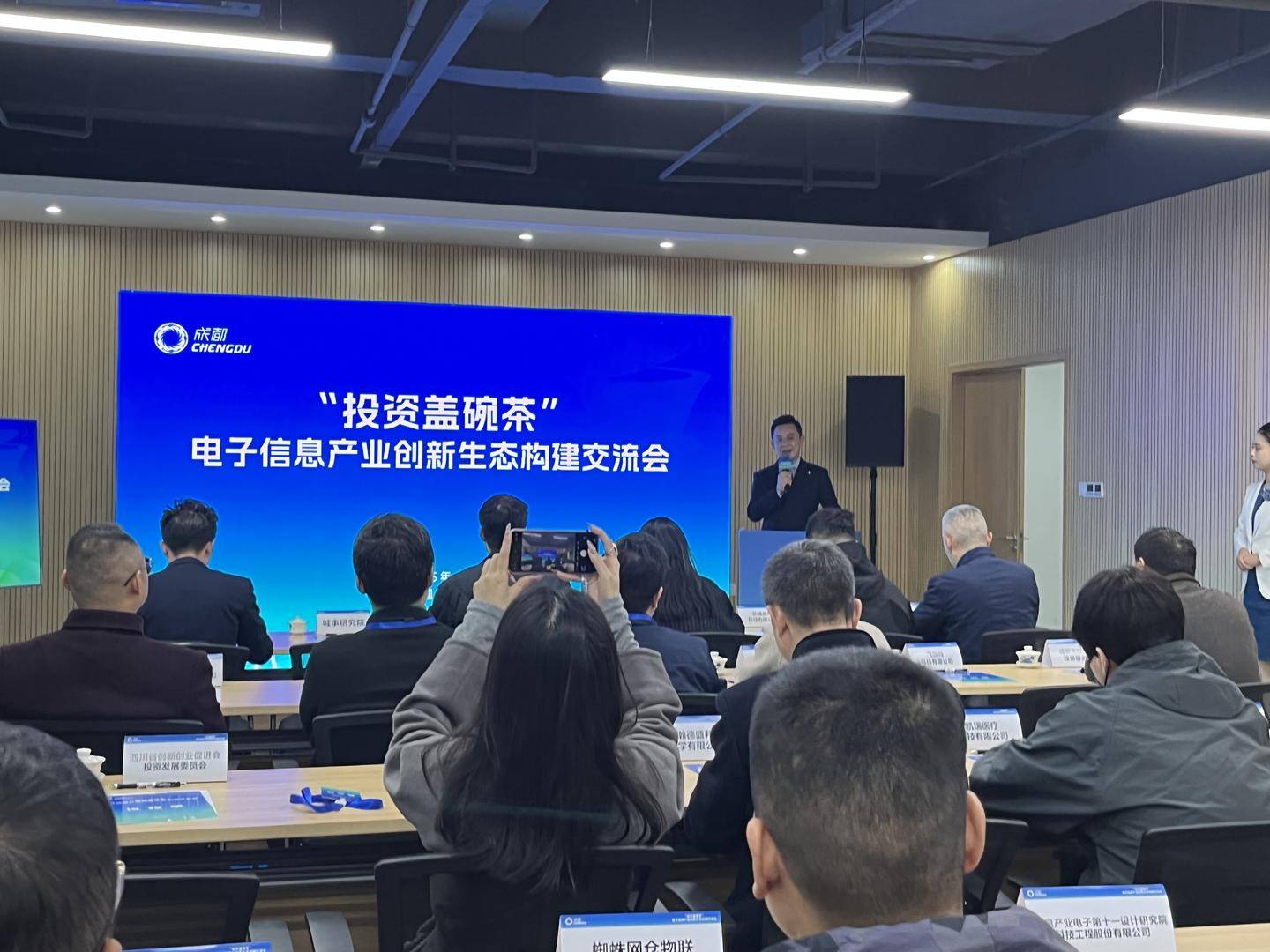
Core Insights - The "Investment Gaiwan Tea" event focused on building an innovative ecosystem for the trillion-level electronic information industry, held on November 13 in Shuangliu District [1] Group 1: Event Overview - The event gathered representatives from innovative SMEs, research institutions, academic associations, and investment firms to discuss project layouts, product promotion, application scenarios, and financing connections [3] - The atmosphere facilitated deep exchanges, with participants discussing macro policies and technical details, enhancing collaboration opportunities [3] Group 2: Regional Advantages - Chengdu's talent and industrial chain advantages were highlighted, with local talent density providing innovation momentum for companies [5] - Companies like Kerry Medical Technology are collaborating with local hospitals for R&D, indicating a focus on Chengdu for market promotion post-product launch [5] Group 3: Technology and Investment Opportunities - Xi Meng Tai Ke Technology introduced a passive wireless sensor technology with a theoretical lifespan of 10 to 20 years, seeking 20 million yuan for a pilot production line [5] - The interest from investors in such technologies reflects Chengdu's push for core technology development and "indigenous autonomy" [5] Group 4: Government and Industry Collaboration - The "Investment Gaiwan Tea" meeting is part of Chengdu's investment promotion system, aiming to create a regular communication mechanism between government and enterprises [6] - The initiative focuses on attracting industrial projects, facilitating precise connections, and enhancing market expansion, thereby generating a strong project sourcing and business attraction environment [6]

机器人、低空持续火热,一星机器人种子轮融资数亿元|投融资周报
2 1 Shi Ji Jing Ji Bao Dao· 2025-09-24 08:09
Group 1: Investment Trends - The trend of embodied intelligence remains strong, with low-altitude economy gaining attention, and the chip and semiconductor sectors continue to attract interest [1] - Recent financing cases indicate that the technology and manufacturing sectors are still the focus of capital, particularly in the low-altitude economy [1][3] - A total of 24 financing events occurred in the domestic primary market from September 15 to September 21, with a total scale of approximately 30.496 billion RMB [2] Group 2: Sector-Specific Financing - The chip/semiconductor sector completed 4 financing rounds, raising over 2.4 billion RMB, while the robotics sector completed 3 financing rounds with disclosed amounts exceeding 4.8 billion RMB [3] - Financing activities were concentrated in Guangdong Province, Beijing, and Zhejiang Province, with 8, 5, and 3 financing rounds completed respectively [4] Group 3: Active Investment Institutions - BV Baidu Ventures and Shenzhen Capital Group were notably active, completing 3 and 2 financing rounds respectively, primarily in the technology and manufacturing sectors as well as healthcare [5] Group 4: Company-Specific Financing - Micro Differentiation Technology completed nearly 200 million RMB in Pre-A and Pre-A+ financing, with funds aimed at accelerating technology development and market expansion [31] - Enrui Kainuo raised over 200 million RMB in A round financing, focusing on advancing clinical trials and international strategy [12] - Huakan Biotechnology announced several billion RMB in B+ round financing, targeting technology development and product matrix expansion [14] - Qinyun New Materials completed several hundred million RMB in C round financing, aimed at R&D and capacity expansion in high-end specialty materials [35]
人工智能破局“不可能三角”:迈纳士AI医疗装备赋能基层,开启县域医共体智慧诊疗新时代
Quan Jing Wang· 2025-09-22 07:23
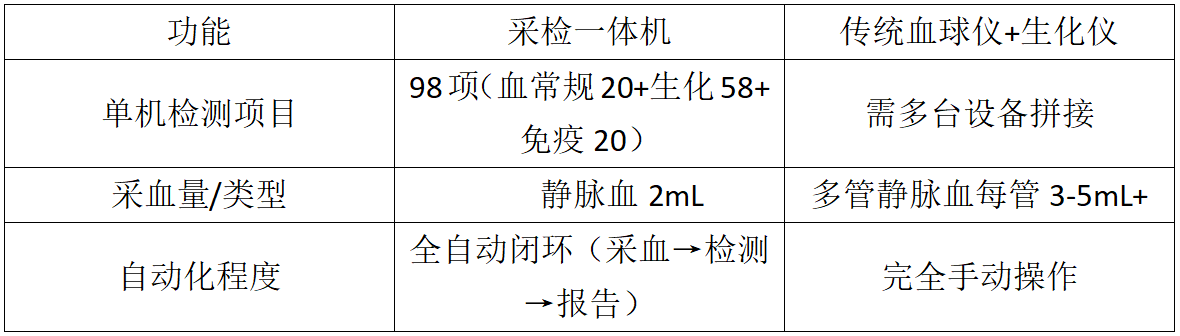
Core Insights - Minauth has launched the "Grassroots Medical AI Diagnosis Project" driven by policy and market demand, utilizing "AI + microfluidics + blockchain" technology to create an intelligent sampling and testing closed loop for county-level medical communities, addressing the "impossible triangle" of grassroots healthcare [1][2] - The company's core product, the "Magic Lab Intelligent Diagnostic System," received its Class II medical device registration in May 2025, marking its entry into clinical application [1][4] Industry Context - The global healthcare market is nearing $10 trillion, with the U.S. healthcare expenditure surpassing $4.9 trillion in 2023, of which approximately 75% is allocated to service delivery. The shortage of healthcare resources is becoming increasingly severe, with 16.7% of U.S. hospitals anticipating critical staffing shortages [2] - In China, 1.07 million grassroots medical institutions lack testing capabilities, with 80% of tests relying on higher-level hospitals, leading to inefficiencies and long wait times for patients [2] Technological Advancements - The application of AI in medical equipment has evolved from single-function assistance to a comprehensive intelligent ecosystem covering the entire lifecycle of research, production, clinical use, and regulation. From 2018 to 2024, 379 domestic AI medical devices have been approved in China, indicating a shift from "assisted diagnosis" to "full disease management" [3] - The "Magic Lab" system integrates an automated blood collection robot and multifunctional analyzer, achieving a fully automated process from blood collection to report generation, significantly reducing the time required for diagnostics [5][6] Operational Efficiency - The "Magic Lab" system can perform nearly 100 tests in about 15 minutes, compared to traditional methods that take 1-2 days. This system allows for painless blood collection in just 3 minutes, enhancing patient experience and accessibility [5][6] - The operational costs for a typical township health center using "Magic Lab" are projected to be 13.6% lower than traditional external testing methods over three years, with significant savings in labor costs due to reduced reliance on specialized personnel [7] Market Potential - The demand for integrated testing solutions in grassroots medical institutions is substantial, with a potential market exceeding 500 billion yuan in China. The government is promoting the expansion of quality medical resources to improve regional healthcare equity [9][10] - Minauth has initiated the "Village Health" project to provide systematic training for grassroots healthcare workers and optimize product adaptability, aiming to enhance the stability and compatibility of its systems in complex environments [10] Clinical Validation and Future Prospects - The "Magic Lab" system has been clinically validated in nearly 20 top-tier hospitals, serving over 200,000 patients and securing 45 patents, establishing a strong technological moat with no direct competitors anticipated in the next 3-5 years [11] - The company is set to launch a 100 million yuan Series A financing round, focusing on research and market expansion, positioning itself as a potential unicorn in the AI healthcare sector [12]
小米,投了家半导体材料企业 | 融中投融资周报
Sou Hu Cai Jing· 2025-06-01 03:09
Group 1: Financing and Investment - ShunJing Pharmaceutical has completed a 300 million RMB Series A financing round, led by multiple investment firms including Songhe Fund and Dacheng Fund [1] - The funds will primarily be used to accelerate the Phase II clinical trials of SGC001, a novel antibody drug for acute myocardial infarction, and other core pipeline IND applications and clinical research [1] - Horizon Robotics has announced a successful 100 million USD Series A financing round, attracting numerous domestic and international investors [2] Group 2: Product Development and Innovation - ShunJing Pharmaceutical focuses on developing first-in-class (FIC) and best-in-class (BIC) drugs, with SGC001 being the fastest in development, having received IND approval from both the FDA and the National Medical Products Administration [1] - The company aims to enhance its strategic layout in the biopharmaceutical industry, aligning with China's 14th Five-Year Plan for biopharmaceutical development [1] - Horizon Robotics has built a complete product system covering chips, algorithms, and software to meet the diverse needs of intelligent robots across various sectors [3] Group 3: Market Expansion and Ecosystem - ShunJing Pharmaceutical's funding is expected to deepen its strategic layout and enhance its long-term operational development [1] - Horizon Robotics is expanding its developer ecosystem, empowering over 200 small and medium-sized creators and incubating nearly 100 new types of intelligent robots [5] - The company has established partnerships with over 200 universities to cultivate talent in the field of intelligent robotics [6] Group 4: Industry Trends and Future Outlook - The financing activities reflect a growing interest in the biopharmaceutical and intelligent robotics sectors, indicating a robust investment climate [2][4] - Companies are increasingly focusing on integrating innovative technologies and expanding their product offerings to capture larger market shares [2][5] - The advancements in intelligent robotics and biopharmaceuticals are expected to contribute significantly to the overall growth of the respective industries in the coming years [1][3]

5月盘点:成都重要投融资事件及产业环境数据汇总
Sou Hu Cai Jing· 2025-05-30 12:01
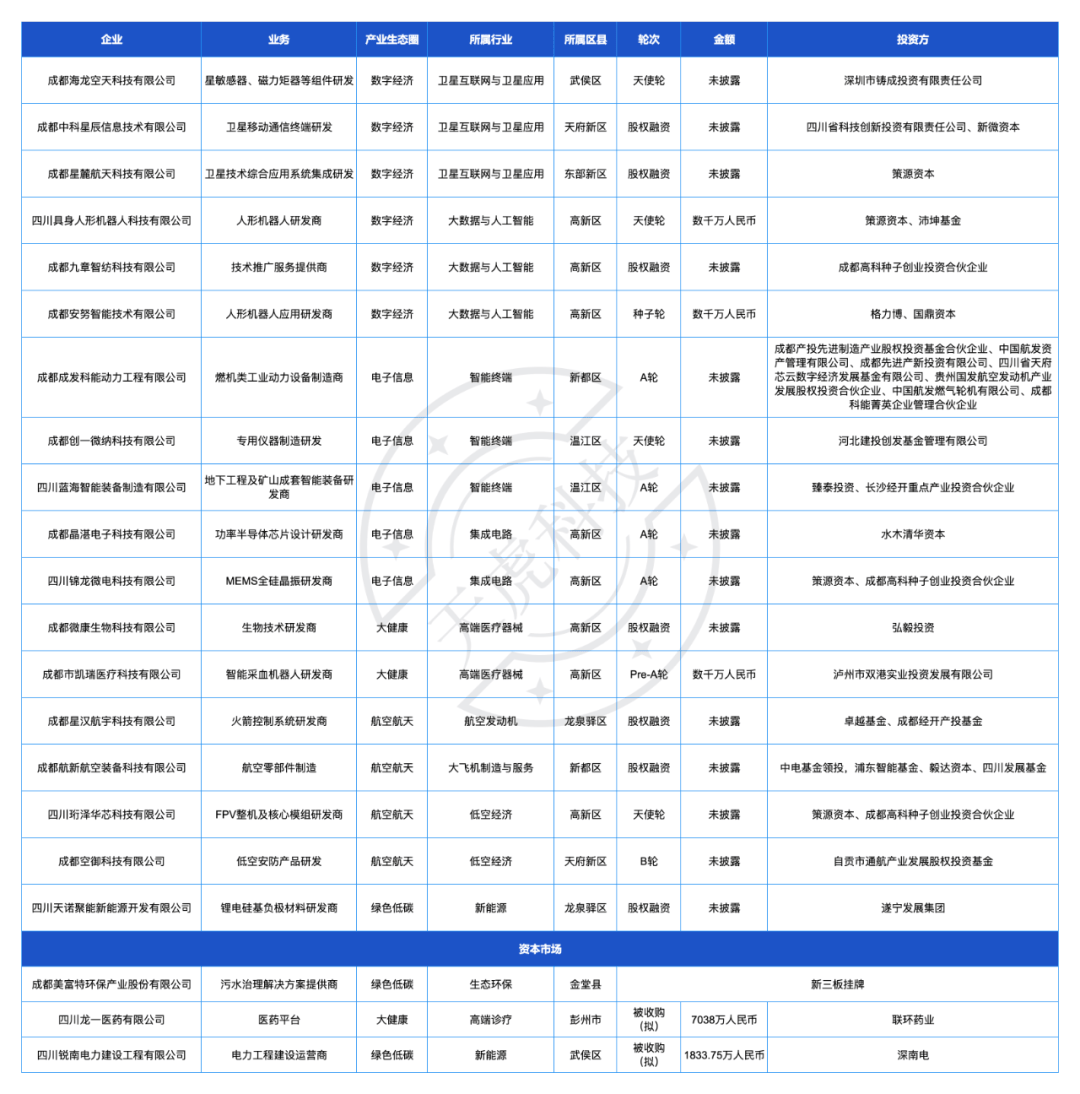
Core Insights - In May, Tianhu Technology recorded 21 investment and financing events related to technology innovation and entrepreneurship in Chengdu, indicating a vibrant investment landscape in the region [1][3]. Group 1: Investment Events - Chengdu Hailong Aerospace Technology Co., Ltd. completed angel round financing, focusing on the development of star sensors and magnetic moment devices [2][10]. - Chengdu Zhongke Xingchen Information Technology Co., Ltd. secured equity financing, specializing in satellite mobile communication terminals [2][11]. - Chengdu Xinglu Aerospace Technology Co., Ltd. completed equity financing, engaged in satellite technology integration [2][12]. - Sichuan Jushen Humanoid Robot Technology Co., Ltd. raised tens of millions in angel round financing, focusing on humanoid robots [2][13]. - Chengdu Jiuzhang Zhifang Technology Co., Ltd. completed equity financing, providing technology promotion services [2][14]. - Chengdu Annu Intelligent Technology Co., Ltd. raised tens of millions in seed round financing, focusing on humanoid robot applications [2][15]. - Chengdu Chengfa Kenen Power Engineering Co., Ltd. completed A round financing, specializing in industrial power equipment [4]. - Chengdu Chuangyi Micro-Nano Technology Co., Ltd. completed angel round financing, focusing on specialized instrument manufacturing [6]. - Sichuan Blue Ocean Intelligent Equipment Manufacturing Co., Ltd. completed A round financing, specializing in intelligent equipment for underground engineering [7]. - Chengdu Jingzhan Electronic Technology Co., Ltd. completed A round financing, focusing on power semiconductor chip design [8]. - Sichuan Jinlong Microelectronics Technology Co., Ltd. completed A round financing, specializing in MEMS silicon oscillators [9]. - Chengdu Weikang Biotechnology Co., Ltd. completed equity financing, focusing on biotechnology research [17]. - Chengdu Kerry Medical Technology Co., Ltd. completed tens of millions in Pre-A round financing, focusing on intelligent blood collection robots [18]. - Sichuan Tiannuo Juneng New Energy Development Co., Ltd. completed equity financing, focusing on lithium-silicon anode materials [19]. - Chengdu Hangxin Aviation Equipment Technology Co., Ltd. completed equity financing, specializing in aviation parts manufacturing [21]. - Chengdu Xinghan Aerospace Technology Co., Ltd. completed equity financing, focusing on rocket control systems [22]. Group 2: Market Trends - The majority of financing events were in the seed and angel round stages, indicating a focus on early-stage investments [3]. - The digital economy and electronic information sectors were the hottest investment areas in Chengdu, with nearly 30% of projects related to the digital economy and about 25% related to electronic information [3].