医疗赛道

Search documents
ETF跟踪研究:ETF市场周度更新-20260323
Yin He Zheng Quan· 2026-03-23 04:44
ETF Market Overview - As of March 23, 2026, the total number of ETFs in the market reached 2,310, with a total scale of 1,234.5 billion yuan and a weekly trading volume of 123.4 billion yuan. The number of newly added funds this week was 13 [1][3]. - Equity funds dominate the market, with thematic equity funds accounting for 30.6% of the total number, and their scale reaching 1,234.5 billion yuan, representing 60.1% of the total scale. Bond ETFs had the highest weekly trading volume, accounting for 25.3% [1][4]. Fund Inflow and Outflow - The inflow of funds last week was primarily concentrated in broad-based indices and bond ETFs, with the top inflow being the Short-term Bond ETF from Hai Fu Tong, which saw an inflow of 1.2 billion yuan. The latest scale of this fund is 12.3 billion yuan [5][6]. - In contrast, resource and chemical ETFs experienced significant outflows, with the chemical ETF seeing an outflow of 1.2 billion yuan, and the non-ferrous metal ETF experiencing an outflow of 1.1 billion yuan [7][8]. Industry Sector Fund Flow - Only the financial real estate and pharmaceutical sectors saw a slight net inflow of funds, with the financial real estate sector receiving 1.2 billion yuan and the pharmaceutical sector 0.3 billion yuan. Other sectors, including consumption and technology, experienced net outflows [13][14]. New ETF Listings - Last week, a total of 13 new ETFs were listed, all of which were equity funds covering various sectors, themes, and cross-border categories. The largest new listing was the Agricultural and Fishery ETF from Invesco, with a scale of 1.2 billion yuan [16][17]. Core Broad-based Index and ETF Performance - The performance of core broad-based indices showed significant divergence, with the ChiNext index rising against the trend, achieving a weekly return of 3.5%. In contrast, the CSI 300 index saw the largest weekly decline of 2.3% [18][19].
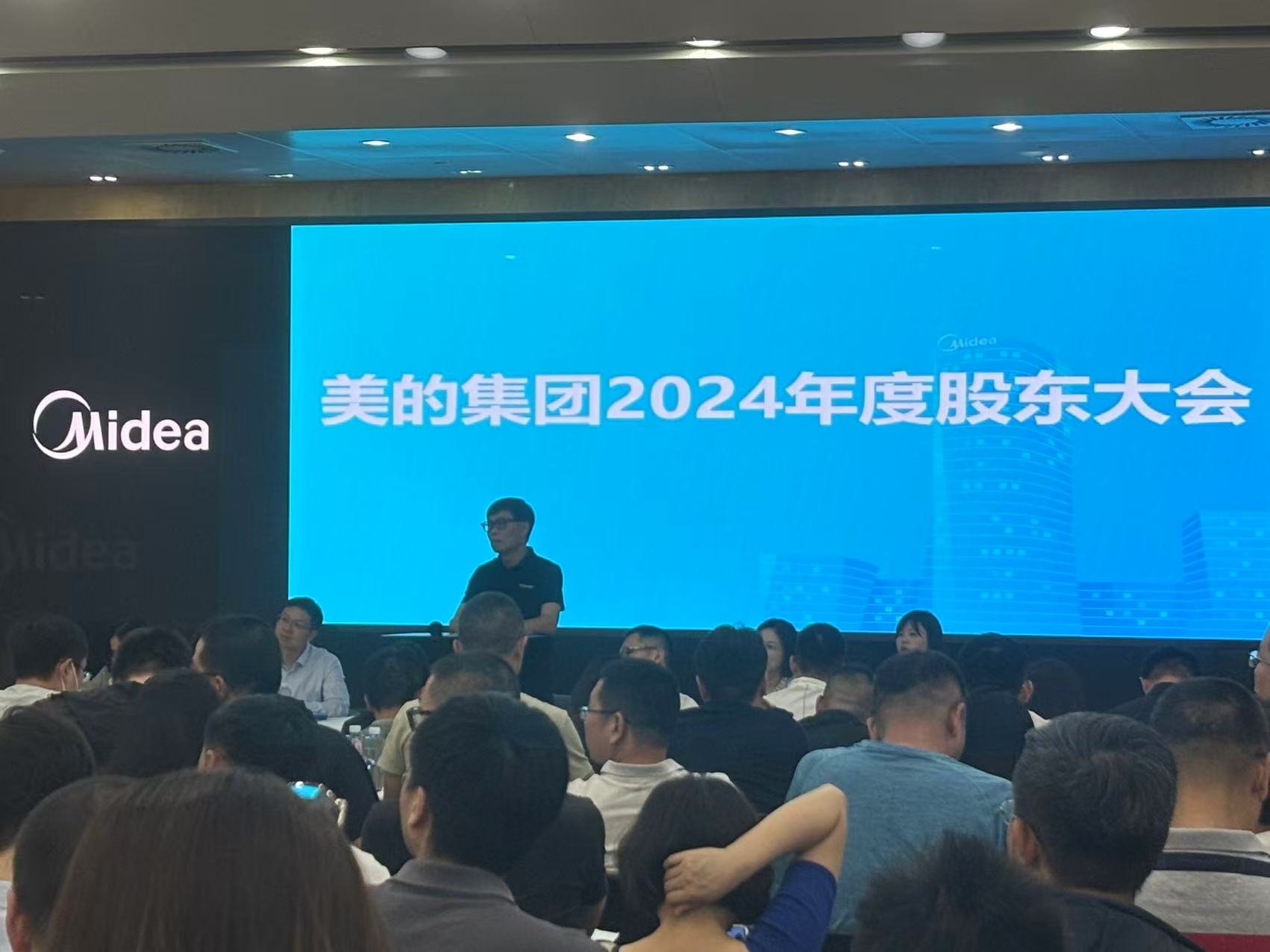
美的集团董事长方洪波:小米进入家电业在战略上已经输了
Di Yi Cai Jing· 2025-05-30 09:47
Core Insights - The home appliance industry is highly competitive, described as a "red ocean," with limited growth potential and efficiency improvements [3] - Midea Group is focusing on extending the lifecycle of its consumer appliance (To C) business while developing its business-to-business (To B) segment as a second growth curve [3] - Midea's chairman, Fang Hongbo, stated that the entry of new players like Xiaomi into the home appliance market is strategically flawed [3] Group 1: Market Competition and Strategy - Midea's chairman emphasized that the home appliance industry has low entry barriers and has undergone multiple rounds of competition, making it a challenging environment for new entrants [3] - Despite the competitive landscape, Midea aims to maintain its market share by transforming its direct-to-consumer model and expanding its overseas operations [3] - The company has not established a significant competitive moat, according to Fang Hongbo, but is working to enhance its business model [3] Group 2: Financial Performance and Market Trends - Midea's revenue from the U.S. market accounts for 6% of its total revenue for 2024, with plans to increase production outside of China to mitigate tariff impacts [4] - The company reported a significant increase in domestic air conditioning sales, with installation volumes growing over 50% year-on-year in May [4] - The introduction of entry-level products has contributed to Midea's market share growth, despite some declines in categories like dishwashers [4] Group 3: Business Development and Future Prospects - Midea is optimistic about the medical sector and has been exploring this field for over a decade, focusing on diagnostic equipment through its acquisition of Wandong Medical [5] - The company is also investing in robotics, having acquired KUKA Group, and is researching the potential for household robots [5] - Midea plans to enhance its dividend distribution in 2024, indicating a commitment to returning value to shareholders [6]