
半导体散热技术

Search documents
性能突破性提升!我国攻克半导体材料世界难题
中国能源报· 2026-01-17 02:32
Core Viewpoint - Xi'an University of Electronic Science and Technology has successfully transformed the rough "island" interface in semiconductor manufacturing into an atomically smooth "film," significantly improving chip heat dissipation efficiency and device performance [1][2]. Group 1: Technical Breakthrough - The traditional semiconductor chip's crystal nucleation layer has uneven surfaces, severely affecting heat dissipation [2]. - The issue of heat accumulation, or "thermal bottlenecks," can lead to decreased chip performance or even device damage, a problem that has persisted since the 2014 Nobel Prize in related nucleation technology [2]. - The team pioneered the "ion implantation-induced nucleation" technology, converting the random growth process into a precise and controllable uniform growth, resulting in a new structural interface thermal resistance that is only one-third of the traditional methods [2]. Group 2: Performance Metrics - The GaN microwave power devices produced using this technology achieved output power densities of 42 watts/millimeter in the X-band and 20 watts/millimeter in the Ka-band, enhancing international records by 30%-40% [2].

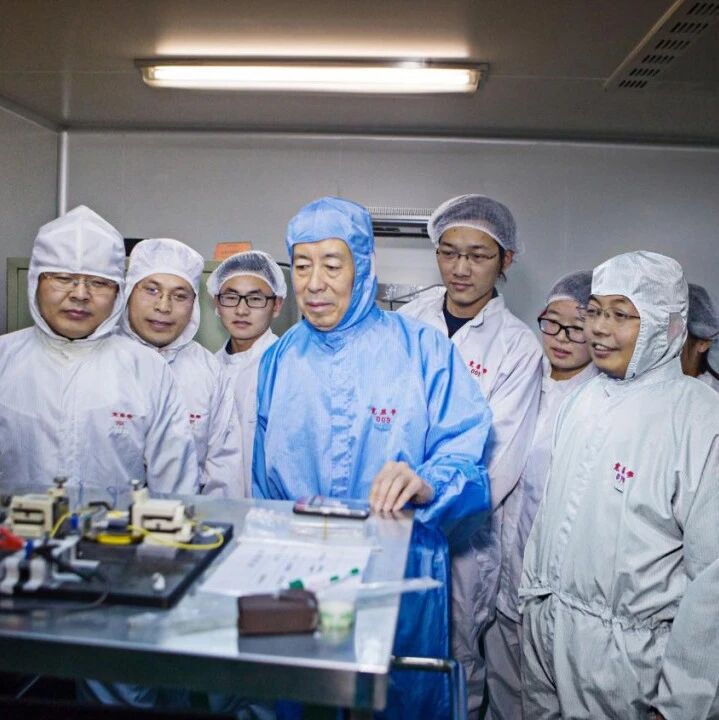
从“岛”到“膜”:西安电子科技大学攻克半导体散热世界难题
Xin Lang Cai Jing· 2026-01-16 12:56
Core Insights - The breakthrough in semiconductor technology involves transforming rough "island" interfaces into atomically smooth "films," significantly enhancing chip heat dissipation and performance [1][2] - The new "ion implantation induced nucleation" technique allows for precise and uniform growth of materials, addressing a long-standing issue in chip manufacturing [1] - The developed aluminum nitride (AlN) structure has a thermal resistance that is only one-third of traditional methods, leading to improved device efficiency [1] Group 1 - The innovation enables aluminum nitride to transition from a specific "adhesive" to a versatile "universal integration platform" for various materials [2] - GaN microwave power devices produced using this technology achieve output power densities of 42 watts/mm and 20 watts/mm in the X-band and Ka-band, respectively, marking a 30%-40% increase over international records [2] - This advancement not only enhances performance but also addresses common thermal challenges faced by third and fourth-generation semiconductors, laying the foundation for future industries such as 5G/6G communications and satellite internet [2] Group 2 - The technology is expected to improve signal quality and battery life for mobile devices in remote areas [2] - Future research may focus on materials with even better thermal conductivity, such as diamond, potentially increasing device power handling capabilities by an order of magnitude [2]