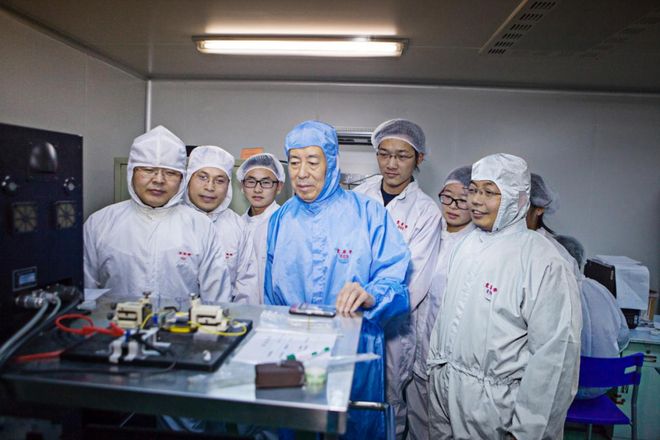
氮化镓微波功率器件

Search documents
西电团队攻克芯片散热世界难题
Zhong Guo Qing Nian Bao· 2026-01-23 06:30
Core Viewpoint - A significant breakthrough in semiconductor technology has been achieved by a research team at Xi'an University of Electronic Science and Technology, which enhances chip heat dissipation efficiency and overall performance by transforming the "island-like" connections between materials into atomically smooth "thin films" [1][2]. Group 1: Research Breakthrough - The research team developed a new growth mode for aluminum nitride (AlN) layers, changing them from rough "polycrystalline island-like" structures to highly ordered "single crystal thin films" [2]. - The new "ion implantation induced nucleation" technique allows for precise and uniform growth, significantly reducing interface defects and thermal resistance [2]. - Experimental data shows that the new interface thermal resistance is only one-third of that of the traditional "island-like" structure, marking a major advancement in the field [2]. Group 2: Performance Improvement - The GaN microwave power devices produced using this innovative AlN thin film technology achieved output power densities of 42W/mm and 20W/mm in the X-band and Ka-band, respectively, improving international performance records by 30% to 40% [2]. - This advancement allows for increased detection range without changing chip size and enables communication base stations to achieve longer signal coverage with lower energy consumption [2][3]. Group 3: Broader Implications - The technology's benefits will gradually be realized by the general public, potentially enhancing mobile signal reception and battery life in remote areas [3]. - The breakthrough provides a scalable "universal integration platform" for high-quality integration of various semiconductor materials, offering a replicable model for global challenges in the semiconductor industry [3]. - Future research may explore replacing AlN with diamond, which could further enhance power handling capabilities by an order of magnitude, indicating ongoing exploration of material limits as a driving force in semiconductor technology advancement [3].
我国攻克半导体材料世界难题!
DT新材料· 2026-01-17 16:04
Core Viewpoint - The article highlights significant advancements in semiconductor materials and manufacturing technologies, particularly focusing on breakthroughs in heat dissipation and ion implantation techniques that enhance chip performance and manufacturing capabilities [2][4][5]. Group 1: Semiconductor Material Innovations - Researchers from Xi'an University of Electronic Science and Technology have transformed rough "island" interfaces into atomically smooth "films," significantly improving chip heat dissipation efficiency and device performance [2]. - The new structure's thermal resistance is only one-third of that of traditional methods, leading to a 30%-40% increase in output power density for GaN microwave power devices in X-band and Ka-band applications [4]. Group 2: Equipment Manufacturing Breakthroughs - The successful development of China's first series-type high-energy hydrogen ion implanter (POWER-750H) marks a major milestone, achieving international advanced levels in core indicators [5]. - This development signifies China's mastery over the entire R&D chain of series-type high-energy hydrogen ion implanters, addressing a critical bottleneck in power semiconductor manufacturing and enhancing the country's self-sufficiency in key manufacturing equipment [5].

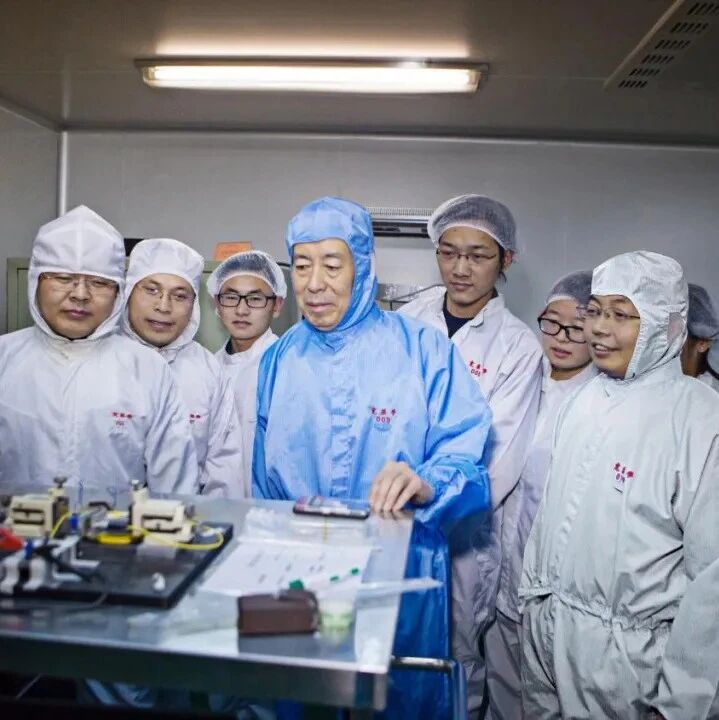
我国攻克半导体材料世界难题
新浪财经· 2026-01-17 07:34
Core Viewpoint - The article discusses a breakthrough in semiconductor technology achieved by a research team from Xi'an University of Electronic Science and Technology, which addresses a long-standing issue in chip manufacturing related to heat dissipation and performance enhancement [2][5]. Group 1: Breakthrough Technology - The research team has developed a novel "ion implantation induced nucleation" technology that transforms the rough "island" interfaces into atomically smooth "films," significantly improving heat dissipation efficiency [2][5]. - The new structure's thermal resistance is only one-third of that of traditional methods, marking a substantial advancement in semiconductor material integration [5]. Group 2: Performance Metrics - The GaN microwave power devices produced using this technology achieve output power densities of 42 watts/mm in the X-band and 20 watts/mm in the Ka-band, enhancing international records by 30% to 40% [5]. - This improvement allows for increased detection ranges with the same chip area, leading to more efficient and far-reaching communication base stations [5].
我国攻克半导体材料世界难题
Zhong Guo Ji Jin Bao· 2026-01-17 04:27
Core Viewpoint - The breakthrough in semiconductor materials integration by the team from Xi'an University of Electronic Science and Technology addresses a long-standing bottleneck in chip performance related to heat dissipation, transforming rough "island" interfaces into atomically smooth "films" [1][3] Group 1: Technological Innovation - The team developed a novel "ion implantation induced nucleation" technology that allows for precise and uniform growth, overcoming the random growth process that previously hindered performance [3] - The new structural interface exhibits thermal resistance that is only one-third of that of traditional methods, significantly improving heat dissipation [3] Group 2: Performance Enhancement - Gallium nitride microwave power devices produced using this technology achieved output power densities of 42 watts/mm in the X-band and 20 watts/mm in the Ka-band, marking a 30%-40% increase over international records [3] - This advancement implies that the same chip area can achieve greater detection distances and more energy-efficient coverage for communication base stations [3]
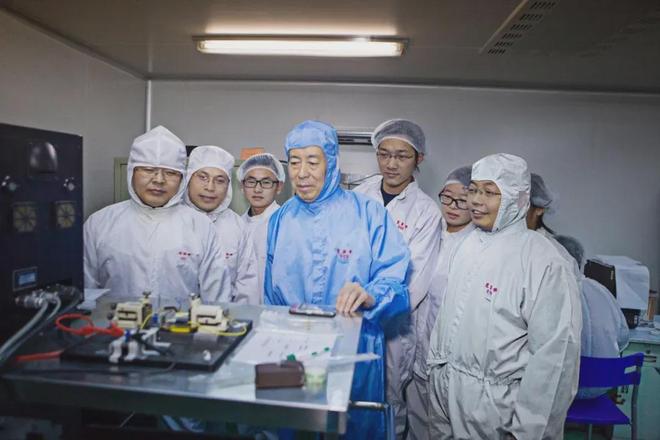
我国攻克半导体材料世界难题
中国基金报· 2026-01-17 04:22
Core Viewpoint - The article discusses a breakthrough in semiconductor manufacturing that addresses the thermal conductivity issues caused by "island-like" structures between material layers, which have been a significant bottleneck for device performance improvement [2]. Group 1 - The research team from Xi'an University of Electronic Science and Technology, led by Academician Hao Yue and Professor Zhang Jincheng, has successfully transformed rough "island" interfaces into atomically smooth "films," significantly enhancing chip heat dissipation efficiency and device performance [2]. - This innovative achievement provides a "Chinese paradigm" for high-quality integration of semiconductor materials and has been published in prestigious journals such as Nature Communications and Science Advances [2]. - The traditional semiconductor chip's crystal nucleation layer has a rough surface that severely impacts heat dissipation, leading to "thermal bottlenecks" that can degrade chip performance or even damage devices [5]. Group 2 - The team pioneered the "ion implantation-induced nucleation" technology, which converts the random growth process into a precise and controllable uniform growth, resulting in a new structural interface thermal resistance that is only one-third of the traditional value [5]. - The GaN microwave power devices fabricated using this technology achieved output power densities of 42 watts/mm in the X-band and 20 watts/mm in the Ka-band, improving international records by 30%-40% [5]. - This advancement implies that, for the same chip area, detection distances can be significantly increased, and communication base stations can cover greater distances while being more energy-efficient [5].

我国攻克半导体材料世界难题
财联社· 2026-01-17 02:44
Core Viewpoint - The article discusses a breakthrough in semiconductor technology achieved by a research team from Xi'an University of Electronic Science and Technology, which addresses a long-standing issue in chip manufacturing related to heat dissipation and device performance enhancement [1][3]. Group 1: Technical Breakthrough - The research team has successfully transformed the rough "island" interface in chip manufacturing into an atomically smooth "thin film," significantly improving heat dissipation efficiency and device performance [1]. - The traditional semiconductor chip's crystal nucleation layer has uneven surfaces, which severely affects heat dissipation, leading to "thermal bottlenecks" that can degrade chip performance or even damage devices [3]. Group 2: Innovative Technology - The team pioneered the "ion implantation-induced nucleation" technology, which converts the random growth process into a precise and controllable uniform growth [4]. - The new structural interface exhibits thermal resistance that is only one-third of that of traditional methods, indicating a substantial improvement in heat management [4]. Group 3: Performance Metrics - The GaN microwave power devices produced using this technology achieved output power densities of 42 watts/mm in the X-band and 20 watts/mm in the Ka-band, enhancing international records by 30%-40% [4]. - This advancement implies that the same chip area can significantly increase detection range and allow communication base stations to cover greater distances while being more energy-efficient [4].

性能突破性提升!我国攻克半导体材料世界难题
中国能源报· 2026-01-17 02:32
Core Viewpoint - Xi'an University of Electronic Science and Technology has successfully transformed the rough "island" interface in semiconductor manufacturing into an atomically smooth "film," significantly improving chip heat dissipation efficiency and device performance [1][2]. Group 1: Technical Breakthrough - The traditional semiconductor chip's crystal nucleation layer has uneven surfaces, severely affecting heat dissipation [2]. - The issue of heat accumulation, or "thermal bottlenecks," can lead to decreased chip performance or even device damage, a problem that has persisted since the 2014 Nobel Prize in related nucleation technology [2]. - The team pioneered the "ion implantation-induced nucleation" technology, converting the random growth process into a precise and controllable uniform growth, resulting in a new structural interface thermal resistance that is only one-third of the traditional methods [2]. Group 2: Performance Metrics - The GaN microwave power devices produced using this technology achieved output power densities of 42 watts/millimeter in the X-band and 20 watts/millimeter in the Ka-band, enhancing international records by 30%-40% [2].
中国首创!攻克涉半导体世界难题
Guan Cha Zhe Wang· 2026-01-16 23:33
Core Insights - The semiconductor industry faces a fundamental contradiction: while the performance of next-generation materials is known to be superior, the manufacturing process remains uncertain [1] - A significant breakthrough has been achieved by a research team led by Academician Hao Yue and Professor Zhang Jincheng, transforming "island-like" connections between materials into atomically smooth "films," enhancing chip thermal efficiency and overall performance [1][5] - This innovation marks a historic leap, breaking a two-decade technical stagnation and showcasing immense potential in cutting-edge technology [1] Group 1: Technical Breakthrough - The quality of interfacial layers in semiconductor devices directly impacts overall performance, particularly in third and fourth-generation semiconductors like Gallium Nitride (GaN) and Gallium Oxide (Ga2O3) [2] - Traditional methods using aluminum nitride as an intermediate "adhesive layer" resulted in uneven "island" formations, creating significant thermal resistance and leading to performance degradation [2][4] - The research team developed an "ion implantation-induced nucleation" technique, transforming the growth process from random to controlled, resulting in a uniform single-crystal film that significantly reduces interface defects [4][6] Group 2: Performance Enhancement - The new aluminum nitride film technology has led to a remarkable performance increase of 30% to 40% in GaN microwave power devices, achieving output power densities of 42 W/mm and 20 W/mm in the X-band and Ka-band, respectively [6] - This advancement allows for increased detection ranges without enlarging chip sizes and enhances signal coverage and energy efficiency for communication base stations [6] - The technology's benefits will gradually manifest in consumer devices, potentially improving signal reception and battery life in mobile phones, especially in remote areas [6][9] Group 3: Future Implications - The research establishes aluminum nitride as a versatile integration platform, addressing global challenges in high-quality semiconductor material integration and providing a replicable model for future advancements [7][8] - The team aims to explore even more efficient materials, such as diamond, which could further enhance power handling capabilities by an order of magnitude [8] - This achievement reflects over two decades of dedicated research, marking a significant shift for China in the semiconductor field from following to leading, and offering a new paradigm for global semiconductor technology advancement [8][9]

从“岛”到“膜”:西安电子科技大学攻克半导体散热世界难题
Xin Lang Cai Jing· 2026-01-16 12:56
Core Insights - The breakthrough in semiconductor technology involves transforming rough "island" interfaces into atomically smooth "films," significantly enhancing chip heat dissipation and performance [1][2] - The new "ion implantation induced nucleation" technique allows for precise and uniform growth of materials, addressing a long-standing issue in chip manufacturing [1] - The developed aluminum nitride (AlN) structure has a thermal resistance that is only one-third of traditional methods, leading to improved device efficiency [1] Group 1 - The innovation enables aluminum nitride to transition from a specific "adhesive" to a versatile "universal integration platform" for various materials [2] - GaN microwave power devices produced using this technology achieve output power densities of 42 watts/mm and 20 watts/mm in the X-band and Ka-band, respectively, marking a 30%-40% increase over international records [2] - This advancement not only enhances performance but also addresses common thermal challenges faced by third and fourth-generation semiconductors, laying the foundation for future industries such as 5G/6G communications and satellite internet [2] Group 2 - The technology is expected to improve signal quality and battery life for mobile devices in remote areas [2] - Future research may focus on materials with even better thermal conductivity, such as diamond, potentially increasing device power handling capabilities by an order of magnitude [2]
性能突破性提升!我国攻克半导体材料世界难题
Huan Qiu Wang Zi Xun· 2026-01-16 12:40
Core Viewpoint - The research team from Xi'an University of Electronic Science and Technology has developed a breakthrough technology that transforms rough "island" interfaces in chip manufacturing into atomically smooth "films," significantly enhancing heat dissipation efficiency and device performance [1][3]. Group 1: Technological Breakthrough - The traditional semiconductor chip's crystal nucleation layer has uneven surfaces, which severely affects heat dissipation [3]. - The newly developed "ion implantation induced nucleation" technology allows for precise and controllable uniform growth, addressing a long-standing issue in the industry since the related nucleation technology won the Nobel Prize in 2014 [3]. - The new structural interface exhibits thermal resistance that is only one-third of that of traditional methods [3]. Group 2: Performance Improvements - Gallium nitride microwave power devices produced using this technology achieve output power densities of 42 watts/mm in the X-band and 20 watts/mm in the Ka-band, improving international records by 30% to 40% [3]. - This advancement implies that the same chip area can significantly increase detection range, allowing communication base stations to cover greater distances while being more energy-efficient [3].