
南水北调工程

Search documents
南水北调工程润泽沿线48座城市1.95亿人
Qi Lu Wan Bao· 2026-01-06 11:16
Core Insights - The press conference held by the State Council Information Office highlighted the progress and achievements of the Yangtze River Economic Belt over the past decade [1] Group 1: Infrastructure Development - The South-to-North Water Diversion Project has delivered over 84 billion cubic meters of water, benefiting 48 cities and 195 million people along the route [1] Group 2: Economic Growth - The per capita disposable income of residents in the economic belt increased from 23,000 yuan to 44,000 yuan, representing a growth of 91% [1]
【劳动者故事】南水北调“守井人”
Xin Lang Cai Jing· 2026-01-01 19:47
Core Viewpoint - The transformation of the Danjiangkou Reservoir area reflects a deep commitment to water quality preservation, with local residents taking on the role of "water guardians" to ensure clean water supply for northern regions [1][2][3][4] Group 1: Community Involvement - Local residents, referred to as "water guardians," have adapted their livelihoods from fishing to water protection roles, forming teams dedicated to maintaining water quality [2][3] - Numerous volunteer groups, including student and elderly participants, actively engage in water protection efforts, showcasing a community-wide commitment to safeguarding the water source [2][3] Group 2: Environmental and Technological Initiatives - Collaborative efforts between the Yuyang region and surrounding areas, including Beijing, have led to the establishment of cross-regional cooperation mechanisms for water protection [3] - The implementation of technology, such as a smart water management platform and drone surveillance, enhances monitoring and response capabilities for water quality [3] Group 3: Economic and Ecological Development - The region is transitioning towards eco-friendly agriculture and green industries, with initiatives to develop organic tea gardens and ecological orchards, aiming to improve both water quality and local economy [3] - Local businesses, such as "fishing restaurants," are capitalizing on the clean water narrative to attract visitors, promoting regional products while emphasizing the importance of water quality [3]
南水北调东线一期工程 启动2025至2026年度冰期输水
Xin Lang Cai Jing· 2025-12-21 23:49
Core Viewpoint - The South-to-North Water Diversion Project's Eastern Route Phase I has initiated its ice period water transfer for the 2025-2026 season, expected to conclude in February 2026, ensuring stable water supply during extreme cold weather [2][3] Group 1: Ice Period Water Transfer - The ice period water transfer for the Eastern Route Phase I started on December 21, 2025, and is projected to end in February 2026 [2] - The project has successfully completed ice period water transfers for five consecutive years during the 14th Five-Year Plan, totaling approximately 961 million cubic meters [2] - The company will monitor temperature trends and ice conditions closely, optimizing water transfer operations to maximize efficiency while ensuring safety [2] Group 2: Emergency Water Supply - The North Extension Emergency Water Supply Project for the Eastern Route Phase I began its water transfer operations in October 2025, with an expected completion by the end of May 2026 [3] - This project plans to supply 320 million cubic meters of water to Hebei and Tianjin [3]

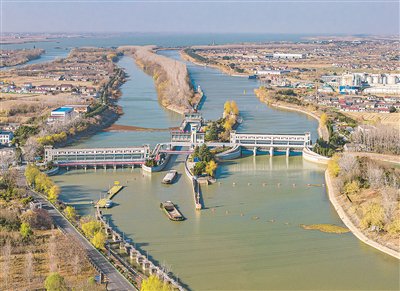
冰期输水,启动!
中国能源报· 2025-12-21 12:52
Core Viewpoint - The South-to-North Water Diversion Project's Eastern Route Phase I will commence water delivery during the ice period from December 21, 2025, to February 2026, ensuring stable water supply during extreme cold weather [1]. Group 1: Project Overview - The Eastern Route Phase I of the South-to-North Water Diversion Project has successfully completed ice period water delivery for five consecutive years during the 14th Five-Year Plan, with a total of approximately 9.61 billion cubic meters of water delivered [1]. - The project aims to address water shortages in winter and spring, ensuring stable water supply for domestic, industrial, agricultural, and ecological needs along the route [1]. Group 2: Operational Measures - During the ice period, the South-to-North Water Diversion Group will closely monitor temperature trends and cold wave warnings, optimizing operational scheduling to maximize water delivery efficiency while ensuring safety [1]. - Strict daily inspections and monitoring protocols will be implemented to address risks such as gate freezing and ice blockages, ensuring safe water delivery during the ice period [1]. Group 3: Emergency Supply Initiatives - The North Extension Emergency Water Supply Project for the Eastern Route Phase I has also commenced, with plans to deliver 320 million cubic meters of water to Hebei and Tianjin by the end of May 2026 [1].
南水北调东线工程今起冰期输水
Xin Lang Cai Jing· 2025-12-20 23:09
Core Viewpoint - The South-to-North Water Diversion Project's eastern route has officially commenced its water supply for the ice period of 2025-2026, expected to conclude in February 2026, addressing severe water shortages in northern China [1] Group 1: Project Overview - The eastern route of the South-to-North Water Diversion Project has successfully completed ice period water supply tasks for five consecutive years during the 14th Five-Year Plan, with a cumulative water diversion of approximately 961 million cubic meters [1] - This initiative has significantly ensured stable water supply during extreme cold weather, meeting the water needs for living, industry, agriculture, and ecology in the regions along the route [1] Group 2: Emergency Water Supply - The emergency water supply project for the northern extension of the eastern route has commenced on October 27, 2025, with a planned water supply of 320 million cubic meters to Hebei and Tianjin by the end of May 2026 [1] - This project aims to contribute positively to the comprehensive management of groundwater over-extraction and the ecological restoration of rivers and lakes in North China [1] Group 3: Operational Monitoring and Safety - During the ice period water supply, the South-to-North Water Diversion Group will closely monitor temperature trends, cold wave warnings, and ice conditions to optimize project operations and maximize water diversion benefits [1] - The company will implement strict daily inspections and monitoring protocols to address potential risks such as gate freezing and ice jams, ensuring the safety of the water supply during the ice period [1]
水泽大地醒 雨润草木新
Bei Jing Wan Bao· 2025-12-15 08:19
Core Viewpoint - The article highlights the significant increase in rainfall in Beijing over recent years, particularly noting the impact of the South-to-North Water Diversion Project on the region's water supply and ecological environment [1][2]. Group 1: Rainfall Statistics - In 2021, Beijing experienced a total rainfall of 792.6 millimeters, with July alone recording 400.4 millimeters, marking the highest monthly rainfall since 1951 [1]. - The summer and autumn of 2021 saw a 65% increase in rainfall compared to previous years [2]. - As of October 9, 2023, Beijing recorded a cumulative rainfall of 904.3 millimeters, breaking the previous record of 899.2 millimeters set in 1961 [4]. Group 2: Ecological Impact - The increased rainfall has led to a rise in groundwater levels in North China, contributing to improved ecological conditions and even changes in local climate, making it more humid [1]. - The abundance of rain has resulted in lush vegetation, with various plants and flowers thriving in the city, showcasing a vibrant natural landscape [6][7]. Group 3: Weather Patterns - Recent weather patterns in Beijing have shown an increase in unexpected rain days, with instances of rain occurring on days forecasted as clear or cloudy [4]. - The phenomenon of rain occurring during sunny days has become more common, leading to unique weather experiences such as sudden downpours followed by rainbows [4][5].
南水北调东中线累计调水超845亿立方米
Ren Min Ri Bao· 2025-12-13 00:50
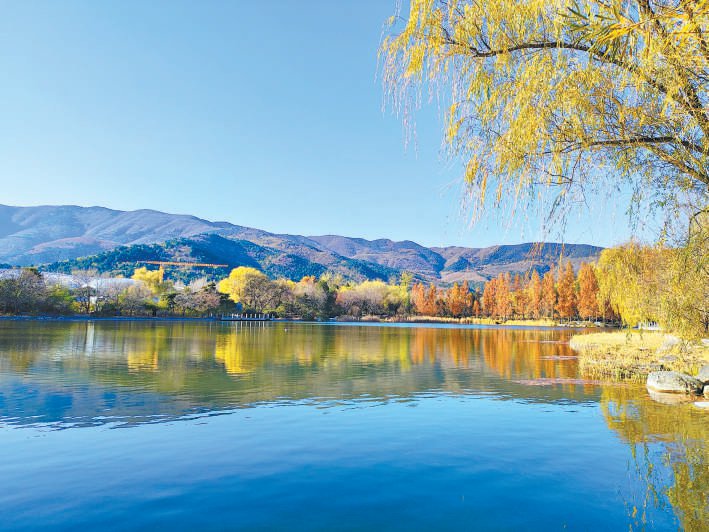
Core Insights - The South-to-North Water Diversion Project's East and Middle Line Phase I has successfully diverted over 84.5 billion cubic meters of water in 11 years, benefiting 195 million people across 48 major cities, significantly promoting high-quality economic and social development in the region [1] Group 1: Water Quality and Supply - The water quality of the Middle Line project has consistently met surface water Class II standards or above, while the East Line project has maintained Class III standards [1] - The guaranteed supply rate for domestic water in cities along the Middle Line has increased from less than 75% to over 95% [1] - The guaranteed supply rate for domestic and industrial water in cities along the East Line has improved from below 80% to over 97% [1] Group 2: Ecological Benefits - The project has utilized surplus water before floods for ecological replenishment, aiding in the recovery of the ecological environment of rivers and lakes along the route [1] - The South-to-North Water Diversion Project has cumulatively implemented ecological replenishment for over 50 rivers in Northern China [1]
11年、超844亿立方米、1.95亿人……透过数据看南水北调工程惠民“成绩单”
Yang Shi Wang· 2025-12-12 02:02
Core Insights - The South-to-North Water Diversion Project's Eastern and Central Route has been operational for 11 years, benefiting 195 million people along the route [1] - The project has delivered over 84.4 billion cubic meters of water to northern regions, providing a stable and high-quality water source for 48 major cities [1] - Water quality standards have been maintained, with the Central Route achieving surface water Class II and above, while the Eastern Route maintains Class III standards [4] Water Supply and Quality Improvement - The guarantee rate for domestic water supply in cities along the Central Route has increased from below 75% to over 95% [4] - The guarantee rate for domestic and industrial water supply in cities along the Eastern Route has improved from below 80% to over 97% [4] Ecological Restoration Efforts - The project has implemented ecological replenishment, providing over 12.3 billion cubic meters of water to more than 50 rivers and lakes, revitalizing previously dry ecosystems [6]
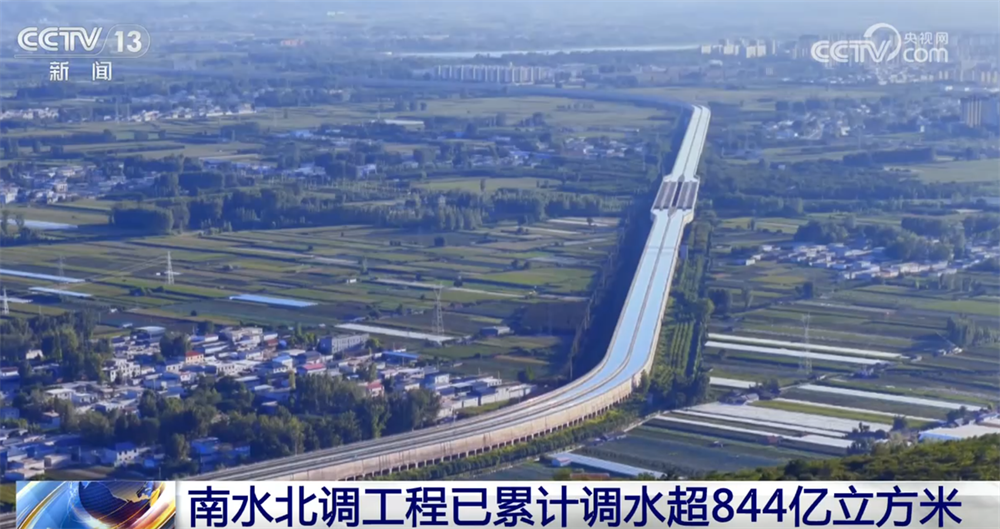
奋进的河南 决胜“十四五”·生态焕绿记丨为清水北上筑牢安全屏障
He Nan Ri Bao· 2025-11-18 23:23
Core Points - The South-to-North Water Diversion Project is crucial for strategic development and public welfare, with a focus on ensuring water quality and supply safety [2] - The ecological restoration efforts in the Danjiangkou Reservoir area have significantly improved forest coverage and water quality, creating a protective green barrier [3] - The province has achieved high precision in water supply management, with actual supply closely matching planned amounts, demonstrating effective operational strategies [4] - The project has supplied over 260.92 billion cubic meters of water to the province, benefiting over 35 million people [5] Group 1 - The South-to-North Water Diversion Project is a key initiative for long-term development and public welfare, emphasizing the importance of maintaining water quality and supply safety [2] - The ecological restoration in the Danjiangkou Reservoir area has transformed previously barren land into a green barrier, with forest coverage increasing from 45.7% to 61.7% [3] - Water quality in the Danjiangkou Reservoir and the main canal remains stable, with the majority meeting Class II surface water standards [3] Group 2 - The province has implemented precise water supply management, achieving a deviation of only 1% from the planned supply for 2024, indicating high operational efficiency [4] - Local governments have adopted innovative measures to enhance water supply security, including frequent scheduling and flow monitoring [4] - The South-to-North Water Diversion Project has cumulatively supplied 260.92 billion cubic meters of water, with ecological replenishment accounting for 42.99 billion cubic meters [5]
南水北调山东段工程累计调水突破110亿立方米
Da Zhong Ri Bao· 2025-11-17 01:09
Core Insights - The South-to-North Water Diversion Project in Shandong has successfully transferred over 11 billion cubic meters of water in total, with more than 9 billion cubic meters sourced from the Yangtze River, benefiting over 40 million people [2] Group 1: Project Achievements - The project marks its 12th anniversary with record water transfer and supply metrics, achieving a total water transfer of 10.66 billion cubic meters from the Yangtze River and 7.49 billion cubic meters from local sources in the 2024-2025 period [2] - The project has maintained a 100.15% completion rate for water supply, with significant contributions from cities such as Dezhou and Jinan, achieving completion rates of 120.3% and 116.63% respectively [2] - The project has exceeded emergency water supply tasks by delivering 1.63 billion cubic meters to Hebei and Tianjin, showcasing its capability to adapt and respond to regional water needs [2] Group 2: Economic and Environmental Impact - The South-to-North Water Diversion Project has become a vital lifeline for optimizing water resource allocation, ensuring safe drinking water for the population, revitalizing river and lake ecosystems, and facilitating economic circulation between the north and south [2] - The project has achieved historical highs in both water transfer and supply metrics for three consecutive years, indicating a continuous improvement in its comprehensive benefits and support for high-quality economic and social development in the receiving areas [2]