
跨区域协作

Search documents
云南多地做优就业服务 让团圆与增收双向奔赴
Xin Hua Wang· 2026-02-15 11:37
Core Viewpoint - The article highlights the ongoing "Spring Breeze Action" and employment assistance activities across China, particularly in Yunnan Province, focusing on enhancing employment services, integrating industry development, and addressing the employment needs of key groups through innovative service models [1]. Group 1: Industry Empowerment and Local Employment - Yunnan's human resources department is promoting the integration of industry and employment, leveraging unique plateau industries to support local job creation and stable income [2]. - In Weixin County, the local government is utilizing its 560,000 acres of bamboo resources to provide specialized training in bamboo cultivation and management, enabling residents to participate in various bamboo industry operations and achieve stable employment [2]. - The "Happiness Community" in Yanshan County is connecting with 39 large-scale vegetable planting bases to create over 50,000 job opportunities, facilitating local employment for returning labor [3]. Group 2: Cross-Regional Collaboration - Yunnan is deepening cooperation with regions like Shanghai, Zhejiang, and Fujian to match labor resources with quality job opportunities, exemplified by a series of recruitment fairs that brought together over 170 companies and offered thousands of job positions [7]. - The establishment of employment service platforms in various counties, such as the "Happiness Community" and the comprehensive employment service complex in Yiliang County, enhances job-seeking convenience for local residents [9]. Group 3: Service Innovation and Community Engagement - The return of migrant workers during the Spring Festival is seen as an opportunity to enhance grassroots governance and employment services, with Yunnan creating tailored employment service scenarios to meet local needs [12]. - Initiatives like the "Spring Breeze Send Jobs" night market and dynamic labor information tracking in various regions aim to effectively connect returning workers with job opportunities [13]. - Yunnan's employment bureau is actively engaging with returning migrant workers through various outreach efforts, including financial support and policy guidance, to ensure their successful reintegration into the local job market [17].

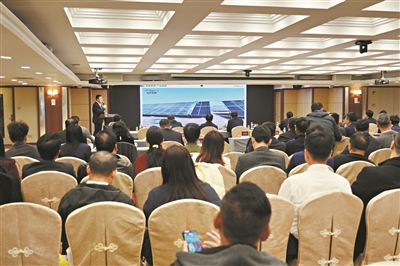
广州“双向赋能”产业对接路演活动开幕
Guang Zhou Ri Bao· 2026-02-11 02:32
Core Insights - The article emphasizes the importance of cross-regional collaboration in various industries, particularly in sectors like new energy vehicles, biomedicine, and artificial intelligence, through initiatives like the "dual empowerment" industry matchmaking event in Guangzhou [2][5]. Group 1: Event Overview - The "dual empowerment" industry matchmaking event in Guangzhou featured over 20 high-quality enterprises from sectors such as new energy vehicles, biomedicine, and artificial intelligence, promoting their products, technologies, and collaboration opportunities [2]. - The event aims to establish a clear pathway for precise collaboration, transitioning from "list matching" to "ecological co-construction" [5]. Group 2: Collaboration Mechanisms - Guangzhou is implementing a dynamic mechanism for continuous updating and precise matching of collaboration projects, resulting in 23 key cooperation projects identified to date [5]. - The city plans to host 17 specialized matchmaking events in 13 domestic cooperation cities by 2025, attracting over 450 enterprises and institutions to facilitate efficient resource flow and collaboration [5]. Group 3: Industry Synergy and Benefits - The collaboration efforts are designed to enhance the high-end industrial landscape, focusing on sectors like new energy vehicle sales, low-altitude economy, digital technology, and biomedicine, leading to successful project implementations [6]. - The initiative not only extends Guangzhou's advantageous industries but also aids partner regions in industry transfer and the cultivation of new productive forces [7]. Group 4: Economic Impact - Since 2025, Guangzhou has completed or signed over 80 cooperation projects, with a total economic cooperation amount exceeding 10 billion yuan, showcasing the value of cross-regional collaboration [8]. - The city has organized 17 promotional matchmaking activities, attracting 245 Guangzhou enterprises and achieving a trade cooperation scale surpassing 7 billion yuan [8].
严谨与激情并存:QYResearch团队的工作氛围是怎样的?
QYResearch· 2026-02-10 09:20
Core Viewpoint - QYResearch is recognized for its professional depth, rigorous data, and efficient delivery in the global market research industry, supported by a unique internal work atmosphere that emphasizes scientific rigor and encourages exploration of the unknown [1][8] Group 1: Cross-Regional Collaboration - The core feature of QYResearch's operation is cross-regional collaboration, with teams distributed across countries like China, the USA, Japan, and India, working under a unified methodology [3] - This collaboration allows the team to quickly integrate global information into systematic insights, providing a comprehensive perspective and robust evidence chain [3] Group 2: Data-Driven Research - QYResearch adheres to the principle of "data is king," using verifiable data to construct research frameworks and ensuring the reliability of conclusions through rigorous analysis and logical reasoning [4] - The combination of scientific data methods and professional industry understanding results in research that is not only accurate but also insightful and directional [4] Group 3: Team Culture - The team embodies a mature and vibrant culture, balancing rigor and passion, which enables the organization to remain steady, sensitive, and progressive in a rapidly changing global market [5][6] - QYResearch fosters an environment of openness and innovation, encouraging researchers to maintain strict adherence to established methods while exploring the unknown [6][9] Group 4: Conclusion - The work atmosphere at QYResearch is a balance of rigor and passion, a combination of science and creativity, and a unity of global collaboration and in-depth research, allowing the team to continuously deliver high-quality, reliable, and forward-looking market insights [8][9]

破解跨省域办案难题 形成“一盘棋”保护格局
Xin Lang Cai Jing· 2026-02-06 23:02
Core Viewpoint - The joint initiative "Guarding the Source of the Yellow River: Qinghai-Gansu Beneficial Journey" aims to enhance ecological protection in the upper reaches of the Yellow River through collaborative public interest litigation by the procuratorial organs of Qinghai and Gansu provinces, with a focus on ecological and resource protection [1][2]. Group 1: Special Action Overview - The special action is set to last for three years (2025-2027) and aims to establish a new collaborative governance model for ecological protection in the Yellow River basin [1]. - Gansu's procuratorial authority has outlined nine key tasks and established a three-tiered collaborative mechanism for implementation [1]. - Qinghai's procuratorial authority has integrated the special action into its broader ecological civilization strategy, forming specialized teams and high-efficiency case handling methods [1]. Group 2: Achievements and Impact - As of January this year, a total of 1,227 public interest litigation cases related to ecological and resource protection in the Yellow River basin have been filed by the procuratorial organs of both provinces [1]. - The actions have resulted in the issuance of 770 prosecutorial suggestions, 115 public interest lawsuits, and the recovery of 21.75 million yuan for ecological restoration and functional loss [1]. - Additional achievements include the guidance of carbon credit subscriptions exceeding 500 tons, the restoration of over 1,800 acres of forest and grassland, the clearance of over 66,000 tons of solid waste, and the remediation of over 60 kilometers of polluted and illegally occupied riverbanks [1]. Group 3: Cultural Heritage Protection - The special action also encompasses the protection of cultural heritage, with 237 related cases processed, including ancient sites, buildings, revolutionary relics, and intangible cultural heritage projects [2]. - A new collaborative governance model has been established, enhancing cooperation between the procuratorial and administrative sectors, and facilitating cross-provincial ecological environment public interest litigation inspections along the Yellow River [2]. - An innovative model combining local prosecution,巡回检察 (circuit prosecution), special governance, and additional measures has been developed [2].
一碗糟粕醋,三地共作答:同酿海南“国民味道”
Hai Nan Ri Bao· 2026-01-29 02:42
Core Viewpoint - The Hainan Provincial Two Sessions have initiated a public suggestion collection activity, highlighting the community's enthusiasm for the development of the Hainan Free Trade Port, particularly focusing on the "Wenchang Zhaocai Vinegar" industry [1][2]. Industry Development - The "Wenchang Zhaocai Vinegar" has gained recognition, being included in the government work report for the first time, indicating its growing importance in local culture and economy [1][3]. - The vinegar industry in Wenchang is becoming a significant economic driver, with 98 related restaurants and 9 production enterprises, aiming for an annual production capacity of 30,000 tons and a value of 130 million yuan by 2025 [3][5]. Cultural and Economic Integration - The local government is focusing on cultural excavation and experience upgrades to enhance the vinegar's market appeal, including the establishment of a cultural experience center [4]. - The industry is expected to benefit from standardization and scale, with projections of over 4,000 tons of production and a value of approximately 50 million yuan in Ding'an County by 2025 [5][6]. Collaborative Efforts - There is a push for collaboration among different regions to avoid homogenization and to create a unified brand for the vinegar, with proposals for a provincial-level mechanism to coordinate efforts [8][9]. - The successful application for the "Hainan Zhaocai Vinegar" regional brand demonstrates early collaboration results and sets a precedent for future joint efforts [8]. Expert Recommendations - Experts suggest that Zhaocai Vinegar has the potential to become a cultural symbol for Hainan, advocating for systematic branding and storytelling to enhance its market presence [10][11]. - Recommendations include developing immersive experiences, connecting local culture with global consumers, and creating a narrative that highlights the vinegar's historical and cultural significance [11].
以正义之锚守护壮阔蔚蓝
Xin Lang Cai Jing· 2026-01-28 00:15
Core Viewpoint - The article emphasizes the importance of marine law enforcement and judicial protection in promoting high-quality development of China's marine economy, aligning with national strategies for maritime security and ecological sustainability [6][9][20]. Group 1: Marine Law Enforcement and Judicial Collaboration - The Supreme People's Procuratorate has initiated collaborative efforts with marine law enforcement agencies to enhance legal supervision and ensure marine safety, resource protection, and ecological conservation [6][9]. - A comprehensive cooperation mechanism has been established between coastal procuratorial agencies and maritime law enforcement, facilitating information sharing and joint investigations [9][10]. - The collaboration has proven effective in handling complex maritime cases, such as smuggling and illegal fishing, by ensuring timely intervention and coordinated legal actions [10][11]. Group 2: Marine Resource Protection Initiatives - The article highlights the annual release of 350,000 juvenile clams in Fujian as part of ongoing efforts to protect marine biodiversity and restore overfished species [12][13]. - A comprehensive protection system has been developed to combat illegal fishing and enhance public awareness, resulting in the release of over 2 million clam seedlings since 2021 [13]. - Cross-regional cooperation has been initiated to address illegal fishing and aquaculture, leading to the dismantling of over 800 acres of illegal facilities and the resolution of 22 fishing violations [14]. Group 3: Ecological Restoration and Sustainable Practices - The article discusses innovative ecological restoration methods, including the introduction of carbon credit mechanisms to fund marine ecosystem recovery efforts [15][19]. - The protection of the endangered Chinese white dolphin has been prioritized, with collaborative efforts among multiple provinces to enhance biodiversity conservation [16][19]. - The establishment of a judicial alliance for mangrove protection signifies a shift towards collaborative governance in ecological restoration, integrating legal accountability with environmental sustainability [19]. Group 4: Support for Marine Economic Development - The article outlines the role of coastal procuratorial agencies in supporting the development of the marine economy through legal services and risk prevention strategies for marine enterprises [20][21]. - Initiatives have been launched to regulate the burgeoning marine tourism industry, addressing safety concerns and illegal operations to ensure orderly development [21][22]. - The establishment of marine equipment inspection service stations aims to provide comprehensive legal support for the marine industry, enhancing its international competitiveness [21][22].

黄河源检察公益诉讼专项行动取得阶段性成效
Xin Lang Cai Jing· 2026-01-23 17:51
Core Viewpoint - The joint initiative "Guarding the Source of the Yellow River" by the People's Procuratorates of Qinghai and Gansu provinces aims to enhance ecological protection and resource conservation in the Yellow River basin through collaborative legal actions and public interest litigation [1][2]. Group 1: Collaborative Actions - The two provinces have established a cross-regional collaborative system to address ecological protection, with Gansu outlining nine key tasks and a three-tiered mechanism for implementation [1]. - Qinghai has integrated the initiative into its broader ecological civilization strategy, forming specialized teams and high-efficiency legal methods for case handling [1]. Group 2: Legal Actions and Achievements - As of January, a total of 1,227 public interest litigation cases related to ecological and resource protection in the Yellow River basin have been filed, resulting in 770 prosecutorial suggestions and 115 lawsuits [2]. - The initiative has led to the recovery of 21.75 million yuan for ecological restoration and the guidance of carbon credit purchases exceeding 500 tons, alongside the restoration of over 1,800 acres of grassland [2]. Group 3: Innovation in Governance - The provinces have developed a new governance model that combines "procuratorial + administrative" collaboration, conducting cross-province ecological environment inspections along the Yellow River [3]. - Qinghai has extended supervision to pastoral river sources through ecological guardians, while Gansu has established public interest litigation liaison stations in towns along the river [3].
厦门港新能源汽车跨省铁海联运出海实现新年“开门红”
Zhong Guo Xin Wen Wang· 2026-01-17 11:59
Group 1 - The first batch of 300 electric vehicles has been successfully transported from Wuhan to Xiamen for export to Gdansk, Poland, marking a new phase of efficient operation for the "Hubei production - Xiamen export" channel [1] - The implementation of a full-process "one box system" by Xiamen maritime authorities has significantly shortened the shipping cycle by 5 to 7 days, ensuring seamless transitions from container loading to shipping [1] - Xiamen's maritime department has introduced "cloud review" and "priority channels" to expedite customs and approval times, enhancing the overall efficiency of the export process [1] Group 2 - Safety is critical for the maritime transport of electric vehicles, classified as Class 9 hazardous goods, requiring adherence to stringent safety standards [2] - Upon arrival, maritime enforcement personnel conduct thorough inspections of containers and vessels to ensure compliance with safety regulations, preventing potential risks [2] - With the increasing export volume of Chinese electric vehicles, Xiamen port is leveraging cross-regional collaboration and efficient oversight to attract more inland cargo, aiming to facilitate smoother global market access for "Made in China" products [2]
云南园区经济按下快进键:优化布局 错位发展 协同并进
Xin Lang Cai Jing· 2026-01-13 00:14
Core Viewpoint - Yunnan province has implemented a three-year action plan for the revitalization of development zones, significantly contributing to the regional economy and achieving high-quality development through optimized industrial layout and regional cooperation [1][2]. Group 1: Economic Contributions - Development zones occupy less than 1% of the land area but contribute over 20% of the regional GDP, 30% of employment, 40% of industrial investment, 60% of operating income, and 80% of the industrial output value above designated size [1]. - From January to November 2025, the industrial output value above designated size in development zones grew by 6.0% year-on-year, while the industrial added value increased by 5.6%, both exceeding the provincial average [1]. Group 2: Industrial Upgrading and Collaboration - Yunnan is addressing the challenges of small, scattered, and weak industrial parks by establishing a benefit-sharing mechanism to promote collaborative efforts and efficient resource allocation [2]. - The province has focused on key projects like the Shanghai-Yunnan Port Technology City and the Ruili Industrial Cooperation Park to foster industrial upgrades and demonstrate successful models [2]. Group 3: Innovation and Technology - Eight high-tech zones in Yunnan host 613 high-tech enterprises and 1,307 technology-based SMEs, showcasing a robust innovation ecosystem with 100% of the province's national engineering research centers and 33% of national key laboratories [3]. Group 4: Cross-Regional Cooperation - The Shanghai-Yunnan Port Technology City is emerging as a model for cross-regional industrial cooperation, with 145 enterprises registered and 24 operational, enhancing industrial clustering effects [4]. - A total of 119 projects have been signed and implemented, with a total investment of approximately 36 billion yuan, demonstrating the effectiveness of the "Shanghai headquarters + Yunnan base" collaboration model [6]. Group 5: Shared Development Mechanisms - Yunnan's border cooperation with Laos has led to the establishment of 38 cross-border logistics and manufacturing enterprises, enhancing resource flow and economic cooperation [7]. - Various regions in Yunnan are adopting innovative "park within a park" models to share benefits and attract quality projects, promoting collaborative development across counties and cities [8].
【劳动者故事】南水北调“守井人”
Xin Lang Cai Jing· 2026-01-01 19:47
Core Viewpoint - The transformation of the Danjiangkou Reservoir area reflects a deep commitment to water quality preservation, with local residents taking on the role of "water guardians" to ensure clean water supply for northern regions [1][2][3][4] Group 1: Community Involvement - Local residents, referred to as "water guardians," have adapted their livelihoods from fishing to water protection roles, forming teams dedicated to maintaining water quality [2][3] - Numerous volunteer groups, including student and elderly participants, actively engage in water protection efforts, showcasing a community-wide commitment to safeguarding the water source [2][3] Group 2: Environmental and Technological Initiatives - Collaborative efforts between the Yuyang region and surrounding areas, including Beijing, have led to the establishment of cross-regional cooperation mechanisms for water protection [3] - The implementation of technology, such as a smart water management platform and drone surveillance, enhances monitoring and response capabilities for water quality [3] Group 3: Economic and Ecological Development - The region is transitioning towards eco-friendly agriculture and green industries, with initiatives to develop organic tea gardens and ecological orchards, aiming to improve both water quality and local economy [3] - Local businesses, such as "fishing restaurants," are capitalizing on the clean water narrative to attract visitors, promoting regional products while emphasizing the importance of water quality [3]